
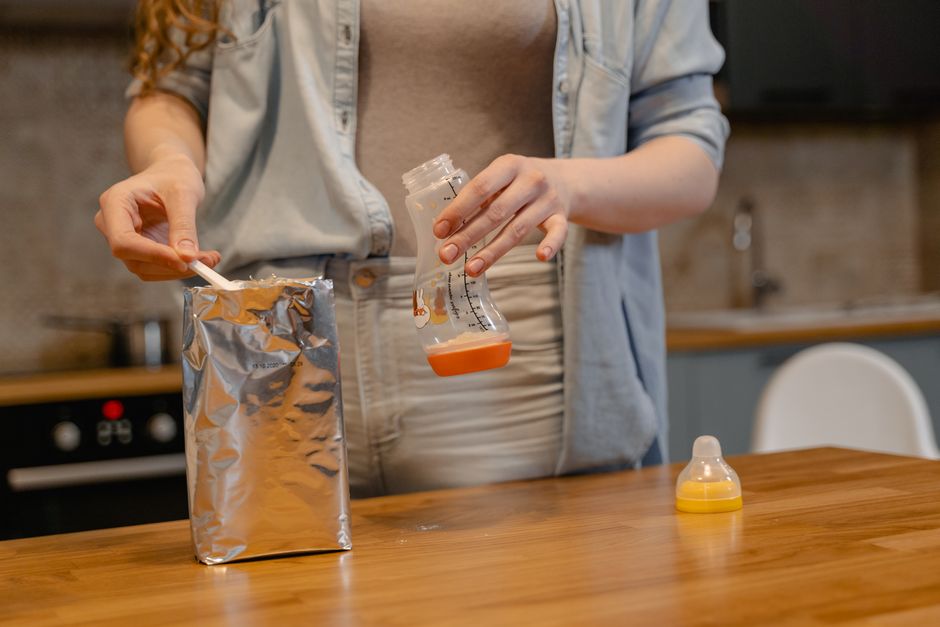
Mixing breast milk and formula is something many parents end up doing, whether they are supplementing a low supply, returning to work, or just trying to get through a growth spurt. The safest approach is to keep the two liquids separate until feeding time: prepare formula exactly as the label directs with water, then combine the two only in the bottle you are about to feed. Do not add formula powder directly to a bottle of breast milk, and do not mix up a large batch to store for later. Both breast milk and prepared formula have their own safety rules, and blending them changes how those rules work.
Why You Should Not Mix Formula Powder Directly Into Breast Milk
Formula powder is designed to be mixed with water in a specific ratio. That ratio matters because it controls how concentrated the final feed is.
Breast milk is not water. It contains fat, protein, carbohydrates, and minerals. When you add powder to breast milk instead of water, the result is a feed that is more concentrated than the formula maker intended. A consistently over-concentrated feed can put stress on a baby’s kidneys and digestive system. Under-diluting is the concern here, not over-diluting, but both errors matter for different reasons.
There is also a measurement problem. You cannot easily tell how much water is in breast milk, so you cannot calculate how much powder to add. The instructions on the can assume water. Following them with breast milk produces an unknown concentration.
Some parents hear that adding a little formula powder to breast milk “fortifies” it. That practice exists in some clinical settings, but it is done under medical supervision with specific products and measurements. It is not something to replicate at home from a general instruction.
How To Mix Breast Milk And Formula Safely Step By Step
The method is simple once you separate the two steps: make the formula properly first, then combine.
- Wash your hands and clean your workspace and bottles.
- Prepare the formula exactly as the label instructs, using the correct amount of water and the scoop that came with that specific product.
- If you are using powdered formula, follow the manufacturer’s guidance on water temperature and any sterilization advice for your baby’s age and health.
- Pour the prepared formula into the bottle first, then add the breast milk. Adding breast milk last means you are not pouring formula into a bottle lined with breast milk, which makes it easier to see what you are doing.
- Swirl gently to combine. Do not shake hard.
- Feed right away. Discard whatever is left in the bottle after the feeding.
The order — formula first, breast milk second — is a practical habit, not a chemical rule. What matters is that the formula was made correctly with water before the two met.
How Long Can A Mixed Bottle Sit Out?
A bottle that contains both breast milk and formula should be treated as more perishable than either one alone, and it should not be saved for a later feeding.
Freshly expressed breast milk can be stored for extended periods under refrigeration, and prepared formula has its own storage window. Once you combine them, you cannot apply the longer of the two windows. The practical rule most clinicians give is to feed the mixed bottle within a short time and discard anything the baby does not finish.
Do not refrigerate a mixed bottle to use hours later. Do not reheat it and offer it again. If you want flexibility, keep the breast milk and the prepared formula in separate containers and combine only what you need at the moment of feeding.
One point parents often miss: a bottle that has touched a baby’s mouth is different from one that has not. Saliva introduces bacteria. Once feeding starts, the clock is running on that bottle no matter what is in it.





Does Mixing Change The Nutrition Or The Benefits Of Breast Milk?
Mixing dilutes the breast milk with formula, so the baby gets less breast milk per ounce than they would from a pure breast milk bottle. That is arithmetic, not a chemical reaction.
Breast milk contains antibodies, live cells, and enzymes that formula does not. These components are not destroyed simply by contact with formula. What changes is the proportion. If a bottle is half breast milk and half formula, the baby receives roughly half the breast milk they would have received from a full breast milk bottle.
This is why some parents choose to feed breast milk and formula in separate bottles back to back, rather than blending them. It lets them track exactly how much of each the baby gets. Others prefer the blended bottle because it stretches a limited supply of breast milk across more feeds. Both approaches are used. Neither is a medical requirement.
When Mixing Is A Reasonable Choice
Supplementing with formula is common, and it is not a failure. For many families it is the difference between continuing to breastfeed and stopping altogether.
Mixing or supplementing can make sense when:
- Milk supply is lower than the baby needs, confirmed with a pediatric provider or lactation consultant.
- The parent is returning to work and pumping does not cover all feeds.
- A medical condition in the parent or baby requires additional calories or specific nutrition.
- The parent needs rest or relief and wants to share feeding duties.
If you are concerned about supply, weight gain, or how much your baby is eating, that is a conversation to have with a pediatric provider or a lactation consultant. They can look at the whole picture, including diapers, weight, and feeding behavior, rather than a single bottle.
Common Mistakes And Safety Points
Most problems come from a small number of avoidable errors.
- Adding powder to breast milk instead of water. This creates an unknown concentration.
- Using the wrong scoop. Scoops are sized for a specific product. Do not swap scoops between brands.
- Packing the scoop. Formula should be loosely scooped and leveled unless the label says otherwise.
- Reusing a mixed bottle. Once combined and fed, it should not be saved.
- Microwaving. Microwaves heat unevenly and can create hot spots that burn a baby’s mouth. Warm bottles in a bowl of warm water or under running warm water instead.
- Mixing a big batch for the day. Prepare only what you need for the feed in front of you.
Powdered formula is not sterile. For infants who are premature, have a weakened immune system, or are very young, guidance from health authorities has generally favored using ready-to-feed liquid formula or taking extra steps to prepare powder safely. Ask your baby’s provider what applies to your situation, because the recommendations differ by age and health status.
What About Warming And Temperature?
You do not need to warm a mixed bottle at all. Babies can drink room-temperature or even cool milk. Warming is a preference, not a requirement.
If you do warm it, use gentle methods and test a few drops on the inside of your wrist before feeding. The milk should feel neither hot nor cold. Never microwave breast milk or formula, because uneven heating can scald a baby even when the bottle feels fine on the outside.
Do not refreeze breast milk that has been thawed, and do not refreeze it after it has been mixed with formula.
When To Call Your Baby’s Doctor
Contact a pediatric provider if your baby is not gaining weight as expected, is having far fewer wet diapers than usual, is unusually sleepy or hard to wake for feeds, or is vomiting forcefully after feeds. These can be signs that something beyond bottle mixing needs attention.
Trust your read on your own baby. If something seems off, a call is cheap and worth it.
Frequently Asked Questions
Can you mix breast milk and formula in the same bottle?
Yes, you can combine them in the same bottle, but only right before feeding. Prepare the formula with water first according to the label, then add the breast milk, and discard anything left after the feeding.
Can you add formula powder directly to breast milk?
No. Formula powder must be mixed with water in the ratio on the label, because adding it to breast milk creates an unknown and likely over-concentrated feed. Fortifying breast milk with powder is done only under medical supervision.
How long can a mixed bottle of breast milk and formula sit out?
A bottle containing both should be fed promptly and not saved for a later feeding. Once a baby has started drinking from it, discard whatever is left, because saliva introduces bacteria.
Does mixing formula with breast milk reduce the benefits of breast milk?
It dilutes the breast milk, so the baby gets fewer of its antibodies and other components per ounce. The components are not destroyed by contact with formula, but the proportion of breast milk in the bottle goes down.
