
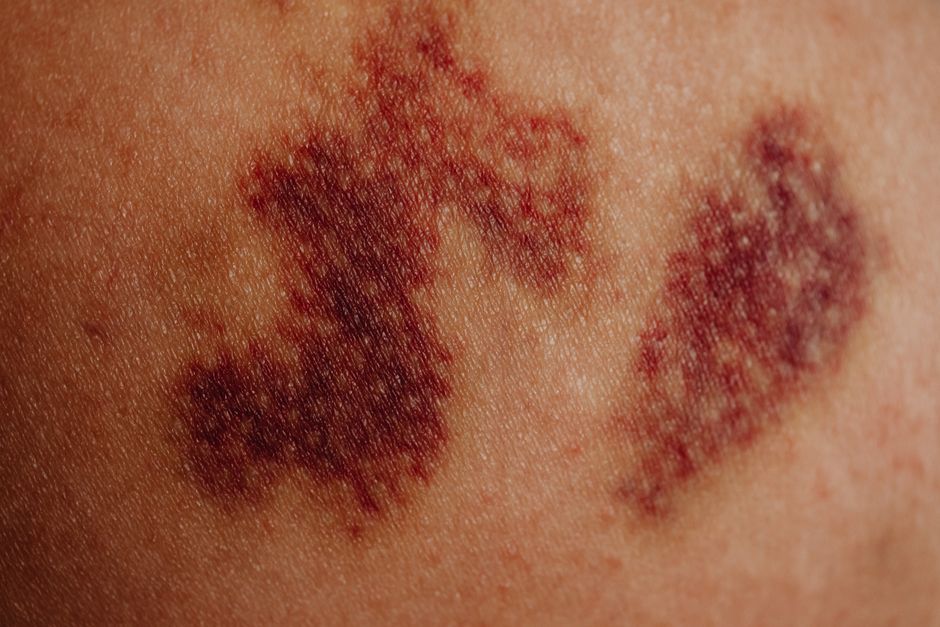
You can minimize a bruise faster by acting in the first 24 to 48 hours: apply a cold pack for about 15 to 20 minutes at a time, keep the injured area raised above heart level when you can, and avoid heat, alcohol, and vigorous rubbing of the area. These steps reduce bleeding under the skin and limit how large and dark the bruise becomes. After the first couple of days, gentle movement and time do most of the remaining work. No home remedy has been shown in clinical trials to erase a bruise overnight.
What actually happens under the skin when you bruise
A bruise forms when small blood vessels under the skin break and leak blood into the surrounding tissue. The skin itself stays intact. What you see is pooled blood being broken down and cleared away.
That clearing process follows a fairly predictable pattern. Hemoglobin from the leaked red blood cells breaks down into other pigments over days. This is why a bruise typically shifts from red or purple to blue, then green, then yellow before it fades. The color change is a sign of normal healing, not a sign that something is wrong.
Most bruises fade on their own within about two weeks, though this varies with size, location, age, and how the injury happened. Bruises on the legs and buttocks often last longer than those on the face or arms. Deeper bruises take more time than surface ones.
Here is a point worth understanding: home remedies do not speed up the chemical breakdown of blood. What they can do is reduce how much blood leaks out in the first place. That is why timing matters more than any single product.
How To Minimize Bruising Fast With Home Remedies
Cold is the most reliable home measure, and it works best when used early. Applying cold to the area causes blood vessels to narrow, which limits further leakage. It can also reduce swelling and pain.
Use a cold pack wrapped in a thin cloth. Do not place ice directly on bare skin. Apply it for roughly 15 to 20 minutes at a time, then let the skin return to normal temperature before repeating. Some clinicians suggest repeating this several times over the first day or two.
Elevation is the second practical step. If the bruise is on an arm or leg, raising it above the level of your heart lets gravity help drain fluid away from the area. This is most useful in the first day or two.
Rest the area. Forceful activity right after an injury can cause more small vessels to break and enlarge the bruise. Gentle movement is fine and often helpful, but avoid heavy strain on the injured spot early on.
A few things to skip in the first 48 hours:
- Heat, including hot baths, heating pads, and hot compresses. Heat widens blood vessels and can increase bleeding under the skin.
- Alcohol. It can widen blood vessels and may slow clotting.
- Vigorous massage or rubbing of a fresh bruise. This can push more blood into the tissue.
- Certain over-the-counter pain relievers. Aspirin and some other anti-inflammatory drugs reduce clotting and may increase bruising. If you take one of these regularly or have a bleeding disorder, talk to a clinician or pharmacist before changing anything.
After the first two days, the approach shifts. Gentle warmth and light movement can help the body clear the pooled blood. Some people find that a soft massage once the area is no longer tender helps, but there is no strong trial evidence that it changes how fast a bruise fades.
Do arnica, vitamin K cream, and other popular remedies work?
The evidence for most topical bruise remedies is limited. This is an area where marketing runs well ahead of the science.
Arnica is one of the most commonly sold remedies for bruising. Some small studies have looked at arnica gels for bruising after procedures, and results have been mixed. The evidence is not strong enough to say it reliably speeds bruising. Arnica taken by mouth in high doses can be toxic, and topical arnica can cause skin irritation in some people.
Vitamin K cream is often marketed for bruising. Vitamin K plays a real role in blood clotting, but there is no solid evidence that rubbing it on intact skin speeds the fading of an ordinary bruise.
Bromelain, an enzyme from pineapple, has been studied for swelling and inflammation, mostly in surgical settings. Evidence for everyday bruising is thin. It can interact with blood thinners, so it is not a casual add-on for people on those medications.
Heparinoid gels are sold in some countries for bruises. Some research suggests modest effects on bruise resolution, but the evidence is not consistent, and availability varies by country.
The honest summary: none of these has been shown in large, well-designed human trials to make an ordinary bruise fade faster. They are unlikely to cause harm when used as directed on intact skin, but they should not be treated as proven.



What foods and nutrients matter for bruising?
Nutrition affects how well your blood vessels and clotting system work over time. It does not act as a quick fix for a bruise you already have.
Vitamin C is needed to make collagen, the structural protein in blood vessel walls. Severe deficiency, historically called scurvy, causes easy bruising and bleeding gums. In people who get enough vitamin C from food, extra amounts have not been shown to reduce bruising.
Vitamin K is required for normal clotting. A deficiency can cause easy bruising. It is rare in healthy adults eating a normal diet, but it can occur with certain gut conditions or long-term antibiotic use.
Vitamin B12 and folate deficiencies can affect blood cells and clotting. These are more common in older adults, people with certain diets, and those with absorption problems.
If you bruise easily and often, a nutrient deficiency is possible but not the most likely explanation. It is reasonable to mention frequent unexplained bruising to a clinician rather than trying to correct it with supplements on your own.
When should you see a doctor about a bruise?
Most bruises are harmless. Some patterns are worth a medical look.
See a clinician if a bruise:
- Appears without any injury or bump you can recall
- Keeps growing or becomes very large and painful
- Does not fade after about two weeks
- Comes with swelling that does not improve, or with a firm lump under the skin
- Occurs along with bleeding gums, nosebleeds, blood in urine or stool, or unusual fatigue
Frequent unexplained bruising can have many causes, including medication effects, liver or blood clotting problems, and blood disorders. It should not be assumed to be harmless. A clinician can decide whether blood tests are needed.
One specific situation deserves attention: a bruise that follows a hard blow to the head, or one that appears on the abdomen after an injury, may need urgent evaluation. This is not a home-remedy situation.
Can you prevent bruises from forming in the first place?
You cannot prevent every bruise, but you can lower the odds and reduce severity.
When you know a bump is coming, such as during sports or certain medical procedures, prompt cold and pressure can limit how much blood leaks. Wearing appropriate protective gear during activities reduces the force that reaches the tissue.
If you bruise easily, review your medications with a clinician or pharmacist. Some common drugs, including certain pain relievers and blood thinners, increase bruising risk. Never stop a prescribed medication on your own.
Strength and balance matter more than most people realize. Falls are a leading cause of bruising and more serious injury in older adults, and exercises that build leg strength and balance can reduce fall risk. This is a prevention measure with real evidence behind it, unlike most bruise creams.
The bottom line on timing
The single most effective thing you can do is act early. Cold, elevation, and rest in the first day or two limit how much blood leaks into the tissue. After that, the body handles the rest on its own schedule, usually over one to two weeks.
Be skeptical of anything promising to clear a bruise in a day. The biology does not move that fast. And if bruising is frequent, unexplained, or comes with other symptoms, treat it as information worth acting on rather than a cosmetic problem.
Frequently Asked Questions
How long does it take for a bruise to go away?
Most bruises fade within about two weeks, though size, location, and age affect timing. Legs and deeper bruises often take longer than small bruises on the arms or face.
Does ice really help a bruise heal faster?
Ice does not speed the breakdown of blood, but it narrows blood vessels and can reduce how much blood leaks out when applied early. Use a cloth-wrapped cold pack for about 15 to 20 minutes at a time.
Does arnica cream work for bruising?
The evidence is limited and mixed, and no large well-designed trials confirm it speeds bruising. It may cause skin irritation in some people.
When should I worry about a bruise?
Seek medical advice for bruises that appear without injury, keep growing, do not fade after about two weeks, or come with bleeding gums, nosebleeds, or unusual fatigue. These can signal an underlying problem that needs evaluation.
