
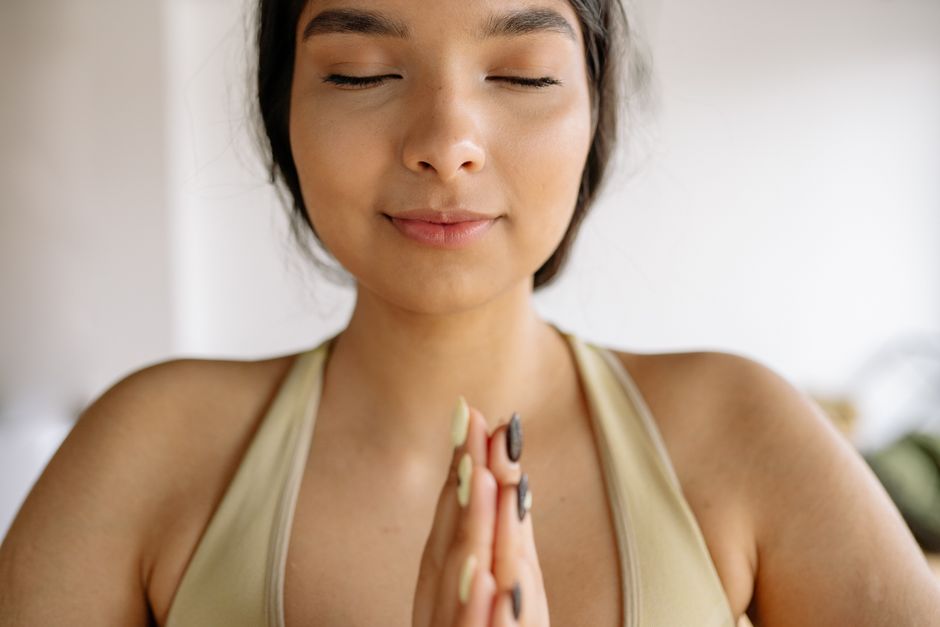
Meditation lowers stress by triggering the body’s relaxation response — a measurable shift from fight-or-flight mode into a calmer physiological state. Even a few minutes of slow, focused breathing can begin that shift. You do not need an app, a cushion, or an hour of silence. You need a simple technique and a willingness to sit with your own breath for a short time.
What Happens In Your Body When You Meditate?
Stress activates the sympathetic nervous system. Your heart rate climbs, blood pressure rises, muscles tense, and stress hormones like cortisol and adrenaline circulate. This system evolved to help you survive short-term threats. It was never designed to stay switched on all day.
Meditation appears to engage the opposite branch — the parasympathetic nervous system. Slow, steady breathing, especially with a longer exhale than inhale, is one of the most direct ways to influence this system. Heart rate slows. Blood pressure tends to drop. Muscles release tension. This is often called the relaxation response, a term first described by Harvard physician Herbert Benson in the 1970s.
Brain imaging studies have shown that regular meditators have measurable differences in areas tied to attention, emotional regulation, and the stress response. The amygdala, a small structure deep in the brain that helps flag threats, tends to show reduced reactivity in experienced meditators. The prefrontal cortex, involved in focus and decision-making, appears more engaged.
One clarification worth making: these brain changes are real but often modest. Meditation is not a switch that turns off stress permanently. It is more like strength training for your nervous system. You build the capacity to return to calm faster, not the ability to never feel stress at all.
How To Meditate Stress Away And Feel Calmer Fast?
The fastest route is not a long session. It is a short, structured practice you can do right now. Here is a basic method that takes about five minutes.
- Sit comfortably. A chair is fine. So is the floor. You do not need to cross your legs or hold a special posture.
- Close your eyes or soften your gaze. Either works. Pick whichever helps you focus.
- Breathe in through your nose for a count of four. Let the breath fill your belly, not just your chest.
- Breathe out slowly for a count of six. The longer exhale is what signals safety to your nervous system.
- Repeat for five minutes. If your mind wanders, notice it and return to the count. Wandering is not failure — returning is the practice.
That last point matters more than most people realize. The moment you notice your attention has drifted and you bring it back — that is the rep. The wandering is not the problem. The return is the training.
If counting feels mechanical, try labeling. On each exhale, silently note “calm” or “release.” Some people prefer a body scan: slowly moving attention from the top of the head down to the feet, relaxing each area as they go. Any of these approaches can work. The specific technique matters less than doing one consistently.
How Long Does It Take To Feel Calmer?
Some effects show up within a single session. A few minutes of slow breathing can lower heart rate and reduce the feeling of tension. Most people notice something — a looser jaw, slower thoughts, a sense of space — within five to ten minutes of starting.
Lasting changes take longer. Research on mindfulness-based programs, including work published in journals such as JAMA Internal Medicine, suggests that consistent practice over several weeks is associated with reduced symptoms of anxiety and depression. The key word is consistent. A single session helps in the moment. Regular practice changes your baseline.
How long is “regular”? Most studies of structured programs use daily practice over eight weeks. That is a reasonable frame for expecting durable change. But you do not need to wait eight weeks to feel something. You can feel calmer today.




What If Your Mind Won’t Stop Racing?
A racing mind is the single most common reason people quit meditation. They assume they are doing it wrong. They are not. A busy mind is not a barrier to meditation. It is the raw material.
When thoughts arrive, you have a few options. You can label them — “thinking” — and return to the breath. You can picture the thought as a passing cloud and let it drift. You can simply notice the thought without following it. None of these requires you to force your mind blank. Trying to force a blank mind usually backfires and increases tension.
If sitting still feels impossible, try walking meditation. Walk slowly and pay attention to the sensation of each foot meeting the ground. The same principle applies: notice when your attention drifts, then bring it back to the physical sensation. Movement can make the practice more accessible for people who find stillness uncomfortable.
Does Meditation Actually Reduce Stress, Or Just Feel Good In The Moment?
Both, and the distinction matters. The immediate calming effect is real and measurable — slower heart rate, lower blood pressure, reduced muscle tension. Those changes are physiological, not imagined.
The longer-term effects are also supported, though the evidence varies by outcome. Research consistently shows meditation can reduce symptoms of anxiety and stress in many people. Evidence for effects on depression is generally positive but more mixed depending on the study and the type of meditation. Claims that meditation cures disease, replaces medication, or eliminates stress permanently are not supported by the evidence.
Meditation is not a treatment for clinical anxiety disorders, depression, or post-traumatic stress disorder on its own. It can be a useful complement to care from a qualified professional. If you are experiencing persistent anxiety, depression, or trauma symptoms, meditation is not a substitute for evaluation and treatment. Talk to a doctor or mental health provider.
Which Type Of Meditation Works Best For Stress?
There is no single best type. The one you will actually do is the one that works for you. That said, some approaches have more research behind them for stress specifically.
| Type | What It Involves | Best For |
|---|---|---|
| Mindfulness meditation | Non-judgmental awareness of the present moment | General stress, anxiety, rumination |
| Breathing-focused meditation | Slow, controlled breathing with extended exhale | Quick calming, acute stress |
| Body scan | Sequential attention through the body | Tension, sleep difficulty |
| Loving-kindness meditation | Directing goodwill toward self and others | Emotional stress, self-criticism |
| Transcendental meditation | Silent repetition of a mantra | Those who prefer a structured technique |
Mindfulness-based stress reduction, or MBSR, is one of the most studied programs. It was developed by Jon Kabat-Zinn at the University of Massachusetts Medical School in the late 1970s. It combines mindfulness meditation, body scan, and gentle movement over eight weeks. Research on MBSR has generally shown benefits for stress and anxiety, though effect sizes vary across studies.
Can You Meditate Anywhere, Or Do You Need A Quiet Room?
You can meditate almost anywhere. A quiet space helps, especially when you are new, because fewer distractions make it easier to focus. But silence is not required. Some people meditate on trains, in parked cars, or in office bathrooms.
What matters more than the setting is the intention. If you decide to take five minutes to breathe slowly and pay attention, the environment matters less than you might think. Noise becomes just another thing to notice and let pass.
That said, if you are trying to build a habit, a consistent spot can help. Same chair, same time of day. The brain starts to associate that context with the practice, which can make it easier to settle in.
What Meditation Cannot Do
Meditation is not a cure-all. It does not replace medical treatment. It does not eliminate stress from your life. It does not work the same way for everyone — some people find it helpful, others find it frustrating or neutral.
Rarely, meditation can bring up difficult emotions or memories, particularly for people with a history of trauma. If that happens, it is worth talking to a mental health professional rather than pushing through alone. Some clinicians recommend trauma-informed approaches for these individuals, though the research on how best to adapt meditation for trauma survivors is still developing.
The honest position: meditation is a low-cost, generally safe practice with reasonable evidence for reducing stress and anxiety in many people. It is not a replacement for professional care when care is needed. It works best as one part of a broader approach to managing stress, alongside sleep, movement, social connection, and, when appropriate, medical treatment.
Frequently Asked Questions
How fast can meditation reduce stress?
Many people notice a calming effect within five to ten minutes of slow breathing. Lasting changes in baseline stress typically take several weeks of consistent practice.
Do I have to sit still to meditate?
No. Walking meditation and other movement-based practices are valid alternatives. The core skill is noticing when your attention drifts and bringing it back.
Can meditation replace medication for anxiety or depression?
No. Meditation is not a substitute for professional treatment of clinical anxiety, depression, or PTSD. It may complement care, but it should not replace it.
What if meditation makes me more anxious?
This can happen, especially for people with a trauma history. If meditation increases distress, stop and consider speaking with a mental health professional about a trauma-informed approach.
