
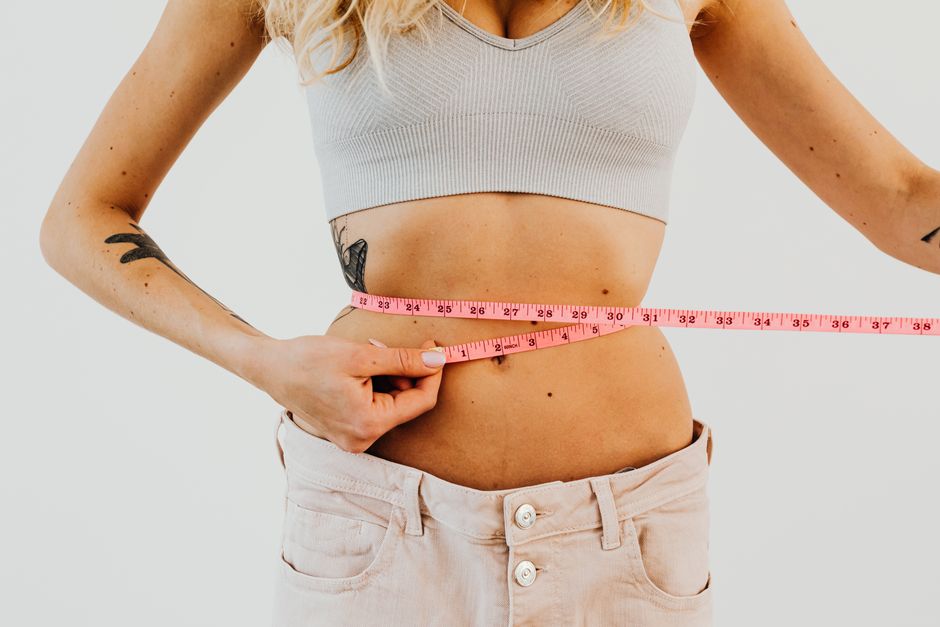
You can measure your waist without a tape measure using items you already have at home. A standard sheet of paper, a piece of string, a phone charging cable, or a dollar bill can all work as a substitute. The key is to mark the length, then compare it against something with a known size. For most adults, waist circumference is measured at the level of the belly button, or at the narrowest point of the torso if that is easier to identify.
Why Does Waist Measurement Matter for Your Health?
Waist circumference is one of the simplest ways to estimate abdominal fat. Unlike body weight alone, it tells you where fat is stored. Fat around the organs in the belly — called visceral fat — is linked to higher risk of heart disease, type 2 diabetes, and metabolic problems.
This is why waist measurement is used in clinical settings alongside body mass index (BMI). BMI tells you whether your weight is proportionate to your height. Waist circumference tells you whether that weight is concentrated in a risky area. Two people can have the same BMI and very different health risks depending on where their fat sits.
Research consistently shows that abdominal obesity, independent of overall body weight, is associated with increased cardiometabolic risk. The mechanism is reasonably well understood: visceral fat is metabolically active and releases inflammatory signals and free fatty acids that affect how the body handles insulin and cholesterol.
What Household Items Can You Use Instead of a Tape Measure?
Several common items have known, standardized dimensions. You do not need a ruler to use them — you just need to know their size in advance.
- Standard sheet of paper (US Letter): 8.5 inches wide, 11 inches long
- US dollar bill: 6.14 inches long, 2.61 inches wide
- Standard credit card: 3.37 inches wide, 2.13 inches tall
- A piece of string, shoelace, or charging cable: no fixed size, but useful as a marker once you measure it against a known object
The paper and the dollar bill are the most practical because their dimensions are fixed by manufacturing standards. A credit card works too, though it is shorter, so you may need to mark and repeat.
How To Measure Your Waist Without A Tape Measure?
The method is straightforward: wrap a non-stretch material around your waist, mark where it overlaps, then measure that length against a known object.
Step 1: Find the right spot. Stand up straight and relax. Do not suck in your stomach. The standard measurement point is at the top of your hip bones, roughly level with your belly button. Some clinical guidelines use the narrowest part of the torso instead. Either works, but be consistent if you are tracking changes over time.
Step 2: Wrap and mark. Take a piece of string, a shoelace, or a charging cable. Wrap it around your bare waist — not over thick clothing. Keep it snug but not tight enough to compress the skin. Pinch or mark the point where the end meets the rest of the string.
Step 3: Measure the marked length. Lay the string flat. Use a sheet of paper or a dollar bill to measure it. For example, if your string is 2.5 dollar bills long, that is about 15.4 inches. If it is 3 sheets of paper long (using the 11-inch side), that is 33 inches.
Step 4: Convert if needed. Most US guidelines use inches for waist circumference. If you measured in centimeters, divide by 2.54 to get inches.
This method will not be as precise as a tape measure. Expect an error margin of roughly half an inch to an inch depending on how carefully you mark and measure. That is acceptable for a general check, but not for clinical decision-making.





What Is a Healthy Waist Measurement?
Guidelines from the National Institutes of Health and other health authorities define increased health risk based on waist circumference. The thresholds differ by sex.
| Category | Men | Women |
|---|---|---|
| Increased risk | 40 inches (102 cm) or more | 35 inches (88 cm) or more |
| Lower risk | Below 40 inches | Below 35 inches |
These thresholds are for adults. They are not diagnostic on their own — they are screening tools. A person with a waist above these numbers does not automatically have a disease. But the risk of metabolic and cardiovascular problems is higher on average.
Some research suggests that waist-to-height ratio may be a better predictor than waist circumference alone. A common guideline is that your waist should be less than half your height. For a person who is 68 inches tall, that means a waist under 34 inches. This ratio is not yet universally adopted in clinical practice, but the evidence behind it is growing.
What Are the Most Common Mistakes When Measuring Your Waist?
Small errors can change your measurement by an inch or more. Here are the ones that matter most.
- Measuring over clothing. Even a thin shirt can add half an inch or more. Measure against bare skin or very thin fabric.
- Pulling too tight. The string or substitute should sit flat against the skin without pressing in. Compressing the waist underestimates the true circumference.
- Measuring at the wrong height. The most common error is measuring at the narrowest point when the guideline calls for the belly button level, or vice versa. Pick one and stick with it.
- Holding your breath or sucking in. Breathe normally. Exhale gently before reading the mark.
- Using a stretchy material. A rubber band or elastic cord will stretch and give a false reading. Use something that does not stretch.
If you are tracking your waist over time, measure at the same time of day, in the same spot, with the same method. Waist circumference can fluctuate by an inch or more throughout the day due to meals, bloating, and hydration.
When Should You Use a Real Tape Measure Instead?
For a one-time check or general awareness, a homemade method is fine. But there are situations where precision matters.
If a doctor has asked you to track your waist as part of monitoring a condition like prediabetes or metabolic syndrome, use a proper tape measure. The same goes if you are participating in a clinical program where waist circumference is a measured outcome. The error margin of a string-and-paper method is too large for those purposes.
Flexible measuring tapes designed for body measurement are inexpensive and widely available. They are the standard tool for a reason.
Does Waist Size Matter More Than Weight?
Neither replaces the other. They measure different things. Weight tells you total mass. Waist tells you distribution. Both are useful, and both have limitations.
A person with a normal BMI can still have a waist above the risk threshold — sometimes called normal-weight central obesity. Research indicates this pattern carries elevated metabolic risk even when overall weight is normal. The reverse is also possible: a person with a higher BMI but fat stored mainly in the hips and thighs may have a lower waist circumference and a different risk profile.
This is why some clinicians measure both. Neither number tells the whole story on its own.
Frequently Asked Questions
Can I use my phone to measure my waist?
Some smartphone apps claim to measure waist circumference using the camera, but their accuracy varies widely and most have not been validated in clinical studies. A string and a sheet of paper are more reliable for a home check.
Where exactly should I measure my waist?
The standard location is at the top of your hip bones, roughly level with your belly button. Some guidelines use the narrowest point of your torso instead. Either is acceptable as long as you use the same spot each time.
How accurate is measuring without a tape measure?
Expect an error margin of about half an inch to an inch. That is close enough for a general health check but not precise enough for clinical monitoring or research purposes.
What waist size is considered too large?
For men, 40 inches (102 cm) or more is considered increased risk. For women, the threshold is 35 inches (88 cm) or more. These are screening thresholds, not diagnoses.
