
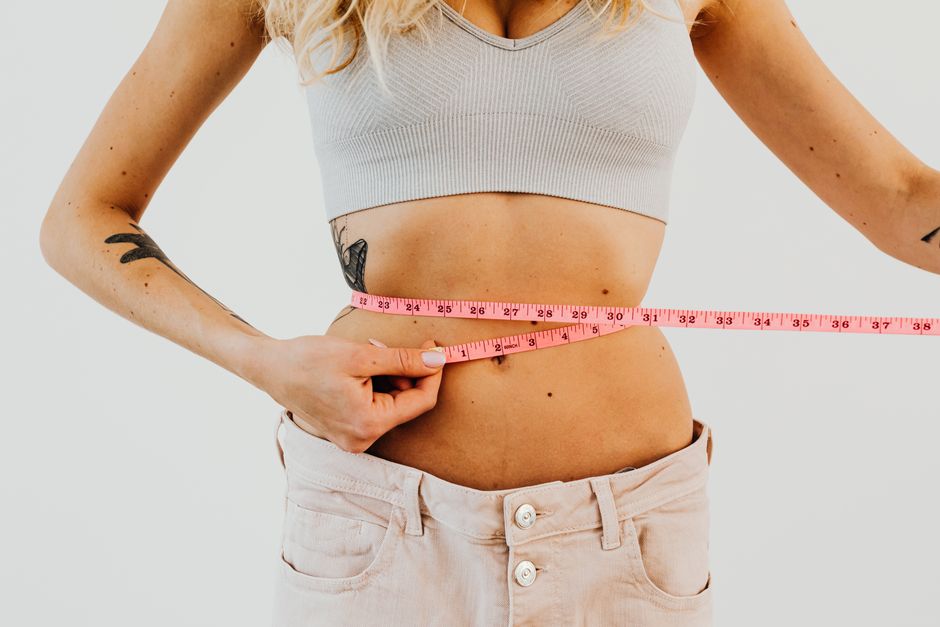
Measuring your waist correctly comes down to one thing: finding the narrowest point of your torso, usually just above the belly button, and wrapping a tape measure around it while you breathe out normally. The tape should sit snug against your skin without pressing in. You read the number at the end of a normal exhale, not while sucking your stomach in. That single measurement tells you more about your metabolic health than the number on your bathroom scale.
Why Does Waist Size Matter More Than Weight?
Where your body stores fat matters more than how much you weigh. Fat packed around the abdominal organs, called visceral fat, behaves differently from fat under the skin on your hips or thighs. Visceral fat releases inflammatory signals and free fatty acids that affect how your body handles insulin and blood lipids.
This is why two women can weigh the same and have very different metabolic risk. A woman with a larger waist carries more visceral fat regardless of what the scale says. Research consistently shows that waist circumference predicts cardiovascular and metabolic risk independently of body mass index.
BMI still has value as a quick population-level tool. But it cannot tell where your fat sits. A muscular woman and a woman with central obesity can share the same BMI. Waist measurement fills that gap.
What Is the Correct Way To Measure Your Waist at Home?
You need a flexible tape measure, the kind used for sewing. A metal construction tape will not wrap accurately around your body. Stand in front of a mirror so you can see the tape is level all the way around.
Follow these steps:
- Stand upright with your feet close together and your weight evenly balanced.
- Exhale normally and stop. Do not hold your breath or pull your stomach in.
- Find the narrowest part of your torso. This is usually just above your navel, but it varies by body shape.
- Wrap the tape around your bare skin or a thin layer of clothing, not over thick fabric.
- Check in the mirror that the tape is parallel to the floor in the back and not twisted.
- Pull the tape snug but not tight. It should touch your skin without denting it.
- Read the number at the point where the tape meets itself.
Measure twice. If the two numbers differ by more than a small amount, adjust your technique and try again.
Where Exactly Is Your Natural Waist?
Most people assume the waist is at the belly button. For many women it is not. The natural waist is the narrowest point between your lowest rib and the top of your hip bone. On some women this sits well above the navel. On others it is close to it.
Bend sideways to find it. The crease that forms on your side marks roughly where your natural waist is. That crease is a reliable landmark when the mirror is not giving you a clear answer.
If you genuinely cannot find a narrowest point, which happens with an apple-shaped body, measure at the level of your belly button instead. Note which landmark you used so your future measurements stay consistent.





Common Mistakes That Throw Off the Number
The most frequent error is sucking in the stomach. It can change the reading noticeably and it defeats the purpose of tracking. You want the number your body actually produces at rest.
Other errors that distort results:
- Measuring over a thick sweater or jeans. Clothing adds inches that are not you.
- Letting the tape slope downward in the back. A slanted tape measures a longer path and inflates the number.
- Pulling the tape so tight it compresses the skin. This reads smaller than reality.
- Measuring right after a large meal or at the end of the day. Bloating and food volume can add to the reading.
- Measuring at a different spot each time. Consistency of location matters more than which landmark you choose.
One detail that surprises people: waist measurements can vary by a small amount depending on the time of day and whether you have eaten. For tracking purposes, measure at the same time under the same conditions. Morning before eating is a common choice.
What Waist Measurement Indicates Higher Health Risk?
For women, a waist circumference above 35 inches is generally considered to indicate increased health risk. This threshold comes from guidance used by the National Heart, Lung, and Blood Institute and other major health bodies. For men the corresponding threshold is 40 inches.
These cutoffs are not diagnostic. They flag elevated risk, not a disease. A woman below 35 inches is not automatically in the clear, and a woman above it is not automatically ill. The number is one signal among several.
Waist-to-height ratio has gained attention as another simple check. The general idea is that your waist should be less than half your height. A woman who is 64 inches tall would aim for a waist under 32 inches under that framework. This ratio is not yet part of formal diagnostic criteria in the same way as the 35-inch cutoff, but some researchers consider it a useful screening tool across different body types.
How To Measure Your Waist Correctly For Women Across Body Shapes
Body shape changes where the narrowest point sits, and it changes what a given number means. This is one place where a single rule does not fit everyone equally.
| Body Shape | Where the Waist Sits | Practical Note |
|---|---|---|
| Hourglass | Clear narrow point between ribs and hips | Easy to locate; measure at the dip |
| Pear | Narrow relative to hips, often higher up | Waist may read small even with higher total body fat |
| Apple | Little to no narrowing; waist close to bust | Measure at the navel if no clear narrowest point |
| Rectangle | Minimal curve; waist close to bust and hip width | Consistency of location matters most |
Apple-shaped women carry more of their fat centrally. That pattern is associated with higher metabolic risk at any given weight. The measurement itself is still valid. It just carries more weight as a warning sign for this group.
How Often Should You Measure and What Changes Mean
Measuring once every two to four weeks is enough for most people. Day-to-day fluctuations from food, hormones, and hydration make daily tracking noisy and discouraging. Trends over weeks tell you far more than any single reading.
Waist changes can happen without weight changes. Losing visceral fat through activity and dietary changes can shrink the waist before the scale moves. That is a real and meaningful shift, not a measurement error.
If your waist is increasing steadily over months, that is worth a conversation with a clinician. It can reflect fat gain, fluid retention, or other changes that deserve a professional look. A tape measure is a screening tool, not a diagnosis.
Keep a simple log. Date, number, and where you measured. Over a few months you will see your true trend instead of reacting to normal variation.
Frequently Asked Questions
Should I measure my waist at my belly button or above it?
Measure at your narrowest point, which for many women is just above the belly button. If you cannot find a narrowest point, use the belly button and stay consistent.
What is a healthy waist size for a woman?
A waist above 35 inches is generally considered to indicate increased health risk for women. Below that threshold, risk is lower but not zero, so other factors still matter.
Does sucking in my stomach change the measurement?
Yes, it can reduce the reading and make your tracking meaningless. Always measure at the end of a normal exhale with your muscles relaxed.
Can my waist size change without losing weight?
Yes, losing visceral fat can shrink your waist before the scale moves. This is why waist measurement adds information that weight alone does not provide.
