
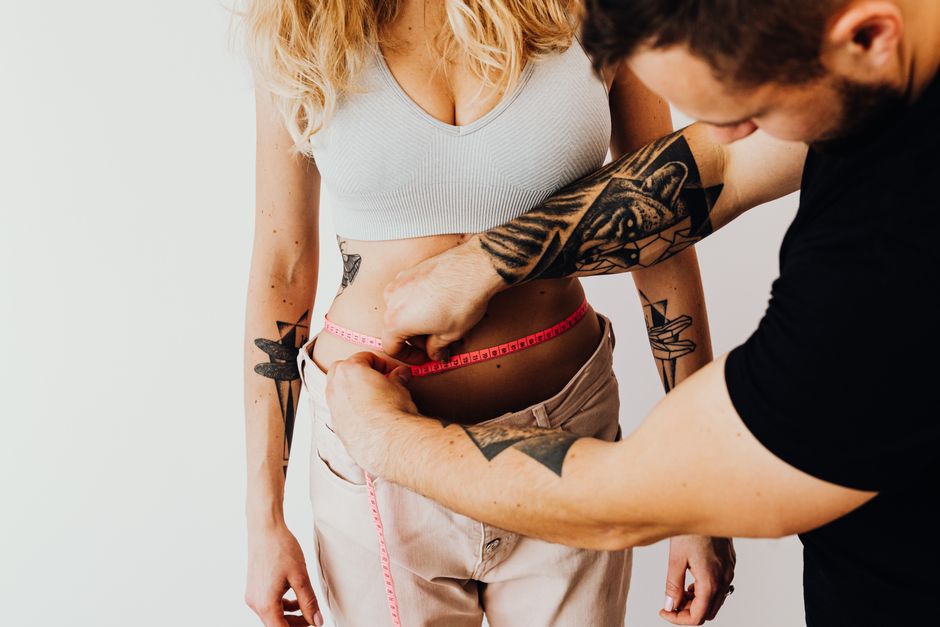
To measure your upper body for clothing, you need four core numbers: chest, waist, shoulder width, and sleeve length. Use a soft measuring tape held snug but not tight, keep it parallel to the floor, and measure over light clothing or bare skin. Have someone help you where possible — self-measuring your own chest and shoulders is where most errors happen.
Getting these numbers right takes about five minutes. Getting them wrong is why a shirt that fits at the neck pulls across the chest, or why sleeves that looked right online stop short of your wrist. The measurements themselves are simple. The technique is what people get wrong.
What Tools Do You Need To Measure Your Upper Body?
A soft, flexible measuring tape is the only essential tool. The kind used for sewing works best because it bends around the body and lies flat against curves.
If you only have a rigid metal tape measure, you can still get accurate results, but it will not follow the contour of your chest or shoulders as well. A piece of string marked and then laid against a ruler is a workable substitute, though it adds a step where errors creep in.
You also want a mirror, or better, a second person. A full-length mirror lets you check that the tape is level. A helper removes the guesswork entirely for chest and shoulder measurements, which are the hardest to take on yourself.
Wear light clothing or measure against bare skin. A thick sweater can add an inch or more to your chest measurement. The same goes for bulky undergarments. Measure in what you would typically wear under the garment you are buying.
How To Measure Your Upper Body For Clothing: The Four Core Measurements
These four numbers cover almost every upper-body garment: shirts, jackets, coats, and dresses with fitted bodices. Take them in this order.
Chest
Wrap the tape around the fullest part of your chest, usually across the nipple line. Keep the tape level all the way around — front, sides, and back. It should sit flat against your body without compressing it.
Stand relaxed with your arms at your sides. Do not puff out your chest or hold your breath. Breathe normally and read the number at the point where the tape meets itself.
For people with a larger chest, the fullest point may sit lower than the nipple line. Find where the tape naturally rests at its widest and measure there.
Waist
Your natural waist sits at the narrowest part of your torso, typically just above the belly button and below the bottom of your rib cage. Bend sideways — the crease that forms is roughly your natural waistline.
Keep the tape level and snug but not tight. Do not suck in your stomach. The waist measurement on a shirt or jacket is usually taken at this natural point, not at the top of your pants.
Shoulder Width
This is the measurement most people get wrong. It runs from the bony point at the outer edge of one shoulder to the same point on the other — across your back, not your front.
Feel for the edge of your shoulder bone where the arm begins. That is your landmark. Measure straight across the back of your shoulders between those two points.
A helper makes this much easier. Measuring your own shoulder width means reaching across your body and guessing where the tape lands on the far side. If you must do it alone, stand with your back to a mirror and use a wall or doorframe to anchor one end.
Sleeve Length
Sleeve length runs from the shoulder point — the same bony landmark — down the outside of your slightly bent arm to the wrist bone. Keep your arm relaxed and slightly bent, as it would hang naturally.
Some brands measure sleeve length from the center back of the neck, across the shoulder, and down to the wrist. Check the brand’s measuring guide before you buy. The two methods produce very different numbers.
How Should The Tape Sit When You Measure?
The tape should be snug enough to stay in place and loose enough to slide a finger underneath. That is the standard most tailors use.
Level matters as much as tension. A tape that dips at the back or rides up at the front will give you a number that does not match your body. Check in a mirror, or have someone look from behind.
Stand naturally. Do not straighten your posture beyond how you normally stand. Clothing is made for your real body, not a posed version of it.
Take each measurement twice. If the two numbers differ, take a third. Consistent readings tell you the technique is sound.




Why Do Your Measurements Not Match A Size Chart?
Size charts vary between brands, and sometimes between products from the same brand. A medium from one company can match a large from another. This is not a flaw in your measuring — it is how the clothing industry works.
Vanity sizing is part of it. Over the past several decades, the number on a label has drifted away from actual body dimensions, particularly in women’s clothing. A size that fit you ten years ago may not correspond to the same body measurement today.
The practical answer is to trust your measurements over the label. Compare your chest and waist numbers directly to the brand’s size chart, which is usually listed in inches or centimeters alongside each size.
Fit preference also matters. A slim-fit shirt and a relaxed-fit shirt in the same size are cut differently. Your measurements tell you what your body is. The garment’s cut tells you how it will sit on it.
| Measurement | Where To Place The Tape | Common Mistake |
|---|---|---|
| Chest | Fullest part of chest, level all around | Tape dips at the back |
| Waist | Narrowest part of torso, above belly button | Measuring at the pants waistline |
| Shoulder width | Bony edge to bony edge, across the back | Measuring across the front |
| Sleeve length | Shoulder point to wrist bone, arm slightly bent | Measuring with arm straight down |
Should You Measure Yourself Or Have Someone Help?
Have someone help if you can. Chest and shoulder width are the two measurements where self-measuring reliably introduces error.
When you measure your own chest, the tape tends to ride up at the back because your arms are lifted to hold it. When you measure your own shoulders, you are reaching across your body and cannot see where the tape lands on the far side.
If you are alone, use a mirror and take each measurement twice. Anchor one end of the tape against a wall for shoulder width, then step away and read the number. It is slower, but it works.
What About Neck, Bicep, And Torso Length?
These are secondary measurements. They matter for specific garments — dress shirts, tailored jackets, and athletic wear — but most casual clothing does not require them.
Neck: Measure around the base of your neck where a collar sits, adding about half an inch for comfort. Dress shirt sizing often uses this number directly.
Bicep: Measure around the fullest part of your upper arm with the arm relaxed. This matters for fitted sleeves and athletic tops.
Torso length: Measure from the top of your shoulder, near the neck, straight down to your natural waist. Some brands use this for fitted shirts and dresses.
Only take these if the garment’s size guide asks for them. Extra numbers you do not need add confusion, not accuracy.
How Do You Use Your Measurements To Choose A Size?
Compare your numbers to the brand’s size chart, not to your usual size. Start with chest and waist, since those determine whether a garment will button or zip comfortably.
If your chest and waist fall into different sizes, size to the larger measurement for fitted garments. Tailoring can take a garment in. It cannot add fabric that is not there.
For jackets and coats, chest and shoulder width matter most. Shoulder seams that sit past your natural shoulder point cannot be fixed by a tailor without major reconstruction.
Check the return policy before you buy. Measurements get you close. Trying the garment on is still the only way to know how it actually fits.
Frequently Asked Questions
Where exactly do you measure your chest for clothing?
Measure around the fullest part of your chest, usually across the nipple line, keeping the tape level all the way around. The tape should sit flat against your body without compressing it.
Do you measure shoulder width from the front or back?
Measure across the back, from the bony point at the outer edge of one shoulder to the same point on the other. Measuring across the front will give you an inaccurate number.
Should you measure over clothes or bare skin?
Measure over light clothing or bare skin, not over thick garments. A bulky sweater can add an inch or more to your chest measurement and throw off your size choice.
What if my chest and waist measurements fall into different sizes?
Size to the larger measurement for fitted garments, since tailoring can take a garment in but cannot add fabric. Check the brand’s return policy before buying.
