
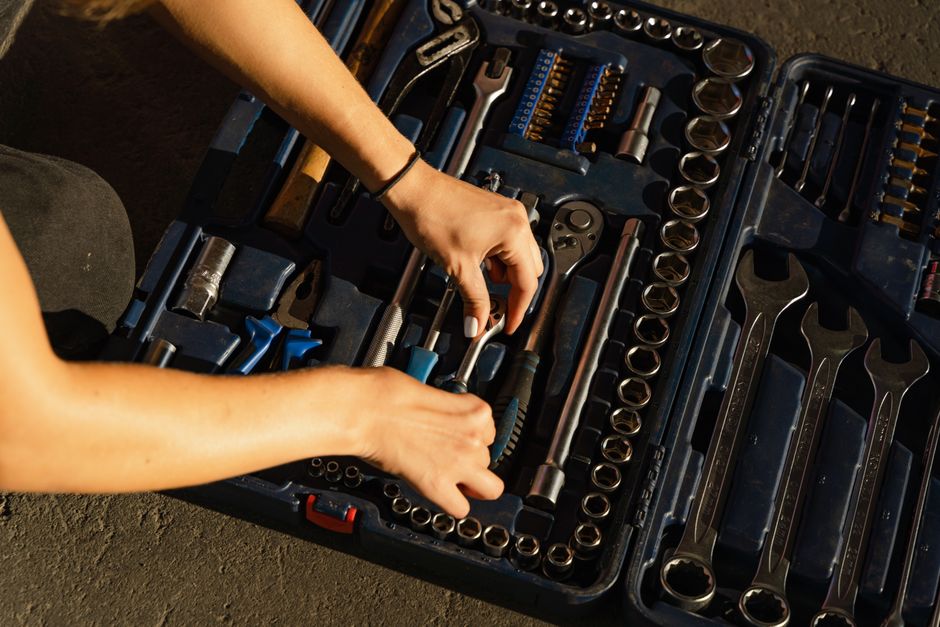
Measuring torque on a bolt means controlling how much twisting force is applied to it, and there are three main ways to do it: a calibrated torque wrench, a torque screwdriver for small fasteners, or a torque tester that checks the tool itself. Each method works by measuring either the force applied at a known distance or the resistance the fastener gives as it tightens. The tool you pick depends on the bolt size, the accuracy you need, and whether you are tightening fasteners for a car, a machine, or a home project.
Torque matters because a bolt that is too loose can vibrate free, and one that is too tight can stretch, strip, or break. Getting it right is about safety as much as it is about a good finish.
What Does Torque Actually Measure?
Torque is a measure of rotational force. It combines how hard you push with how far from the bolt’s center you push. The standard unit is the newton-meter (N·m), though in the US you will often see foot-pounds (ft-lb) and inch-pounds (in-lb).
The formula is simple: torque equals force times distance. If you press 10 pounds on a wrench one foot from the bolt, you apply 10 foot-pounds. Press the same 10 pounds two feet out, and you double the torque to 20 foot-pounds. This is why a longer wrench lets you tighten a bolt with less effort.
Here is the part many people miss. Torque is not the same as tension. What actually holds a joint together is the stretch in the bolt, called clamp load. Torque is just the easiest way to estimate that clamp load from the outside. The relationship between the two is imperfect because friction eats up a large share of the twisting force — in the threads and under the bolt head. That friction varies with lubrication, surface finish, and rust. So two bolts tightened to the same torque can end up with different clamp loads. This is a well-established limitation of torque as a measurement, not a flaw in your technique.
How To Measure Torque On A Bolt: Methods And Tools
The most common and practical method is a calibrated torque wrench set to the target value, turned until it signals that the value is reached. The tool does the measuring for you.
There are several tool types, and they work in different ways:
- Click-type torque wrench. A internal spring mechanism releases with a click when you hit the set torque. Common, affordable, and accurate if calibrated. The click is a signal, not a stop — you should stop pulling once you hear or feel it.
- Beam-type torque wrench. A flexible beam with a pointer that bends as you pull. It reads the torque on a scale in real time. No calibration spring to drift, but you must view the scale straight on to read it correctly.
- Electronic or digital torque wrench. Uses a strain gauge or sensor to display torque, often with audible and vibrating alerts. Generally more precise and easier to read than mechanical types.
- Torque screwdriver. For small fasteners where a full wrench is too big. Same principle, smaller scale.
- Torque multiplier. A geared device that multiplies the input torque, used for very large bolts where a person cannot apply enough force alone.
Whichever tool you use, the method is the same: set the target, apply force smoothly and steadily, and stop when the tool indicates the value. Jerking or bouncing on the handle gives a false reading.
Why Calibration Decides Whether Your Reading Is Real
A torque wrench that has never been checked is only a guess. Calibration confirms the tool reads accurately across its range. Without it, you have no idea whether the number on the dial matches the force actually applied.
Click-type wrenches are the most likely to drift because they rely on a spring that can weaken with use and time. Manufacturers typically recommend periodic calibration, and professional settings often require it on a set schedule. For home use, having a wrench checked periodically — or comparing it against a known-good tool — is sensible. The evidence here is practical rather than from large trials: calibration is standard practice in engineering and automotive settings, and the principle is sound.
Two habits protect accuracy. First, store click-type wrenches at their lowest setting so the spring is not left compressed. Second, never use a torque wrench as a breaker bar or hammer — the shock can damage the mechanism. A torque wrench measures; it does not loosen stuck bolts.





What About Angle and Stretch Methods?
Some fasteners are not specified by torque alone. Torque-to-yield bolts, common in modern engine heads, are tightened to a low torque and then turned a set number of degrees further. This is called the torque-angle method.
The reason is friction. Because torque is a poor predictor of clamp load, engineers sometimes skip it and measure the bolt’s stretch directly — either by angle of rotation or by physically measuring bolt length before and after. These methods are more accurate for critical joints, but they require specific specifications from the manufacturer. You should not substitute a torque value for an angle specification or the reverse. Follow what the fastener or vehicle maker states.
There is also a direct way to measure clamp load: a load cell or bolt extensometer placed in line with the fastener. This is used in laboratories and high-precision assembly, not typical home work. It confirms the point above — torque is an indirect estimate, and when accuracy truly matters, engineers measure tension itself.
Common Mistakes That Throw Off the Reading
Most torque errors come from technique, not the tool. A few are worth knowing.
- Using an extension or adapter. A straight extension along the axis of the bolt does not change torque much, but a wobble extension, universal joint, or crows-foot adapter changes the effective length and can alter the reading. When adapters are unavoidable, the manufacturer’s correction guidance applies.
- Pulling at an angle. Force should be applied perpendicular to the wrench handle. Pulling sideways or at an angle reduces the true torque.
- Reading a beam wrench off-axis. If your eye is not directly above the pointer, you misread the scale.
- Reusing torque-to-yield bolts. These bolts stretch permanently when tightened and are generally designed for one use. Reusing them can lead to failure. Check the specification.
- Ignoring thread condition. Dirty, rusty, or over-lubricated threads change friction and therefore the clamp load for a given torque. Clean threads and the specified lubricant matter.
Which Tool Fits Which Job?
Match the tool to the fastener and the accuracy required. A rough guide:
- Bicycle and small equipment bolts: a torque screwdriver or small inch-pound wrench.
- Automotive lug nuts and general fasteners: a click-type or digital torque wrench in the appropriate foot-pound range.
- Engine and critical assemblies: follow the manufacturer’s torque and angle specifications exactly, often with a digital wrench.
- Large industrial bolts: a torque multiplier, with calibration checks.
Pick a wrench whose range covers your target near its middle. A tool used at the very bottom of its range is generally less accurate than one used mid-range. This is a practical guideline rather than a hard rule, but it holds across most mechanical torque tools.
Do You Need a Torque Tester at Home?
A torque tester is a device that checks whether your wrench is accurate. It is standard equipment in shops and calibration labs. For most home users, buying one is not necessary. Having a wrench professionally checked periodically, or comparing it to a known-good tool, covers the same ground at lower cost.
What matters most is that you know your tool is trustworthy. A cheap, uncalibrated wrench can be worse than careful hand-tightening because it gives false confidence. A checked tool, used with steady technique and the right specification, is reliable.
Frequently Asked Questions
What is the most accurate way to measure torque on a bolt?
For most work, a calibrated digital torque wrench gives the most precise and readable result. For critical joints, measuring bolt stretch or using the torque-angle method is more accurate than torque alone.
Can I measure torque without a torque wrench?
You can estimate it by applying a known force at a known distance, but this is imprecise and not recommended for safety-critical fasteners. A calibrated torque wrench is the reliable method.
How often should a torque wrench be calibrated?
Manufacturers typically recommend periodic calibration, and professional settings often follow a set schedule. For home use, having it checked periodically or compared against a known-good tool is sensible.
Does a longer wrench change the torque reading?
A longer wrench lets you apply more torque with the same effort, but a properly set wrench still signals at its target value. What changes is the force you need, not the torque delivered.
