
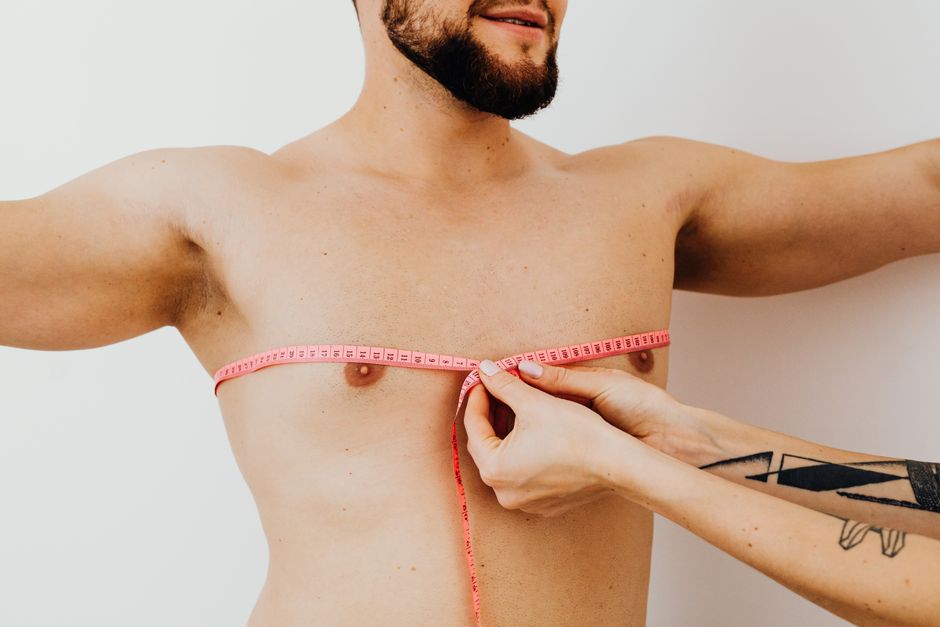
Measuring shoulder width for bodybuilding is straightforward if you use the right landmarks. Place the tape measure at the widest point of your deltoid muscles on both sides, keeping it parallel to the floor, and record the number. For a more skeletal measurement that removes muscle size from the equation, measure between the outer edges of your acromion bones, which are the bony tips at the top of your shoulders.
Why Shoulder Width Matters in Bodybuilding
Shoulder width creates the V-taper that bodybuilding judges look for. A wider shoulder line makes the waist appear smaller by comparison. This visual contrast is one of the most important aesthetic goals in the sport.
Your shoulder width is largely determined by your clavicle bones. The clavicles are fixed in length by genetics and cannot be lengthened through training. What you can change is the size of your deltoid muscles sitting on top of those bones. This is why two people with the same skeletal frame can look very different in shoulder width.
Competitive bodybuilders care about this measurement because it directly affects stage presentation. A wider shoulder-to-waist ratio is consistently associated with higher scores in physique competitions. The measurement itself is less important than the proportion it creates with your waist.
How To Measure Shoulder Width For Bodybuilding: Step-by-Step
You need a flexible tape measure and ideally a partner to help. Self-measuring is possible but less accurate because reaching across your body can shift the tape.
Stand upright with your arms relaxed at your sides. Your shoulders should be in a neutral position, not rolled forward or pulled back. Find the widest point of each deltoid muscle. This is usually about halfway down the shoulder, where the muscle bulges most laterally.
Place the end of the tape at that point on your left shoulder. Run the tape across your upper back, keeping it parallel to the floor. Do not let it dip down your back or ride up toward your neck. Read the measurement where the tape meets your right shoulder.
Take three measurements and use the average. Muscle size can vary slightly day to day with hydration and training status. Measuring at the same time of day, preferably before training, gives the most consistent results.
The Bone Measurement Method
If you want to track skeletal width separately from muscle size, measure the biacromial width. This is the distance between the outer edges of your acromion processes. The acromion is the bony bump you can feel at the top of your shoulder, just before the muscle begins.
To find it, raise your arm slightly and feel along the top of your shoulder. You will feel a hard bony ridge. That is the acromion. Mark both sides with a small dot or just hold your fingers on the points.
Have your partner measure between these two bony landmarks across your upper back. This measurement will not change with training because bone does not respond to exercise. It gives you your true structural shoulder width.
Bodybuilders often track both numbers. The bone measurement tells you your genetic ceiling. The muscle measurement tells you how much deltoid mass you have added on top of that frame.




Common Mistakes That Skew Your Numbers
Several errors can make your shoulder width measurement inaccurate. The most common is measuring from the front instead of the back. The tape must cross your upper back to capture the true widest points.
Another mistake is letting the tape angle downward. If the tape is not parallel to the floor, you will get a longer measurement that does not represent actual width. Check in a mirror that the tape is level on both sides.
Flexing your shoulders during measurement inflates the number. Relaxed deltoids give the true resting width. If you flex, you are measuring a temporary contraction, not your actual shoulder width.
Measuring after a shoulder workout also skews results. Training increases blood flow to the deltoids, temporarily increasing their size. Measure on a rest day or before training for consistent numbers.
What Is a Good Shoulder Width Measurement?
There is no single ideal number because shoulder width must be interpreted relative to height and waist size. A width that looks balanced on a tall lifter may look narrow on a shorter one.
For men, the average biacromial width is roughly 15 to 18 inches. For women, it is typically 13 to 15 inches. These are population averages, not targets for competition.
More important than the raw number is the shoulder-to-waist ratio. Many physique competitors aim for a waist that is noticeably smaller than their shoulder measurement. A common aesthetic benchmark is a shoulder-to-waist ratio around 1.6 to 1.7, though individual results vary widely.
Do not compare your numbers to someone else’s directly. Body structure varies by height, frame size, and genetics. Track your own measurements over time to see progress rather than chasing a specific number.
Can You Increase Shoulder Width?
You cannot change your clavicle length. That is fixed by your genetics. But you can increase the muscle mass around your shoulders, which adds visible width.
The deltoid muscle has three heads: anterior, lateral, and posterior. The lateral head is the one that creates width when viewed from the front. Training this head specifically with lateral raises is the most direct way to add visible shoulder width.
Building the upper back muscles also contributes to the appearance of width. The rear deltoids and upper traps fill out the shoulder line from behind and from the side. A well-developed back makes the shoulders look broader even if the bone measurement stays the same.
Some people ask about clavicle lengthening surgery. This procedure exists but is rare, carries significant risks, and is not recognized as a standard bodybuilding practice. No reputable bodybuilding organization endorses it. The realistic path to wider shoulders is building deltoid and upper back mass.
Shoulder Width vs. Shoulder Circumference
These are two different measurements that people often confuse. Shoulder width is a straight horizontal line across the back. Shoulder circumference is the distance around the entire shoulder girdle.
Circumference is measured by wrapping the tape around both shoulders and under the armpits. This captures the thickness of your deltoids, chest, and upper back together. It is a useful measure of overall upper body size.
Bodybuilders track both. Width tells you about your frame and V-taper. Circumference tells you about total upper body mass. They change at different rates and respond to different training emphases.
If you only track one, width is more relevant for the aesthetic of broad shoulders. Circumference is more relevant for overall size goals. Track both for a complete picture of your upper body development.
How Often Should You Measure?
Measuring once every four to six weeks gives you a realistic picture of progress. Muscle growth is slow, and measuring weekly will mostly show daily fluctuation rather than actual change.
Take your measurement at the same time of day under the same conditions each time. Morning measurements before eating or training are the most consistent. Record the number in a training log so you can compare over months and years.
If the number is not moving, that is useful information too. It may mean you need to adjust your training volume, exercise selection, or calorie intake. A stagnant measurement is a signal to change something, not a reason to obsess.
Frequently Asked Questions
What is the most accurate way to measure shoulder width?
The most accurate method is measuring between the outer edges of your acromion bones with a flexible tape across your upper back. This captures skeletal width without being affected by muscle size or posture.
Should I measure shoulder width with arms down or flexed?
Measure with your arms relaxed at your sides. Flexing your deltoids inflates the measurement and does not reflect your actual resting shoulder width.
How much can shoulder width increase with training?
Bone width cannot change, but deltoid muscle growth can add roughly one to two inches of visible width over years of consistent training. Individual results depend on genetics, training quality, and nutrition.
Does shoulder width include the deltoid muscle?
It depends on the method. A tape measure across the widest point of your shoulders includes deltoid mass. Measuring between the acromion bones excludes muscle and captures only the skeletal frame.
