
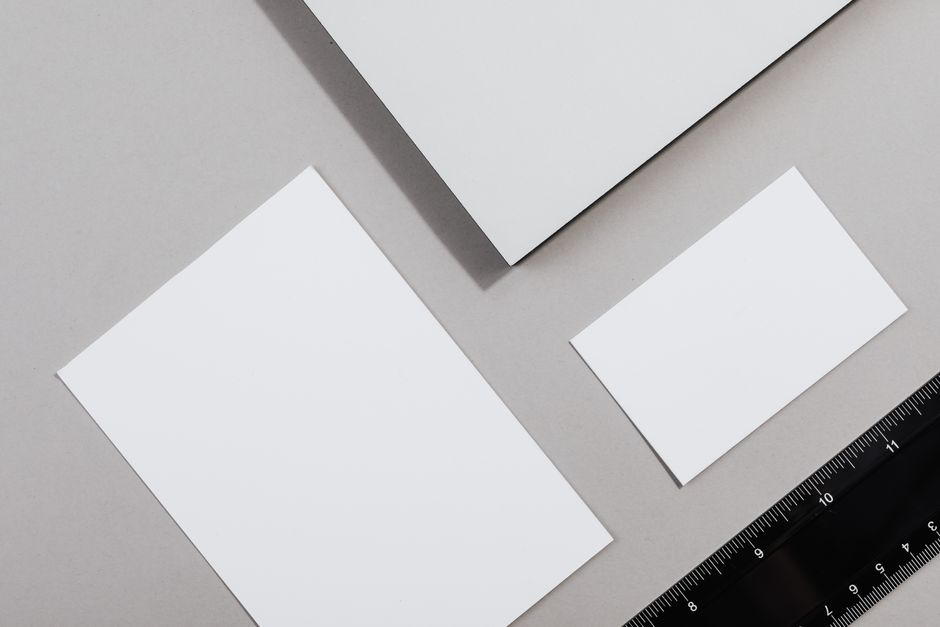
Paper size, thickness, and weight are not guesses. They are measured with specific tools and standards. Size is measured in inches or millimeters using a ruler. Thickness is measured with a caliper or micrometer. Weight is measured on a scale and expressed as pounds or grams per square meter. Each measurement answers a different question about the paper you are using.
How To Measure Paper Size Thickness And Weight
The method depends on which property you need. Start with size because it is the simplest. Lay the paper flat on a table. Use a steel ruler or tape measure for accuracy. Measure the length and width from edge to edge. Record both numbers in inches or millimeters. Standard printer paper in the US measures 8.5 by 11 inches. That is the dimensional size.
Thickness requires a different tool. A regular ruler cannot measure the thickness of a single sheet accurately. Paper is too thin. You need a caliper or a micrometer. These tools measure in thousandths of an inch or microns. One micron is one-thousandth of a millimeter. Open the caliper jaws, place the paper between them, and close gently until they touch the sheet. Read the measurement on the display or dial.
Weight is the third measurement. Paper weight is not the same as the weight of a single sheet you hold. It is a standardized number. In the US, paper weight is the weight of a ream. A ream is 500 sheets. The paper is weighed in its uncut “basis” size, which varies by paper type. This is why 20-pound bond paper and 65-pound cover stock feel very different despite both being called “paper.”
What Is The Difference Between Paper Weight And Thickness
Weight and thickness are related but not identical. Weight tells you how dense the paper is per unit area. Thickness tells you the physical distance between the two surfaces of the sheet. Two papers can have the same weight and different thickness. This happens when one paper is more compressed or has a different fiber structure.
Think of it like comparing a dense brick and a fluffy loaf of bread. Both can weigh the same. The brick is thin and heavy for its size. The bread is thick and light. Paper behaves the same way. A high-quality art paper may be thick and light. A cheap copy paper may be thin and heavy for its thickness.
This distinction matters for printing. A printer that accepts 20-pound bond paper may jam on a 20-pound cover stock if the cover stock is thicker. The weight number is the same, but the physical thickness is not. Always check both numbers, not just one, when choosing paper for a project.
How To Measure Paper Thickness Without A Caliper
You can estimate thickness without specialized tools, but the result is less precise. Stack a known number of sheets. Use 50 or 100 sheets for better accuracy. Measure the total height of the stack with a ruler. Divide that number by the number of sheets. The result is the average thickness per sheet.
For example, if 100 sheets stack to 0.4 inches, each sheet is about 0.004 inches thick. This method works best with a stack that is compressed evenly. Use a heavy book or a flat weight on top to press out air between the sheets before measuring. The result is an estimate, not a precise measurement. If you need exact numbers for a professional job, buy a caliper.
Digital calipers are affordable and widely available. They measure in both inches and millimeters. A basic model costs less than a ream of premium paper. For anyone who works with paper regularly, the tool pays for itself quickly.





What Does GSM Mean For Paper
GSM stands for grams per square meter. It is the metric standard for paper weight. The number tells you how much one square meter of the paper weighs in grams. This system is used everywhere outside the US and in most professional printing industries inside the US as well.
GSM is more consistent than the US basis weight system. The US system uses different base sizes for different paper types. Bond paper is based on a 17 by 22 inch sheet. Cover stock is based on a 20 by 26 inch sheet. Text paper uses a 25 by 38 inch sheet. Comparing weights across these types requires math. GSM avoids that problem entirely. One number works across all paper types.
Common GSM values give you a reference point. Standard office copy paper is around 75 to 90 GSM. Lightweight paper for forms or airmail is 50 to 60 GSM. Brochures and flyers use 120 to 170 GSM. Business cards and postcards use 250 to 350 GSM. These ranges are general guidelines, not strict rules.
To convert US basis weight to GSM, you need the specific conversion factor for that paper type. For bond paper, multiply the basis weight by 3.76. For cover stock, multiply by 2.71. These are standard conversion factors used in the paper industry. If you are not sure which type you have, check the package label.
What Are The Standard Paper Sizes
The US uses the Letter system for most everyday paper. Letter size is 8.5 by 11 inches. Legal size is 8.5 by 14 inches. Tabloid size is 11 by 17 inches. These are the three most common sizes in offices and homes across the United States.
The rest of the world uses the ISO 216 standard. The A-series is the most common. A4 paper is 210 by 297 millimeters, which is about 8.27 by 11.69 inches. A4 is slightly narrower and taller than US Letter. That difference matters when printing documents designed for the other system.
The A-series has a useful property. Each size is half the area of the previous size. A3 is twice the size of A4. A4 is twice the size of A5. The aspect ratio stays the same at every size. This means you can scale a document from A4 to A3 without cropping or distortion. The US Letter system does not have this property.
Envelope sizes follow their own standards. A standard business envelope is called a #10 envelope. It measures 4.125 by 9.5 inches. It fits a Letter size sheet folded into thirds. This is why most business letters use the same fold pattern.
How To Read Paper Packaging Labels
Paper packaging labels contain all the information you need, but the format can be confusing. The label usually lists the basis weight, the GSM, and the sheet count. It may also list the thickness in points or mils. A point is one-thousandth of an inch. A mil is also one-thousandth of an inch. The two terms are interchangeable.
Bond paper is often labeled as 20-pound or 24-pound. This refers to the weight of 500 sheets of the uncut base size. The actual ream you buy may weigh less because it is cut to Letter size. A ream of 20-pound Letter size paper weighs about 5 pounds. The “20-pound” number is the standard measure, not the actual weight of the package.
Cardstock is labeled in points. A common label is “12 pt cardstock.” This means the paper is 0.012 inches thick. Another common label is “110 lb cardstock.” This means the basis weight is 110 pounds. These two labels describe different properties of the same material. Thickness and weight are both listed because both matter for different uses.
Look for the GSM number on the label for the most direct comparison. A label that says 100 GSM is the same paper density regardless of the brand or the country of origin. GSM is the universal language of paper measurement.
Why Paper Measurement Matters For Printing
Printers have specific paper requirements. The printer manual lists acceptable weight ranges for the paper tray. Using paper outside that range causes jams, misfeeds, and poor print quality. Thin paper may curl or wrinkle during printing. Thick paper may not feed properly through the rollers.
Inkjet printers are more forgiving of paper variety than laser printers. Inkjet printers spray liquid ink onto the paper surface. They work with a wider range of paper weights and finishes. Laser printers use heat to fuse toner powder onto the paper. The heat can warp thin paper or damage thick paper that is not designed for it.
Paper measurement also matters for postage. The US Postal Service charges more for envelopes that are rigid, uneven, or too thick. A standard business envelope with a few sheets of 20-pound paper is flexible and uniform. It qualifies for regular letter postage. A card made from heavy cardstock may be classified as a rigid envelope and cost more to mail.
For professional printing jobs, the paper specifications are usually listed in the project requirements. A print shop may ask for 100 GSM text paper or 14 pt cover stock. Knowing what these numbers mean lets you compare options and choose the right material for your project.
Frequently Asked Questions
What tool measures paper thickness?
A caliper or micrometer measures paper thickness accurately. These tools measure in thousandths of an inch or microns.
Is 80 GSM paper the same as 20-pound paper?
Not exactly. 80 GSM is roughly equivalent to 21-pound bond paper, but the conversion is not exact. Check the label for both numbers if you need a specific match.
How many sheets are in a ream of paper?
A standard ream contains 500 sheets of paper. This is the industry standard in the US and most other countries.
What is the thickness of standard printer paper?
Standard 20-pound bond paper is about 0.004 inches thick, which is 4 mils or roughly 100 microns. This varies slightly by brand and manufacturing process.
