
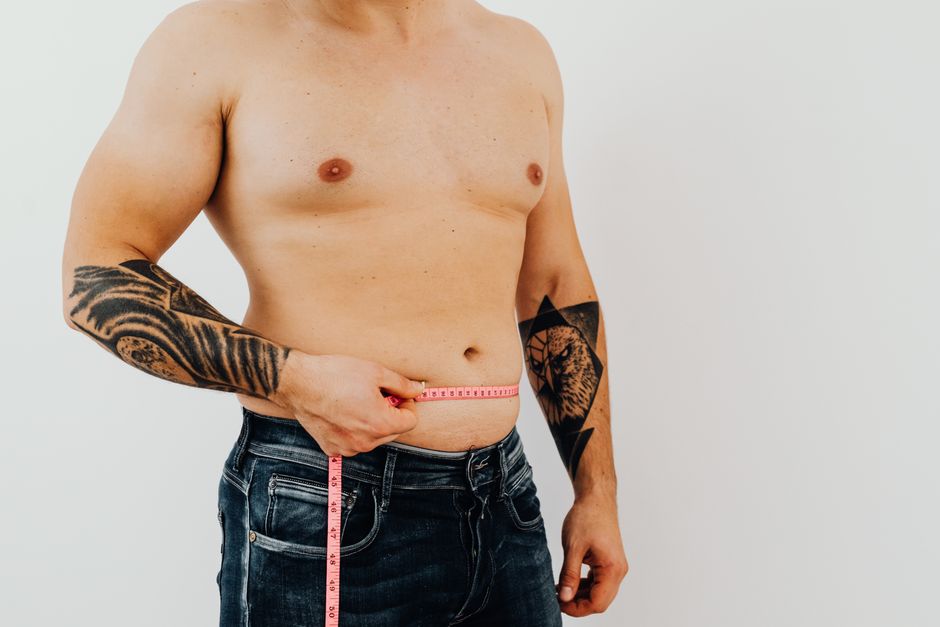
You need to know your girth for a clothing order, a woodworking project, or a health tracking goal, and you do not have a measuring tape anywhere in the house. You can get a reliable measurement using common household items like string, paper, or a dollar bill, combined with a standard ruler. The process is simple: wrap a non-stretch material around the widest part of the object, mark the overlap point, and then measure that length against a flat ruler.
What Is the Most Accurate Way to Measure Girth Without a Tape?
The most accurate method uses a piece of string, a pen, and a rigid ruler. You need a string that does not stretch, such as cotton twine, dental floss, or a shoelace. Wrap it snugly around the widest part of the area you are measuring. Hold it flat against the skin or surface without pressing in. Mark the exact point where the string meets its own end with a pen. Lay the string flat on a table and measure from the end to the mark using a ruler.
This method works because you are transferring a curved measurement onto a straight line. A flexible tape measure does exactly the same thing. The string method is accurate to within a quarter of an inch if you keep the string level and tight.
How To Measure Girth Without Measuring Tape At Home Using Paper
A strip of paper works just as well as string. Cut a piece of printer paper into a long strip about one inch wide. Wrap it around the object or body part you want to measure. Overlap the ends slightly and mark where the paper meets itself. Then lay the paper strip against a ruler and read the length.
Paper has one advantage over string: it does not stretch. A paper strip holds its shape while you mark it, which reduces error. The main risk is tearing, so handle it gently. For larger measurements, tape two strips together end to end, but make sure the tape does not overlap the measuring area.
Which Household Items Have a Known Length?
Several common items have standardized lengths that you can use as a reference. A US dollar bill is exactly 6.14 inches long. A standard sheet of printer paper is 11 inches long. A standard business envelope is 9.5 inches long. A standard brick is 8 inches long. These items give you a rough estimate when you have no ruler at all.
To use this method, wrap your string around the girth, then lay the string next to the known item. Count how many full lengths fit, then estimate the remainder. For example, if your string is slightly longer than one dollar bill, your girth is just over 6 inches. This method is less precise than using a ruler, but it gives you a useful ballpark figure.





How to Get the Most Accurate Reading
Accuracy depends on three things: the material you wrap, the tension you use, and where you place the measurement. Use a material that does not stretch. Nylon rope and elastic bands will give you false readings because they deform under tension. Cotton string, paper, or unwaxed dental floss are the best choices.
Wrap the material snugly but not tightly. If you compress soft tissue or flexible material, your reading will be smaller than the true measurement. For body measurements, stand naturally and breathe normally. For objects, measure at the widest point, which is usually the midpoint for cylinders like pipes or tree trunks.
Take the measurement twice. If the two readings differ by more than a quarter inch, measure a third time. The most common source of error is the mark slipping as you remove the string. Hold the mark with your fingertip while you lift the string off.
Common Mistakes That Ruin the Measurement
The biggest mistake is using a stretchy material. A rubber band or elastic hair tie will give you a smaller number than your actual girth. The second most common error is measuring at an angle. The string must be perpendicular to the long axis of the object. If you wrap it diagonally, you will get a larger reading than the true circumference.
Another frequent error is pulling the string too tight. For body measurements, the string should sit against the skin without leaving an indentation. For objects, it should touch the surface completely without gaps. A gap on one side means the string is not level, and your reading will be too large.
Finally, do not estimate the mark. If you eyeball where the string meets, you introduce error. Make a clear, small mark with a pen or use a piece of tape to hold the overlap point. Then measure from the end of the string to that mark.
How to Measure Girth When You Have No Ruler Either
If you have no ruler and no known-length items, you can still get a rough measurement using your own body parts. Your hand span, from the tip of your thumb to the tip of your little finger when spread wide, is roughly 8 to 9 inches for most adults. Your index finger from the tip to the first knuckle is about one inch. Your foot length, from heel to toe, is close to your shoe size in inches for most adults.
These estimates vary from person to person, so they are only useful for a very rough idea. For anything where precision matters, such as a medical fitting or a custom order, wait until you have access to a proper tape measure or ruler. No household substitute matches the accuracy of a calibrated measuring tool.
Why Precise Girth Measurement Matters for Health Tracking
Waist circumference is a widely used health indicator. Research consistently shows that excess abdominal fat is associated with higher risk of cardiovascular disease and metabolic conditions. The measurement itself is simple, but the interpretation depends on accuracy. A difference of one inch can change how a person’s risk is categorized.
For this reason, health professionals recommend using a flexible tape measure placed at the top of the hip bone, wrapped around the abdomen at the level of the belly button. The tape should be snug but not compress the skin. If you are tracking changes over time, use the same landmark every time. Measuring at slightly different heights can produce false results that look like weight gain or loss.
If you are measuring for fitness progress, consistency matters more than absolute precision. The same string and ruler method used each week will show trends accurately, even if the absolute number is slightly off from a professional measurement.
How To Measure Girth Without Measuring Tape At Home for Clothing and Orders
When you need a measurement for a custom garment, a ring, or a hat, the string method is reliable enough for most purposes. For rings, wrap the string around the base of the finger and mark it, then measure against a ruler. Compare your result to a ring size chart. For hats, measure around the forehead just above the eyebrows. For pants, measure around the waist at the level where you normally wear them.
Avoid measuring over bulky clothing. For waist measurements, measure directly against your skin or over a thin undergarment. For head measurements, remove hats and heavy hair accessories. For finger measurements, measure at the end of the day when fingers are slightly larger.
If your measurement falls between two sizes on a chart, size up for comfort items like rings and hats, and size down for fitted items like compression garments. When in doubt, contact the manufacturer and ask about their sizing method, because sizing standards vary between brands.
Frequently Asked Questions
Can I use a phone app to measure girth?
Yes, some augmented reality apps can measure distance using your phone camera, but accuracy varies widely and they are not reliable for curved surfaces. The string and ruler method is more accurate for most home use.
Is a dollar bill exactly 6 inches long?
A US dollar bill is 6.14 inches long, which is slightly over 6 inches. This small difference matters if you are using it as a measuring reference for precise work.
How tight should the string be when measuring waist girth?
The string should be snug against the skin without leaving an indentation or compressing the tissue. For waist measurements, stand relaxed and breathe out gently before marking the string.
What is the widest point for measuring an object’s girth?
For most cylindrical objects, the widest point is the midpoint of the length. For body parts, the widest point varies, so use anatomical landmarks like the belly button for waist or the fullest part of the bicep.
