
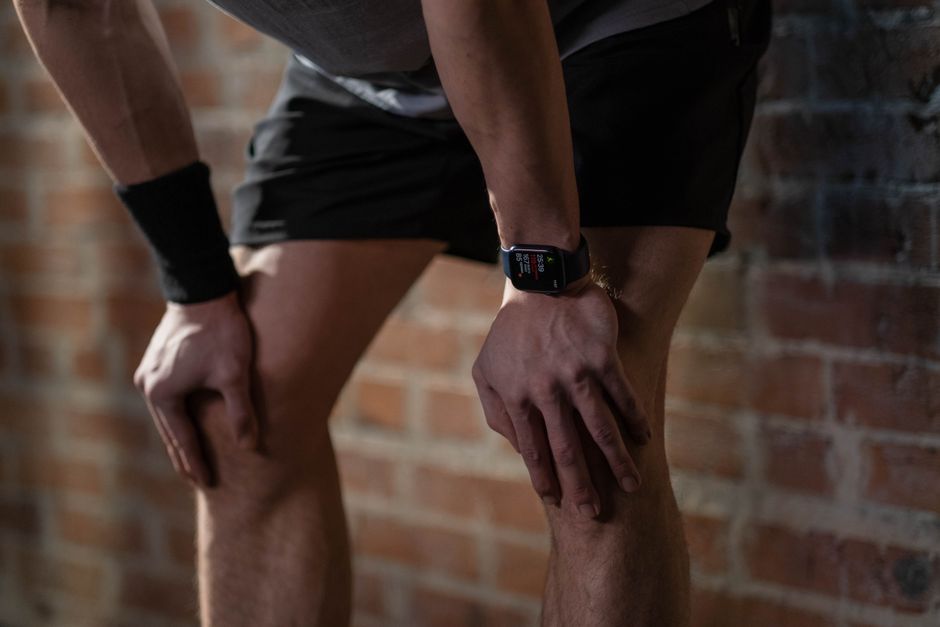
You can measure your endurance with a few simple fitness tests done at home or in a gym. The Cooper 12-minute run test, the 1.5-mile run, and the 3-minute step test are all proven ways to assess your cardiovascular fitness. These tests give you a clear number or time to track, so you know if your training is working.
What Exactly Is Endurance in Fitness?
Endurance is your body’s ability to keep doing physical work over time. It is not the same as strength. Strength is about how much force you can produce. Endurance is about how long you can sustain an effort.
There are two main types. Cardiovascular endurance is how well your heart and lungs deliver oxygen to your muscles. Muscular endurance is how long a specific muscle group can keep contracting. Most endurance tests focus on cardiovascular endurance because it is easier to measure and directly relates to overall health.
Your endurance level is a strong predictor of your long-term health. Research consistently shows that people with higher cardiovascular fitness live longer and have lower risks for heart disease, diabetes, and stroke.
How To Measure Endurance With Proven Fitness Tests
The Cooper 12-minute run test is one of the most reliable ways to measure endurance. You run as far as possible in 12 minutes on a flat track or treadmill. Then you compare your distance to age and gender norms.
For a 40-year-old man, running less than 1.2 miles in 12 minutes is considered poor. Running more than 1.6 miles is above average. For a 40-year-old woman, less than 1.0 mile is poor and more than 1.4 miles is above average. These numbers come from the Cooper Institute, which developed the test in 1968.
Here is a quick reference table for the Cooper test distances by age group:
| Age | Men – Poor | Men – Excellent | Women – Poor | Women – Excellent |
|---|---|---|---|---|
| 20-29 | Under 1.3 miles | Over 1.8 miles | Under 1.1 miles | Over 1.6 miles |
| 30-39 | Under 1.2 miles | Over 1.7 miles | Under 1.0 miles | Over 1.5 miles |
| 40-49 | Under 1.2 miles | Over 1.6 miles | Under 1.0 miles | Over 1.4 miles |
| 50-59 | Under 1.1 miles | Over 1.5 miles | Under 0.9 miles | Over 1.3 miles |
The 1.5-mile run test is another proven option. You run 1.5 miles as fast as you can and record your time. A 40-year-old man finishing in under 12 minutes is excellent. Under 15 minutes is average. A 40-year-old woman under 13 minutes is excellent. Under 16 minutes is average.
What Is the 3-Minute Step Test?
This test is ideal if you do not have space to run or you have joint issues. You step up and down on a 12-inch step for three minutes at a steady pace of 24 steps per minute. After finishing, you sit down and take your heart rate for one minute.
A lower heart rate after the step test means better endurance. For a 40-year-old man, a heart rate under 90 beats per minute is excellent. Between 90 and 110 is average. Above 110 suggests room for improvement. For a 40-year-old woman, under 95 is excellent, 95 to 115 is average, and above 115 needs work.
The step test is less accurate than the run tests but much safer for beginners. It gives you a useful baseline without pushing your joints hard.





How to Test Your Muscular Endurance
Cardiovascular tests are not the whole picture. Muscular endurance matters too. The push-up test and the plank test are the most commonly used measures.
For the push-up test, do as many push-ups as you can without stopping. Keep your body straight and lower your chest to the floor each time. For men, 20 or more push-ups is average. For women, 10 or more is average. These numbers drop with age, but consistent training keeps them higher.
The plank test measures core endurance. Hold a plank position as long as you can. A 40-year-old holding for 90 seconds or more is excellent. 60 seconds is average. Under 30 seconds suggests weak core endurance.
Some studies suggest that push-up capacity is linked to heart health. Men who can do 40 or more push-ups have significantly lower risk of heart disease. This does not mean push-ups prevent heart disease. It means push-up capacity is a useful marker of overall fitness.
How Often Should You Test Your Endurance?
Testing every four to six weeks gives you enough time to see real improvement. Testing too often, like every week, can be misleading because daily energy and hydration affect your performance.
Pick one test and stick with it. Do not switch between the Cooper run and the step test. Each test measures endurance slightly differently, so changing tests makes it hard to compare results.
Write down your results each time. A simple notebook or phone note works. Track your distance, time, or heart rate. After four to six weeks, repeat the exact same test under similar conditions. If your distance is longer or your heart rate is lower, your endurance is improving.
What Factors Can Mess Up Your Test Results?
Many things affect your test results that have nothing to do with your actual fitness level. Sleep quality matters. If you slept poorly the night before, your heart rate will be higher and your performance will drop.
Hydration is another factor. Being even slightly dehydrated raises your heart rate and makes exercise feel harder. Drink water throughout the day before your test, not just right before.
Temperature and humidity change your results too. Running in 90-degree heat is harder than running in 60-degree weather. If you test in summer and again in winter, the temperature difference alone can shift your numbers by 5 to 10 percent.
Do not test when you are sick or recovering from illness. Your body needs full energy to give a true reading. Wait at least one week after you feel fully recovered.
How to Improve Your Endurance Between Tests
Consistent aerobic training is the most effective way to improve endurance. Aim for at least 150 minutes of moderate-intensity cardio per week. Brisk walking, jogging, cycling, or swimming all work.
Interval training can speed up improvement. Alternate between 1 minute of hard effort and 2 minutes of easy recovery. Repeat this cycle 5 to 10 times. Studies have found that interval training improves cardiovascular fitness faster than steady-state cardio alone.
Strength training also helps your endurance indirectly. Stronger legs and core make running more efficient. You use less energy at the same speed, which delays fatigue.
Do not neglect recovery. Endurance improves during rest, not during workouts. Your body repairs and strengthens blood vessels and heart muscle between sessions. Training every day without rest leads to burnout and plateau.
Frequently Asked Questions
What is the best test to measure endurance at home?
The 3-minute step test is the best choice for home use because it requires minimal space and equipment. You only need a 12-inch step and a timer.
How accurate is the Cooper 12-minute run test?
The Cooper test is highly accurate with a strong correlation to lab-measured VO2 max. It is considered one of the most reliable field tests for cardiovascular fitness.
Can I measure endurance without running?
Yes, the 3-minute step test and the plank test both measure endurance without running. The step test measures cardiovascular fitness, and the plank measures core muscular endurance.
How long does it take to improve endurance noticeably?
Most people see measurable improvement in four to six weeks with consistent training. Your Cooper run distance may increase by 0.1 to 0.2 miles in that time.
Measuring your endurance does not require expensive equipment or a lab. A stopwatch, a flat surface, and a consistent approach give you reliable data. Pick one test, do it right, track your numbers, and repeat every month. That is how you know your training is working.
