
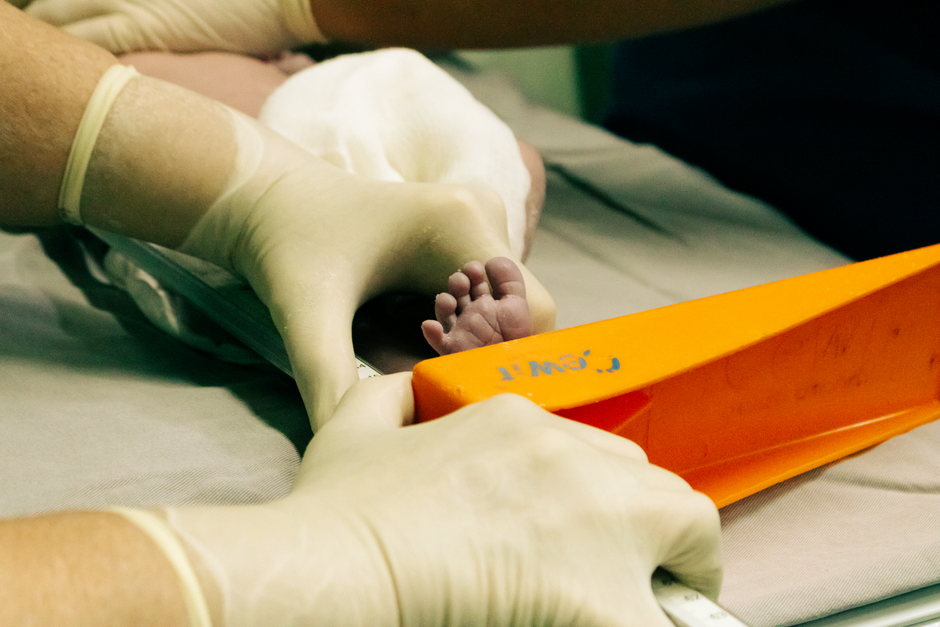
Measuring a baby’s length at home comes down to two things: a flat, firm surface and a gentle, straight stretch from the top of the head to the bottom of the heels. You need two people for a truly accurate result. One holds the head steady against a fixed marker while the other straightens the legs and marks the heel position. For babies under 2 years old, this head-to-heel measurement is called length, not height.
Getting it right matters more than it sounds. Infants are measured lying down because they cannot stand. The number you record feeds into growth charts your pediatrician uses to track development. A sloppy measurement can look like a growth problem that isn’t there, or hide one that is.
Why Is Baby Length Measured Lying Down?
Babies are measured lying flat because they cannot stand independently, and standing height is not a reliable option until a child can stand on their own, usually around age 2. Before that, clinicians measure what is called recumbent length — the distance from the crown of the head to the soles of the feet while the baby lies on their back.
This is not just a convenience. Standing height and lying length are not the same number. When a child is upright, gravity compresses the spine slightly, so a standing measurement tends to read a little shorter than a lying one. That is why the two are tracked on different growth charts and why the switch from length to height happens at a defined age rather than whenever a parent feels like it.
For children under 2, the standard is length. For children 2 and older who can stand, it becomes height. Mixing the two methods on the same chart produces confusing results.
What Do You Need to Measure a Baby’s Length Accurately?
You need a firm flat surface, a measuring tool with clear markings, a pen or marker, and a second set of hands. A soft mattress will not work because the baby sinks into it and the measurement comes out short.
Here is what to gather:
- A firm, flat surface — a countertop, a sturdy table, or the floor with a firm mat. Not a bed.
- A measuring tape that does not stretch, or a rigid ruler or yardstick.
- A washable marker or a piece of tape to mark positions.
- A helper to hold the baby’s head steady.
- A lightweight blanket or a fresh diaper to keep the baby comfortable.
Cloth measuring tapes can stretch over time. If yours has seen heavy use, check it against a rigid ruler before trusting it. A stretched tape quietly adds or subtracts centimeters from every measurement.
How To Measure Baby Length Correctly At Home Step by Step
The most common mistakes are letting the head move and not straightening the legs fully. Both cause the measurement to come out shorter than the true length. Here is the sequence that avoids them.
Step 1: Lay the baby flat. Place the baby on their back on the firm surface. Remove shoes and socks. A diaper is fine, but heavy clothing or a thick blanket under the body will distort the number.
Step 2: Anchor the head. Have your helper hold the baby’s head so the top of the head — the crown — touches a fixed marker, like a wall or the end of the measuring tape. The baby should look straight up, with the chin not tucked toward the chest and not tilted back. The head should be in line with the body, not turned to the side.
Step 3: Straighten the legs. Gently press the baby’s knees down flat and bring the heels together. The legs should be as straight as the baby allows. Do not force or push hard — a gentle, firm touch is enough. Some babies resist, and forcing the legs can cause discomfort and a wriggly measurement.
Step 4: Mark the heel. With the legs straight and the feet flexed so the soles are flat (toes pointing up toward the shins), mark the surface at the bottom of the heels. If the baby’s toes are pointed, the measurement will be short.
Step 5: Measure the distance. Measure from the head marker to the heel marker. Read the tape at eye level to avoid a parallax error, where looking from an angle makes the number look slightly off.
Repeat the measurement two or three times and use the average. A single reading on a moving baby is not reliable. If your readings vary by more than a small amount, try again when the baby is calm.
How Accurate Can a Home Measurement Be?
Home measurements are useful for tracking trends, but they are not as precise as a clinical measurement. Professional length boards — the devices used in pediatric offices — have a fixed headboard and a sliding footboard that keep the baby aligned and reduce error. A tape measure on a table cannot fully match that.
Research on infant measurement has consistently shown that two people measuring produce more reliable results than one. The person holding the head cannot also watch the legs and read the tape. This is why clinicians use two trained people.
That does not mean home measurement is pointless. It means treat your number as an estimate. A difference of a fraction of a centimeter is within the range of normal measurement error and is not meaningful. What matters is the pattern over weeks and months, not a single reading.
What Is a Normal Baby Length, and How Fast Do Babies Grow?
Newborn length varies widely, and healthy babies come in a broad range. Rather than memorizing a single “normal” number, pediatricians plot length on growth charts that compare a baby to others of the same age and sex. The percentile matters more than the raw number.
Babies grow quickly in the first year, then the pace slows. Growth is fastest in the first few months. A baby’s length is usually checked at routine well-child visits, and the trend across visits is what tells the story.
Two things are worth knowing here. First, a baby can be perfectly healthy at a low percentile or a high percentile — what matters is following a steady curve. Second, a baby who drops across several percentile lines over time is a different situation than one who has always tracked along a lower curve. The first pattern is what prompts a closer look.
If you are tracking length at home between visits, write down the date and the measurement each time. A single number tells you little. A series of numbers over months tells you whether growth is steady.
What Are the Most Common Measurement Mistakes?
Most home errors come from a short list of fixable problems. Knowing them in advance saves you a retake.
- Measuring on a soft surface. The baby sinks in, and the length reads short.
- Letting the head lift or turn. The crown must stay against the marker and face straight up.
- Bent knees. Legs must be as straight as the baby allows, with heels together.
- Pointed toes. Feet should be flexed so the soles are flat, not pointed like a ballet dancer.
- Measuring alone. One person cannot hold the head, straighten the legs, and read the tape at the same time.
- Using a stretched cloth tape. Check it against a rigid ruler.
One less obvious point: measuring right after a feeding or during a fussy period tends to produce worse results because the baby moves more. A calm, alert baby is easier to measure accurately.
When Should You Ask a Pediatrician About Growth?
Talk to your pediatrician if you are worried about your baby’s growth, and let them do the measuring. Home measurements are for your own tracking, not for diagnosis. A clinician using a proper length board and growth charts can tell you far more than a tape measure can.
Bring your home records to the visit if you have them. A dated list of measurements gives your pediatrician useful context, even if the individual numbers are imperfect. Do not use home measurements to decide on your own that something is wrong or that everything is fine.
Growth is one part of a bigger picture that includes feeding, development, and overall health. A single length number, especially a home one, does not stand alone.
Frequently Asked Questions
Can I measure my baby’s length alone?
It is possible but much less accurate, because you cannot hold the head, straighten the legs, and read the tape at once. A second person makes the measurement far more reliable.
Should I measure baby length or height?
Babies under 2 are measured lying down, which is called length. Children 2 and older who can stand are measured standing, which is called height.
Why does my home measurement differ from the doctor’s?
Clinical length boards hold the baby in a fixed position and reduce error, so office measurements are usually more precise. Small differences between home and office readings are expected and not a cause for concern on their own.
Does clothing affect baby length measurement?
Yes, bulky clothing or a thick diaper can add to the reading. Measure in light clothing or a fresh diaper for the most consistent result.
