
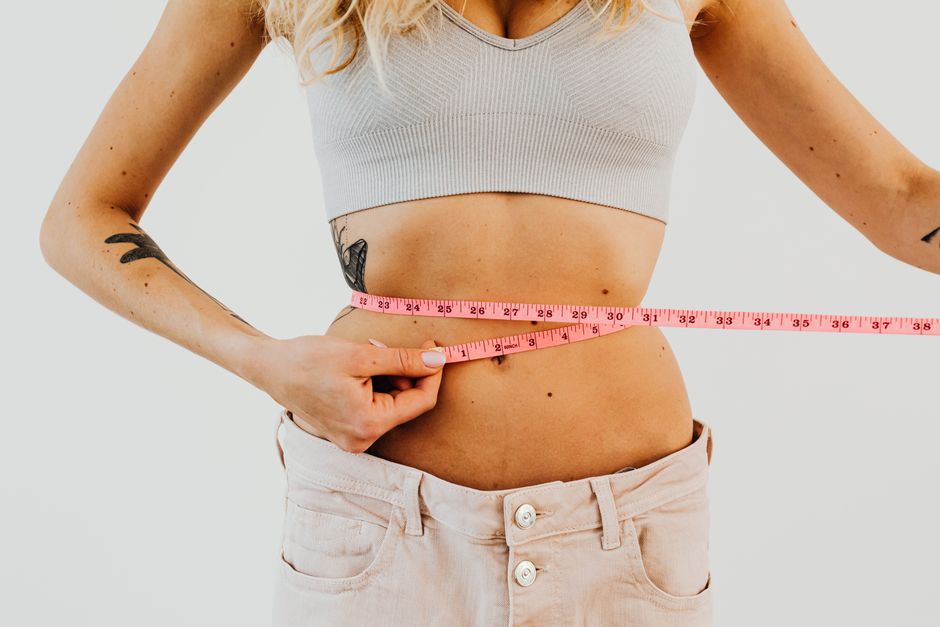
Tracking your waist, body fat, and abdominal muscle is not about vanity. It is one of the most useful health checks you can do at home. Your waist size is a direct measure of visceral fat, which wraps around your organs and carries the highest health risk. Body fat percentage tells you how much of your total weight is fat versus lean tissue. Ab muscle measurement is less about a number and more about consistency in how you track progress. The most accurate approach combines a tape measure for your waist, reliable body fat tools, and a simple method for gauging muscle that you repeat the same way each time.
Why Your Waist Measurement Matters Most
Your waist circumference is the strongest simple predictor of metabolic health. It is not just about the fat you can pinch. It reflects the fat deep inside your abdomen, known as visceral fat. This type of fat is biologically active. It releases inflammatory compounds that can interfere with how your body processes sugar and fats.
The measurement is simple. You need a flexible tape measure. Place it directly on your skin, at the level of your belly button. It should be snug but not compress your skin. Breathe out normally, then take the reading. Do not suck in your stomach.
For most adults, the risk threshold is clear. In the United States, a waist measurement of 35 inches or more for women and 40 inches or more for men is linked to a higher risk of heart disease and type 2 diabetes. These numbers come from established clinical guidelines. They are not arbitrary. They are connected to an increased risk of metabolic complications.
The tape measure at the belly button is the standard. Some clinicians use the narrowest point of the waist. The belly button method is easier to repeat accurately at home. Consistency matters more than which method you choose. Use the same landmark every time.
How To Measure Body Fat At Home
Body fat percentage is harder to measure than waist size. No home method is perfectly accurate. Each tool has trade-offs between convenience and reliability. The key is understanding what each measurement actually tells you.
Skinfold calipers are the most common home tool. They measure the thickness of a fold of skin and the fat beneath it at specific sites on the body. For men, the standard sites are the chest, abdomen, and thigh. For women, the triceps, suprailiac (just above the hip bone), and thigh are typical. You plug those numbers into a formula to estimate total body fat. The accuracy depends heavily on your technique. If you are consistent, the trend over months is useful. The absolute number may be off by a few percentage points.
Bioelectrical impedance scales send a tiny, imperceptible electrical current through your body. Fat resists the current more than muscle does. The scale uses that resistance to estimate fat percentage. These scales are convenient but influenced by hydration. If you drank a lot of water or just exercised, the reading shifts. Use the scale at the same time of day, ideally in the morning before eating or drinking.
No home method matches the accuracy of clinical tools like DEXA scans or hydrostatic weighing. Those are reference standards used in research. If you have access to a DEXA scan, it gives a precise baseline. But for regular tracking, a consistent home method is more valuable than a perfect measurement you only get once a year.
How To Measure Abdominal Muscle Progress
You cannot measure ab muscle directly with a tape measure. What you can do is track changes that indicate the muscle is growing or becoming more visible. The most practical approach combines a few simple observations.
Waist measurement is one indirect signal. If your waist is getting smaller and your body weight is stable, you are likely losing fat. If your waist stays the same while your weight goes up, you may be gaining muscle. This is not a precise method, but it gives direction.
Strength is a better indicator. Track how many push-ups, planks, or hanging knee raises you can do. If the number goes up over weeks, your core is getting stronger. That is a direct reflection of muscle adaptation. Write down your numbers. Do not trust memory.
Photos are a practical visual record. Take a front, side, and back photo in the same lighting and position every two weeks. Visual changes in definition are often visible before the scale or tape measure changes. This is a legitimate tracking method used by trainers and researchers alike.
Clothing fit is another useful signal. If your pants feel looser at the waist but your weight is stable, your body composition is changing. This is not a scientific measurement, but it is a real-world indicator that is easy to notice.


What Is A Healthy Body Fat Range
Healthy body fat ranges depend on sex and age. These ranges are based on population data and are widely cited in clinical practice. They are guidelines, not strict rules.
For men, essential fat is about 2-5%. Athletes typically sit at 6-13%. Fit men are often 14-17%. Acceptable is 18-24%. Above 25% is considered obese. For women, essential fat is higher at 10-13%. This reflects biological needs related to hormones and reproduction. Athletes are 14-20%. Fit women are 21-24%. Acceptable is 25-31%. Above 32% is considered obese.
These numbers are not the same as your waist measurement. They measure different things. You can have a healthy body fat percentage and still have excess visceral fat, or the reverse. Both measurements give you a more complete picture than either one alone.
As you age, body fat tends to increase even if your weight stays the same. Muscle mass declines gradually after about age 30. This is why tracking body composition matters more than tracking weight alone. The scale cannot tell you if you are losing fat or muscle.
How Often Should You Measure
Consistency beats frequency. Measuring every day creates noise. Your body weight and waist fluctuate with hydration, food intake, and time of day. Daily measurements will confuse you more than help you.
Weekly is the right interval for most people. Measure your waist and body fat on the same day, at the same time, under the same conditions. Mornings before breakfast are ideal. Record the numbers in a log or app. Look at the trend over 4-6 weeks rather than week-to-week changes.
Strength measurements can be tracked less often. Every two to four weeks is enough to see meaningful improvement. If you test too frequently, you may not see progress and feel discouraged. Muscle adaptation takes time.
Photos every two to four weeks give a visual record that complements the numbers. The combination of tape measure, scale, strength test, and photo gives you a full picture. No single tool tells the whole story.
Common Measuring Mistakes To Avoid
Several small errors can ruin the accuracy of your measurements. The most common is measuring at the wrong spot. The waist should be at the level of the belly button, not the narrowest part of your torso. The narrowest point is often higher and gives a smaller number.
Pulling the tape too tight is another frequent error. The tape should touch your skin without indenting it. If you can see the tape pressing into your skin, it is too tight. This can shave off a quarter to half an inch from your reading.
Measuring after a meal or at the end of the day inflates the number. Your abdomen expands after eating. Morning measurements on an empty stomach are the most reliable and reproducible.
For body fat scales, hydration is the biggest variable. A difference of one or two percentage points can come from drinking a glass of water. Do not compare readings taken at different times of day or on different hydration levels. This is why the same time and conditions matter.
When To Use Professional Measurement
Home measurements are sufficient for most people. But there are situations where professional measurement adds value. If you are starting a serious fitness program or working with a coach, a DEXA scan gives a precise baseline. It can also show you where your body fat is distributed, which home methods cannot.
If you are concerned about your health risk based on your waist measurement, talk to your clinician. They can assess your overall risk profile, including blood pressure, blood sugar, and cholesterol. Waist size is one piece of the puzzle, not the whole picture.
Professional measurement is also useful if your home measurements are inconsistent. If your scale gives wildly different numbers day to day, a professional assessment can give you a reference point. You can then calibrate your home method against that baseline.
No measurement replaces the judgment of a healthcare professional. If your waist is above the risk threshold, that is a signal to have a conversation with your doctor. It is not a diagnosis on its own.
How To Measure Abs Waist Body Fat And Muscle: The Bottom Line
The most reliable approach combines three simple tools. A tape measure for your waist at the belly button. A consistent home method for body fat, whether calipers or a bioelectrical impedance scale. And a strength or visual record for abdominal muscle. Use them all together, measure weekly, and look at the trend over months.
Do not chase a single number. The goal is not a perfect body fat percentage or a specific waist size. The goal is a trend in the right direction. If your waist is going down and your strength is going up, you are on the right track regardless of what the scale says.
These measurements are tools for awareness, not judgment. They give you information you can act on. That information is most useful when you collect it consistently and honestly.
Frequently Asked Questions
What is the correct way to measure your waist?
Place a tape measure directly on your skin at the level of your belly button, breathe out normally, and read the measurement without pulling the tape tight.
What is a healthy waist size for men and women?
For women, a waist of 35 inches or less is considered lower risk. For men, the threshold is 40 inches or less.
What is the most accurate home method for measuring body fat?
Skinfold calipers are more accurate than bioelectrical impedance scales when used consistently, but both require consistent technique and timing to give useful trends.
How often should I measure my waist and body fat?
Measure once per week, at the same time of day, in the same conditions, and look at the trend over four to six weeks rather than individual readings.
