
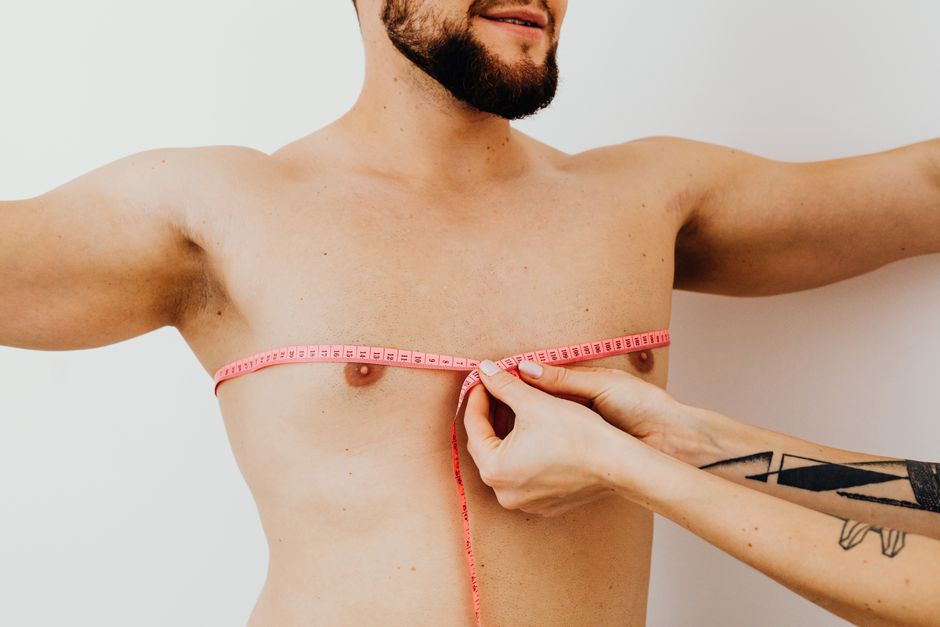
Getting clothes that actually fit comes down to knowing a handful of body measurements and taking them correctly. You need a flexible measuring tape, a mirror, and ideally a second person to help. Measure over thin clothing or undergarments, keep the tape snug but not tight, and write every number down as you go. Those numbers — not the size on the tag — are what tell you whether something will fit.
Sizes vary wildly between brands and even between styles from the same brand. A “medium” at one store can match a “large” at another. Body measurements are the only stable reference point you have. This guide covers what to measure, how to measure it, and where people commonly go wrong.
What Tools Do You Need To Measure A Body Accurately?
A flexible cloth or vinyl measuring tape is the only real requirement. The kind used for sewing works best because it bends around curves. A metal construction tape will not follow the body and will give you wrong numbers.
If you do not have a flexible tape, you can use a piece of string or a strip of paper, then lay it flat against a ruler. It is slower but accurate if you keep the string from stretching. Mark the string with a pen where the ends meet, then measure that length.
A few other things help:
- A full-length mirror so you can check tape placement
- A second person for back and shoulder measurements, which are hard to take alone
- A notebook or phone to record numbers immediately
- Thin clothing or undergarments rather than bulky layers
Stand naturally. Do not suck in your stomach, puff out your chest, or pull the tape tight to flatter yourself. The tape should sit flat against the body without compressing the skin. If it leaves a mark, it is too tight.
How To Measure A Person For Clothes That Fit: The Core Measurements
Most clothing decisions rest on five or six numbers. Take these first.
Chest or bust. Wrap the tape around the fullest part of the chest, usually across the nipples or the bust apex. Keep the tape level all the way around — front and back at the same height. Arms should rest at your sides. For men, this is often called the chest measurement. For women, the bust measurement is taken at the fullest point, and a separate underbust measurement is taken directly beneath the breasts.
Waist. Find your natural waist, which is the narrowest point of your torso. It usually sits just above the belly button and below the bottom of the rib cage. Bend sideways — the crease that forms is roughly your natural waist. Keep the tape level and breathe normally. Do not pull it tight.
Hips. Stand with feet together. Wrap the tape around the fullest part of your hips and buttocks, usually about 7 to 9 inches below the natural waist. Keep the tape parallel to the floor.
Inseam. This is the distance from the crotch seam to the bottom of the ankle. The most reliable way is to measure a pair of pants that already fit you well. Lay them flat, measure from the crotch seam down the inside leg to the hem. Measuring on your own body is harder and less accurate because it is difficult to keep the tape straight.
Sleeve length. For a shirt or jacket, measure from the center back of the neck, across the top of the shoulder, down the outside of the arm to the wrist bone. Keep the arm slightly bent. A straight, locked arm gives a sleeve that is too short when you move.
Shoulder width. Measure from the outer edge of one shoulder to the outer edge of the other, across the back. This one is nearly impossible to do accurately alone. Have someone help.
How Do You Measure For Pants, Shirts, and Dresses Specifically?
Different garments rely on different measurements, and knowing which ones matter saves a lot of returns.
For pants and jeans, waist, hips, and inseam do most of the work. Some brands also list a rise measurement — the distance from the crotch seam to the top of the waistband. Rise affects where the waistband sits on your body, which changes comfort even when the waist size is right.
For shirts, jackets, and blouses, chest or bust, shoulder width, and sleeve length are the key numbers. Neck measurement matters for dress shirts and ties. Measure the neck at the base, where a collar would sit, keeping one finger between the tape and your neck so the collar is not uncomfortably tight.
For dresses and skirts, bust, waist, and hips are the essentials. Length is a personal preference, so measure from a reference point you like — for example, from the natural waist down to where you want the hem to fall.
For bras, two measurements matter: the underbust and the bust. The underbust, measured snugly directly beneath the breasts, helps determine band size. The bust, measured at the fullest point, helps determine cup size. Fitting methods vary between brands and no single formula works perfectly for everyone, so treat any online calculator as a starting point rather than a final answer.
-
 How To Measure Peyronies Curvature In Degrees?
-
EyeFortin Reviews 2026: Clear Vision Or A marketing Scam?
-
Mounjaboost Reviews & Complaints: Does Drops Work for Weight Loss?
-
Yu Sleep Weight Loss Supplement Reviews. Critical March 2026 Update.
-
Neuro Energizer Review 2026. Legit Brain Tool or Just Hype?




Where Do Most People Go Wrong When Measuring?
The most common mistake is pulling the tape too tight. A tight tape gives a smaller number, which leads to clothing that feels restrictive and does not move with you. Snug is enough. The tape should touch the body all the way around without pressing in.
The second mistake is a tape that is not level. If the back of the tape rides up while the front stays low, your measurement will be short. Check in a mirror, or have someone look at the back.
Other frequent errors:
- Measuring over thick clothing, which adds inches that are not there
- Measuring alone for back, shoulder, and sleeve measurements
- Holding your breath or standing unnaturally
- Rounding numbers up or down instead of writing exactly what the tape shows
- Assuming your size has not changed since the last time you measured
Body measurements shift with weight change, muscle gain, pregnancy, and even time of day. Remeasuring before a significant purchase takes a few minutes and prevents a lot of frustration.
How Do You Use Your Measurements To Pick A Size?
Compare your measurements to the specific size chart for the specific item you are buying. Size charts are usually listed by brand and sometimes by individual garment. A size chart from two years ago or from a different product line may not apply.
When your measurements fall between two sizes, the general guidance is to size to the larger measurement for woven fabrics that do not stretch, and you have more flexibility with knits that give. This is common practice rather than a strict rule, and it depends on how the garment is cut.
Pay attention to which measurement the brand treats as most important. Some brands fit to the chest, others to the waist. If the chart lists a range — for example, a waist range rather than a single number — check that your measurement falls inside it rather than at the very edge.
For tailored clothing like suits, the jacket is usually sized to the chest and shoulder, and the waist can be adjusted by a tailor. Shoulders generally cannot be altered much, so shoulder fit matters more than almost anything else on a jacket.
Can You Measure Yourself Without Help?
You can measure your chest, bust, waist, hips, and inseam alone with reasonable accuracy using a mirror. Wrap the tape, step in front of the mirror, and check that it is level before you read the number.
Back, shoulder, and sleeve measurements are genuinely difficult to take alone. The tape twists, the number shifts, and small errors compound. If no one is available to help, measure a garment you already own that fits well and use those numbers instead. This is often more reliable than a solo attempt at a hard-to-reach measurement.
One useful point that surprises people: the numbers on a well-fitting garment laid flat are not the same as your body measurements. A shirt measured flat across the chest, doubled, gives the garment’s chest circumference, which is usually larger than your body measurement to allow for ease and movement. So when you measure your own clothes as a reference, measure them the way the brand measures them, and check the size chart’s instructions.
Frequently Asked Questions
Should I measure over clothes or bare skin?
Measure over thin clothing or undergarments for the most accurate numbers. Bulky layers add inches that are not part of your body, which leads to clothing that is too large.
How tight should the measuring tape be?
The tape should sit snug against the body without pressing into the skin or leaving a mark. If it compresses the skin, it is too tight and your measurement will be too small.
What if my measurements fall between two sizes?
For fabrics that do not stretch, sizing to the larger measurement is common practice so the garment is not restrictive. For stretchy knits, either size may work depending on how you want it to fit.
How often should I remeasure myself?
Remeasure before any significant clothing purchase, especially if your weight, muscle mass, or fitness routine has changed. Body measurements can shift without your clothing size changing noticeably.
