
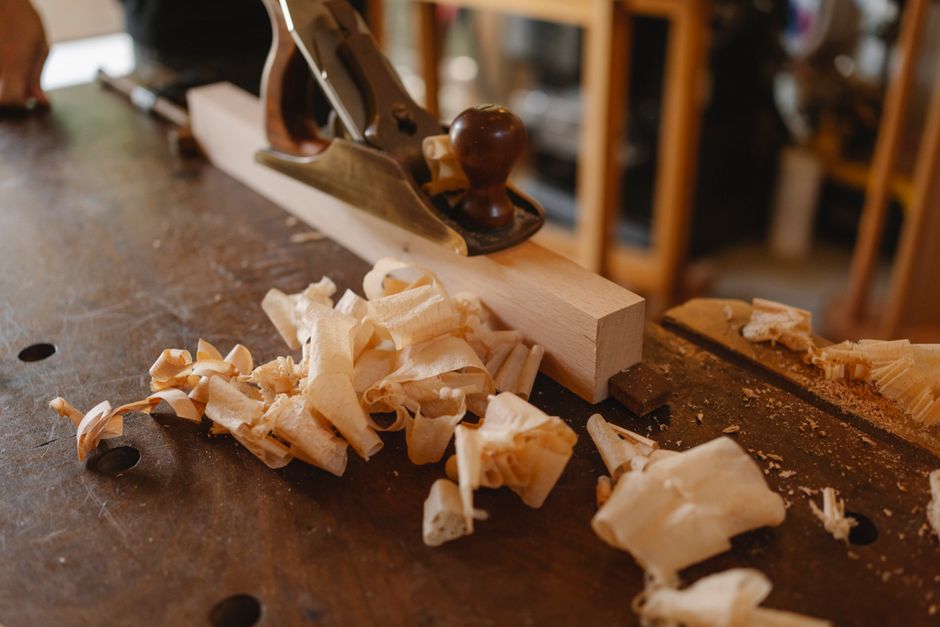
Wood shavings are thin, curled strips of wood removed by a sharp cutting edge — and you can make them with hand tools like a hand plane or spokeshave, or with power tools like a thickness planer, jointer, or router. The tool matters less than three things: how sharp the blade is, how the wood grain runs, and how deep a cut you take. Get those right and clean shavings come off almost any wood.
This article covers the tools, the technique, and the safety basics. It also separates wood shavings from sawdust, because they are not the same thing and they are not used for the same purposes.
What Is the Difference Between Wood Shavings and Sawdust?
Shavings are produced by a slicing cut. Sawdust is produced by a scraping or grinding cut.
When a sharp plane blade lifts and slices a thin layer of wood fibers, the material comes off as a continuous curl or ribbon. That is a shaving. When a saw tooth or sandpaper grain scrapes across the wood, the fibers break into fine particles. That is sawdust.
The distinction matters for more than vocabulary. Shavings are larger, hold their shape, and drain well. Sawdust is fine, packs tightly, and produces far more airborne particulate when disturbed. Anyone working with either material should think about dust, but fine sawdust is the bigger respiratory concern of the two.
Some wood species produce shavings that are notably more irritating than others. The dust and shavings of certain hardwoods and tropical species are associated with respiratory and skin reactions in some people. Walnut, for example, has a long-documented association with sensitization in some woodworkers. If you notice nasal irritation, coughing, or a rash after working a particular species, take it seriously and improve ventilation and filtration.
How Do You Make Wood Shavings With a Hand Plane?
A sharp, properly set hand plane is the simplest and most controllable way to make shavings.
Start with the blade. A dull blade crushes fibers instead of slicing them. You get dust and tearout rather than a clean curl. Sharpening is not optional here — it is the whole game. A blade sharpened to a fine edge will produce shavings that hold together as ribbons.
Next, set the blade depth. A shallow cut produces thin, delicate shavings. A deeper cut produces thicker ones but also raises the risk of tearout, especially on figured wood. Start shallow and increase gradually.
Read the grain before you cut. Look at the side edge of the board. If the grain lines slope up and away from you, you are planing “downhill” and will get clean cuts. If they slope toward you, you are planing “uphill” and the blade will catch and lift fibers. The fix is simple: turn the board around or reverse your planing direction.
Technique:
- Set the board so it will not shift. A bench hook or vise helps.
- Start the plane flat on the wood with light downward pressure on the front.
- Push with steady, even force through the stroke.
- Shift pressure toward the back of the plane as you finish the stroke.
- Lift the plane on the return stroke so it does not drag on the edge.
A spokeshave works the same way on curved surfaces. A drawknife pulls shavings off along the grain for rougher shaping. All three rely on the same principle: a sharp edge meeting wood fibers at the right angle.
How Do You Make Wood Shavings With Power Tools?
Power tools remove wood far faster, but they give you less feel for the grain and produce a mix of shavings and dust.
A thickness planer is the most common machine for producing shavings in volume. It feeds a board past rotating knives that slice off a thin layer across the full width. The result is a pile of shavings, though the high speed tends to break them into shorter pieces than a hand plane would.
A jointer works similarly but flattens one face and squares one edge. A router with a planing or surfacing bit can flatten wide slabs that will not fit in a planer. Handheld power planers take shavings off in passes, similar in concept to a hand plane but much faster.
Two things change when you switch to power:
- Depth of cut per pass should stay light. Taking too much at once strains the motor and increases tearout.
- Grain direction still matters. Feeding a board the wrong way through a planer produces the same tearout a hand plane would, just faster and harder to control.
Power tools also generate far more airborne dust. A planer or jointer should be connected to dust collection. This is not just about tidiness — fine wood dust is a recognized respiratory hazard with repeated exposure, and the evidence on that point is well established.





Which Woods Produce the Best Shavings?
Almost any wood produces shavings when cut, but some behave better than others.
Straight-grained, medium-density hardwoods tend to plane cleanly and produce long, intact curls. Woods with interlocked or highly figured grain are more prone to tearout regardless of how sharp your blade is. Very soft woods compress under the blade and can produce crumbly shavings rather than clean curls. Very dense tropical hardwoods can dull an edge quickly.
There is no universal ranking here, because the same species can behave differently depending on how it was dried, how the grain runs in that specific board, and how sharp your tool is. A board that planes beautifully one day can tear out the next if the blade has dulled.
If your goal is decorative shavings — for gift packaging, event decor, or craft use — lighter-colored woods with straight grain tend to give the most uniform, attractive curls. Cedar and pine are common choices for their color and smell, though some people find cedar’s aroma strong and its dust irritating.
What Are Wood Shavings Used For?
Shavings have real practical uses, and a few that are often overstated.
Animal bedding is the most common use. Shavings are absorbent and drain well. Kiln-dried shavings are generally preferred over fresh ones for small animals, because some fresh softwood shavings release volatile compounds that can affect the respiratory tract in small mammals. This is a genuine concern, not a minor one — if you keep small pets, use bedding sold for that purpose rather than shavings from your shop.
Compost and garden mulch are common uses. Wood shavings are high in carbon and break down slowly. Fresh shavings tilled directly into soil can temporarily tie up nitrogen as microbes work to break them down. Composting them first, or using them as a surface mulch rather than mixing them in, avoids that problem.
Smoking and grilling uses wood chips or chunks rather than shavings, though fine shavings can work in small quantities. They burn fast, so they are better for short bursts of smoke than long cooks.
Craft and packaging uses are largely decorative. Shavings are sometimes marketed as moisture-absorbing or odor-controlling. The absorbency is real. Odor control is less well supported and depends heavily on the wood species.
One caution worth stating plainly: do not use shavings from pressure-treated lumber, plywood, or any wood treated with preservatives for animal bedding, garden use, or anything that touches food. The chemicals in treated wood are not something you want in those settings.
What Safety Precautions Should You Take?
The main hazards when making shavings are cuts, dust, and noise — in that order for hand tools, and dust and noise first for power tools.
Hand plane blades are extremely sharp and often exposed during setup and sharpening. Most hand tool injuries happen during sharpening or blade changes, not during planing. Keep your fingers behind the cutting edge and never test sharpness by running a finger along the blade.
Wood dust is the bigger long-term concern. Fine dust from power tools and sanding is associated with respiratory effects after repeated exposure. The practical response is straightforward:
- Connect power tools to dust collection where possible.
- Wear a fitted respirator when sanding or working in enclosed spaces.
- Ventilate the workspace.
- Avoid sweeping dry dust with a broom, which throws it back into the air.
Power planers and jointers run loud. Hearing protection is worth using without much debate. Loose clothing, gloves, and jewelry should stay away from any rotating cutter head — gloves in particular can catch and pull a hand in.
For anyone with asthma, existing lung disease, or known sensitivity to a specific wood species, the case for serious dust control is stronger, not weaker. If you notice new breathing symptoms or skin reactions after working with wood, that is worth a conversation with a doctor rather than something to push through.
Frequently Asked Questions
Can I make wood shavings without a plane?
Yes. A spokeshave, drawknife, chisel, or even a sharp knife can produce shavings, and power planers, jointers, and routers do it at higher volume. The cutting edge just needs to be sharp and meet the wood at a slicing angle.
Why are my plane shavings coming out as dust instead of curls?
The blade is almost certainly dull, or you are cutting against the grain. Sharpen the blade and check the grain direction on the edge of the board before planing again.
Are wood shavings safe for hamster or rabbit bedding?
Kiln-dried shavings sold for small-animal bedding are the usual choice, because some fresh softwood shavings release compounds that can irritate small mammals’ airways. Avoid shavings from treated, painted, or plywood scraps entirely.
Can I put wood shavings straight into my garden?
You can, but fresh shavings mixed into soil can temporarily reduce available nitrogen as they break down. Composting them first or using them as a surface mulch avoids most of that issue.
