
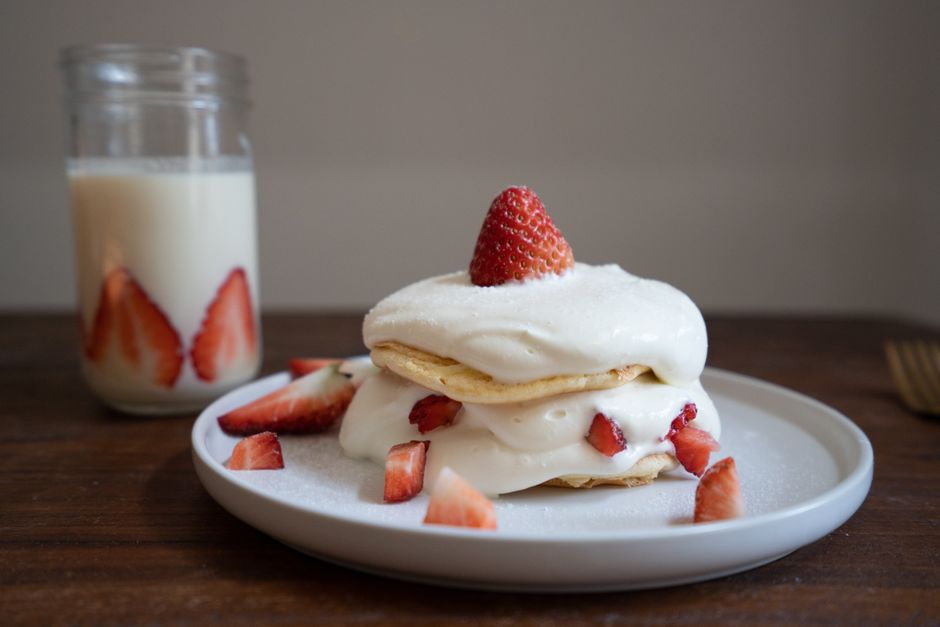
Whipped cream from a carton is made with heavy cream, the kind that contains at least 30 percent milk fat. Milk and sugar alone will not produce the same result. That is the honest answer, and it matters before you start. What milk and sugar can do is make a light, sweetened foam that works as a topping for coffee, cocoa, or a bowl of fruit. It will be thin and it will deflate within minutes. Understanding why comes down to one thing: fat.
Why Does Heavy Cream Whip But Milk Does Not?
Whipping works because fat globules in cream physically trap air. When you beat heavy cream, the fat globules bump into each other, their membranes break, and they stick together into a network that holds air bubbles in place. That network is what gives whipped cream its body.
Whole milk contains roughly 3.25 percent milk fat. Heavy whipping cream contains at least 36 percent. That gap is not a small difference. At 3.25 percent fat, there are not enough fat globules close enough together to form a stable network, no matter how long you beat it. You can whip milk for ten minutes and you will get milk with bubbles in it. The bubbles pop. The liquid stays liquid.
This is established food science, not opinion. The fat content threshold for whipping is generally cited as around 30 percent. Below that, the foam cannot hold.
So what are you actually making if you follow a milk-and-sugar recipe? A sweetened milk foam. Sometimes called milk whip or milk froth. It is a real thing, it tastes good, and it behaves very differently from cream.
How To Make Whipped Cream With Milk And Sugar?
You need cold milk, sugar, and a way to add air. Cold matters — warm milk foams poorly and collapses faster. Use whole milk if you have it, since the extra fat helps a little, though not enough to change the outcome.
Here is a basic method:
- Pour one cup of very cold whole milk into a bowl or a tall jar.
- Add one to two tablespoons of sugar, to taste.
- If you want more stability, add a quarter teaspoon of unflavored gelatin that has been bloomed in a little warm water and cooled. This is optional and changes the texture.
- Whip with a hand mixer, immersion blender, or milk frother for one to three minutes.
- Use immediately.
A whisk by hand will work but takes longer and produces a coarser foam. A French press plunged repeatedly is a common low-tech trick and produces a decent froth.
What you get is a pourable, bubbly liquid with a sweet taste. It is closer to the foam on a latte than to a dollop of whipped cream. If you let it sit for a few minutes, most of the air escapes and you are left with sweet milk.
Can You Make Milk Thicken Like Whipped Cream?
Yes, but not by whipping alone. To get milk to hold a shape, you have to add something that creates structure. The most common approach is gelatin.
Gelatin forms a protein gel when it cools. If you dissolve a small amount in warm water, add it to cold milk and sugar, and whip the mixture, the gelatin begins to set around the air bubbles as it chills. The result holds its shape far better than plain whipped milk. It is sometimes sold commercially as a light whipped topping.
A few things to know about this method:
- The texture is different from cream. It is more jelly-like and less rich.
- It does not taste like cream because it contains no cream.
- Gelatin is animal-derived. Agar agar can be used as a plant-based substitute, though the texture differs and it sets firmer.
- Homemade versions are not sterile and should be refrigerated and used within a day or two.
No clinical guidelines exist for how much gelatin to use in a home recipe, because this is a culinary question rather than a medical one. Recipe sources vary widely. Start with a small amount and adjust.





What About Chilling the Bowl and Beaters?
Chilling your bowl and beaters is standard advice for whipping cream, and it does help. Cold fat holds its structure better during whipping, and a cold bowl slows the warming that happens from friction.
For milk, chilling helps less. The problem with milk is not temperature, it is fat content. A cold bowl will not fix a structural problem. It is still worth doing if you are adding gelatin, since the mixture needs to stay cold to set properly.
Does Adding Sugar Help Milk Whip?
Sugar adds sweetness and nothing else structurally. It does not help milk form a stable foam.
In fact, adding sugar too early to heavy cream can slow whipping, because sugar absorbs some of the water and interferes slightly with the fat network. Most bakers add sugar near the end for that reason.
For milk, the timing does not matter much because the foam is unstable either way. Add sugar whenever you like. Just know it is there for flavor, not function.
How Does This Compare to Real Whipped Cream?
The differences are worth seeing side by side.
| Feature | Heavy Cream | Milk and Sugar |
|---|---|---|
| Milk fat content | At least 36 percent | About 3.25 percent (whole milk) |
| Can it whip into a stable foam? | Yes | No, not without a gelling agent |
| Texture | Thick, holds peaks | Thin, bubbly, pourable |
| How long it holds | Hours if refrigerated | Minutes |
| Taste | Rich, creamy | Sweet, milky |
| Best use | Dessert topping, piping | Drinks, quick topping |
If you need something that holds a shape on a slice of pie, milk will not get you there. If you want a sweet foam on top of a coffee, it works fine.
Are There Safety Concerns With Homemade Milk Foam?
Milk is a perishable food. Any foam you make from milk should be treated like milk. Keep it cold, do not leave it at room temperature for long periods, and discard it if it has been out for more than two hours.
This matters more than it might seem. Whipping incorporates air, which increases the surface area and gives bacteria more places to grow. The two-hour guideline for perishable foods at room temperature is a standard food safety rule from public health agencies.
If you add raw egg white to help the foam hold — a method some older recipes use — be aware that raw eggs carry a risk of Salmonella. Public health agencies advise against consuming raw or lightly cooked eggs, particularly for young children, older adults, pregnant women, and anyone with a weakened immune system. Pasteurized egg whites are a safer option if you want to try this.
Gelatin-based versions should be refrigerated and eaten within a day or two. They are not shelf-stable.
What Actually Works If You Want Whipped Cream
If your goal is real whipped cream, use heavy whipping cream. There is no milk-based substitute that matches it, because the fat content is the whole mechanism.
If you cannot get cream, a few options come closer than milk:
- Evaporated milk, chilled and whipped, produces a foam that holds better than regular milk because it has had water removed and fat concentrated. It still will not match cream.
- Coconut cream, the thick part separated from coconut milk, whips into a stable foam. It tastes like coconut.
- Commercial whipped toppings are formulated with stabilizers and emulsifiers to hold air. They are not the same as cream but they are designed for the job.
None of these is a perfect substitute. Each has a different fat profile and a different taste. The honest summary is that milk and sugar make a pleasant sweet foam, and that is all they make.
Frequently Asked Questions
Can you whip regular milk into whipped cream?
No. Regular milk does not contain enough fat to form a stable foam, so it stays liquid even after whipping. You get sweet froth, not whipped cream.
How do you make milk thick like whipped cream?
You have to add a gelling agent such as gelatin or agar agar, which creates structure as it chills. Even then, the texture is more jelly-like than creamy.
Why does heavy cream whip but milk does not?
Heavy cream contains at least 36 percent milk fat, which is enough for fat globules to form a network that traps air. Whole milk contains about 3.25 percent fat, which is far too little.
How long does milk foam last?
Plain whipped milk collapses within minutes as the air bubbles escape. Adding gelatin extends that to a few hours if the mixture stays cold.
