
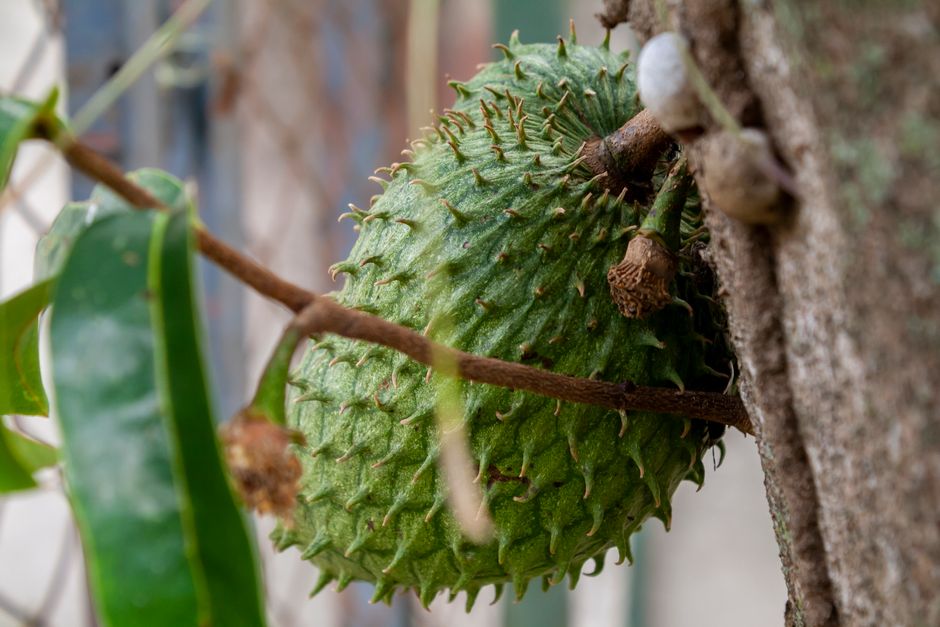
Soursop leaf tea is made by steeping fresh or dried soursop leaves in hot water. There are two main ways to do it: a simple hot infusion, where leaves steep in water just off the boil for several minutes, and a longer simmered decoction, where leaves are gently boiled to draw out more of the plant’s compounds. Both use the same leaves and water. The difference is time and heat.
Soursop (Annona muricata) is a tropical tree grown in parts of Central and South America, the Caribbean, Africa, and Southeast Asia. Its leaves have a long history of use in traditional medicine across those regions. That history is real. What is less settled is how much of the traditional reputation holds up under modern study, and that distinction matters before you start drinking it.
What Is Soursop Leaf Tea?
Soursop leaf tea is a water infusion made from the leaves of the soursop tree. The leaves are typically steeped fresh or dried, and the resulting drink has a mild, slightly earthy, somewhat bitter flavor.
The fruit gets most of the attention, but the leaves are what appear most often in traditional preparations. In many Caribbean and West African traditions, soursop leaf preparations have been used for sleep, relaxation, and digestive complaints. Some of these uses have been studied in laboratory settings. Far fewer have been tested in people.
One important clarification: soursop leaf tea is not the same as soursop fruit juice or fruit extract. The leaves contain different compounds in different concentrations than the fruit does. Research on one does not automatically apply to the other.
How To Make Tea With Soursop Leaves Two Ways
The two methods differ in heat and time. A hot infusion is quicker and gentler. A simmered decoction extracts more from the leaf but also pulls out more bitterness.
Method 1: Hot Infusion (Fresh or Dried Leaves)
This is the simpler method and the one closest to how most herbal teas are brewed.
- Use roughly 3 to 5 fresh soursop leaves, or about 1 to 2 teaspoons of dried crushed leaves, per cup of water. These are traditional preparation ranges, not clinical doses.
- Rinse fresh leaves under cool water to remove dust and debris.
- Bring water to a boil, then let it rest for about a minute so it is just off the boil.
- Pour the hot water over the leaves and cover the cup.
- Steep for 5 to 10 minutes. Longer steeping means a stronger, more bitter taste.
- Strain and drink warm or cooled.
Covering the cup matters more than people realize. Many of the aromatic compounds in herbal teas are volatile, and an open cup lets them escape with the steam. A saucer or lid keeps more of the flavor in the final drink.
Method 2: Simmered Decoction
A decoction uses sustained heat. It is the traditional approach for tougher plant material like leaves, bark, and roots, where a short steep may not extract much.
- Use about 4 to 6 fresh leaves or 1 to 2 teaspoons of dried leaves per 2 cups of water.
- Place leaves and water in a small pot.
- Bring to a boil, then reduce to a gentle simmer.
- Simmer covered for 10 to 15 minutes.
- Remove from heat, keep covered, and let it sit another 5 minutes.
- Strain before drinking.
Expect a stronger, more bitter tea. The longer simmer extracts more plant material overall, which means both more flavor and more of everything else in the leaf. That cuts both ways, and it is one reason not to treat a stronger brew as automatically better.
Fresh Leaves vs. Dried Leaves: Which Should You Use?
Both work. The choice affects flavor more than anything else.
| Factor | Fresh Leaves | Dried Leaves |
|---|---|---|
| Flavor | Milder, more vegetal | More concentrated, often more bitter |
| Availability | Limited to where the tree grows or fresh suppliers | Widely sold dried and packaged |
| Shelf life | Days in the refrigerator | Months if stored cool and dry |
| Amount needed | More by volume | Less by volume, since drying removes water |
Drying concentrates the leaf by removing water, which is why you use less dried leaf than fresh for a similar strength. Store dried leaves away from light and moisture. Fresh leaves should be used quickly or refrigerated and used within a few days.
Does Soursop Leaf Tea Have Health Benefits?
The honest answer is that the human evidence is thin. Most of what exists comes from laboratory and animal studies, not from controlled trials in people.
Laboratory research has found compounds in soursop leaves, including classes called acetogenins, that show activity against cancer cells in petri dishes. That finding gets repeated online as if it means drinking the tea treats cancer. It does not. A compound killing cells in a lab dish is a starting point for research, not proof of a clinical effect. Many substances that look promising in a dish fail completely in the human body, often because they are poorly absorbed, broken down before they reach a target, or not selective enough to spare healthy cells.
Some smaller studies and traditional use reports describe calming or sleep-promoting effects. The evidence there is limited and largely preliminary. No large, well-controlled human trial has confirmed that soursop leaf tea treats any specific disease.
There is also a safety concern that deserves more attention than it usually gets. Soursop leaves and fruit contain annonacin, a compound from the acetogenin family. Some epidemiological research has looked at a possible association between long-term, high dietary intake of soursop and atypical Parkinsonism in certain populations. That research is observational and does not prove cause and effect, and occasional tea drinking is a very different exposure than regular heavy consumption of the fruit. Still, it is a genuine signal, not a rumor, and it is a reasonable reason not to drink large amounts daily over long periods.
Is Soursop Leaf Tea Safe?
Occasional consumption of soursop leaf tea is generally considered low risk for healthy adults, based on its traditional use. That is a statement about common practice, not about proven safety in clinical trials.
Some groups should be more cautious. No clinical guidelines exist for soursop leaf tea during pregnancy or breastfeeding, and it should not be assumed safe in those periods. The same applies to children, where no established dosing or safety data exist.
Soursop may lower blood pressure and affect blood sugar in some reports. People taking blood pressure medication or diabetes medication should talk to a clinician before drinking it regularly, because combining substances with similar effects can push levels too low.
Anyone with a movement disorder or a family history of Parkinsonism should be especially cautious given the annonacin question. And anyone being treated for cancer should not substitute herbal tea for medical treatment. That is not a cautious hedge. It is a real risk, because delaying or replacing proven treatment has documented harms.
How Should You Store and Serve It?
Drink soursop leaf tea fresh when possible. Brewed herbal teas lose aroma and flavor within a day, and there is no good reason to make a large batch in advance.
If you do refrigerate leftovers, keep them covered and use within about 24 hours. Discard anything that smells off or looks cloudy. Honey or a slice of lime can soften the bitterness, though both add sugar or acid that some people prefer to avoid.
One practical note: because the simmered method extracts more, it can be diluted with additional hot water if the bitterness is too strong. That gives you a milder cup without starting over.
Frequently Asked Questions
How many soursop leaves should I use per cup of tea?
Traditional preparations use about 3 to 5 fresh leaves or 1 to 2 teaspoons of dried leaves per cup. These are customary amounts, not clinical doses, and no official guidelines set a standard serving.
Can you drink soursop leaf tea every day?
There is no established safe daily limit, and concerns about long-term high intake of annonacin suggest caution with heavy daily use. Occasional drinking is a different exposure than daily consumption over years.
Does soursop leaf tea cure cancer?
No. Laboratory studies show some leaf compounds have activity against cancer cells in dishes, but no human trial has shown the tea treats cancer, and it should never replace medical treatment.
Is soursop leaf tea safe during pregnancy?
No clinical guidelines exist for soursop leaf tea during pregnancy or breastfeeding, so it should not be assumed safe. Ask a clinician before using it during either period.
