
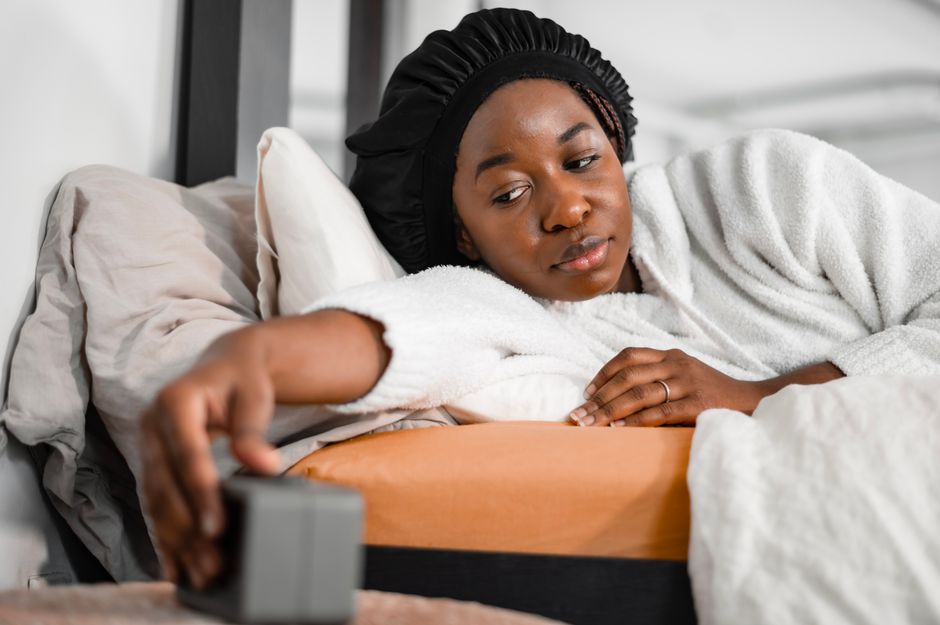
Waking up on time is not about willpower. It is about biology and routine. Your body follows a natural sleep-wake cycle driven by light and darkness. When you work with that cycle instead of against it, waking up becomes easier. The most reliable way to wake up on time is to keep a consistent sleep schedule, get morning light exposure, and use an alarm placed across the room. These steps train your internal clock so your body starts waking naturally before the alarm even sounds.
Why Do You Struggle To Wake Up?
Most people who struggle to wake up are simply not getting enough sleep. Adults need between seven and nine hours per night. If your alarm goes off after only six hours, your body is still in a deep sleep stage. Waking during deep sleep leaves you groggy and confused. That heavy feeling is called sleep inertia, and it happens when you wake from the wrong part of your sleep cycle.
Your sleep runs in cycles of about 90 minutes. You move through light sleep, deep sleep, and REM sleep several times each night. Waking at the end of a cycle feels natural. Waking in the middle of one feels terrible. If you set your alarm based on when you fall asleep, you can time it to go off at the end of a cycle. Many people find that waking after five or six full cycles — about 7.5 or 9 hours — feels much easier than waking after a random number of hours.
Another common cause is an irregular schedule. Going to bed at 10 p.m. on weekdays and 2 a.m. on weekends confuses your internal clock. Your body cannot predict when sleep is coming, so it does not prepare for waking. The result is an alarm that feels like an attack every morning.
How To Make Sure You Wake Up On Time
The single most effective change is a fixed wake time. Wake up at the same time every day — including weekends. This sets your circadian rhythm, the internal clock that controls sleepiness and alertness. When your wake time is stable, your body releases cortisol and other alerting hormones about one to two hours before you open your eyes. You wake up more easily because your body is already preparing.
Pair your fixed wake time with morning light. Light is the strongest signal your brain uses to set its clock. Open your curtains immediately after waking. Go outside for a few minutes if you can. Bright light in the first hour after waking tells your brain that daytime has started. This suppresses melatonin, the sleep hormone, and shifts your clock earlier over time.
Place your alarm clock across the room. This forces you to physically get out of bed to turn it off. Once you are standing, the hardest part is over. Do not use your phone as an alarm if you can avoid it. If you must, put it across the room and use a separate alarm sound that is not your phone’s default. Many people sleep through sounds they are used to. Changing the alarm tone regularly keeps it noticeable.
What To Do The Night Before
Preparation starts hours before bed. What you eat and drink matters. Caffeine stays in your system longer than most people realize. Its effects can last six hours or more. A coffee at 4 p.m. can still interfere with sleep at 10 p.m. Alcohol is another problem. It may help you fall asleep faster, but it fragments sleep in the second half of the night. You may wake up tired even after eight hours in bed.
Create a wind-down routine that lasts 30 to 60 minutes. Dim the lights in your home an hour before bed. Stop using screens — phones, tablets, and computers emit blue light that delays melatonin release. If you must use a screen, use night mode settings that reduce blue light. Do something calm: read a paper book, stretch, or take a warm shower. The drop in body temperature after a warm shower signals your brain that it is time to sleep.
Set your alarm before you get into bed. Decide your wake time and set the alarm while you are still fully awake. Also decide what you will do first in the morning. Having a plan — like making coffee or showering — gives you a reason to get out of bed. A vague intention to “wake up” is weaker than a specific first action.





Is The Snooze Button Really That Bad?
Yes. Hitting snooze fragments your sleep into short, low-quality pieces. Those extra ten-minute intervals are not restorative sleep. You fall back into a shallow sleep and then get yanked out of it again. Each snooze cycle makes you feel worse, not better. The sleep you get between alarms is too short to complete a sleep cycle, so you wake up in the middle of one every time.
Snoozing also trains your brain to ignore the alarm. When you consistently sleep through or dismiss your first alarm, your brain learns it is not a real signal. The alarm loses its power to wake you. The better approach is to set one alarm at your actual wake time and get up immediately. If you worry about sleeping through it, use an alarm app that requires you to scan a barcode or solve a math problem to turn it off. These apps force your brain to engage before your body can go back to sleep.
What About Waking Up Without An Alarm?
Many people want to wake up naturally without an alarm at all. This is possible, but it requires a very consistent schedule. When your bedtime and wake time are stable for weeks, your circadian rhythm becomes precise. Your body learns to wake at the same time each day. Some people find they wake a few minutes before their alarm goes off. That is a sign their internal clock is well-tuned.
To reach this point, start with an alarm to establish your schedule. Keep the same wake time for at least two to three weeks. Get morning light every day. Avoid late nights that shift your schedule. After several weeks of consistency, try going one night without an alarm on a day when you can afford to sleep in. If you wake within the same 30-minute window, your internal clock is working. If you sleep much later, your schedule needs more time or your sleep debt is too high.
Light-based alarm clocks can help bridge the gap. These devices gradually brighten over 30 minutes before your wake time, mimicking a sunrise. The light signals your brain to reduce melatonin and begin waking. Some research suggests these alarms make waking feel more natural compared to sound-based alarms. They are not magic — you still need enough sleep — but they can make the transition gentler.
When Should You See A Doctor?
Occasional difficulty waking is normal. Chronic difficulty is not. If you consistently struggle to wake even after seven to nine hours in bed, something else may be going on. Persistent daytime fatigue, loud snoring, or gasping during sleep can point to sleep apnea. This condition interrupts breathing during sleep and prevents deep rest. It requires medical evaluation and treatment.
Other conditions can also disrupt sleep. Insomnia, restless leg syndrome, and depression all affect sleep quality. Shift work disorder affects people who work nights or rotating schedules. If you have tried consistent sleep schedules and good sleep habits for several weeks without improvement, talk to a doctor. A sleep study may be recommended to identify the underlying cause.
Some people assume they are “just not morning people.” That may be true to a degree — genetics influence whether you are naturally an early bird or night owl. But even night owls can adapt to a fixed schedule with consistent light exposure and routine. The key is recognizing the difference between a preference and a medical problem.
Frequently Asked Questions
How many hours of sleep do I need to wake up easily?
Most adults need between seven and nine hours per night. Waking at the end of a 90-minute sleep cycle — such as after 7.5 or 9 hours — makes waking feel easier.
Does the snooze button actually help you wake up?
No. Snoozing fragments your sleep and makes you feel more groggy. Set one alarm at your real wake time and get up immediately.
Can I train myself to wake up without an alarm?
Yes, with a consistent schedule. Keep the same wake time for several weeks, get morning light daily, and your internal clock can learn to wake naturally.
Why do I feel terrible when my alarm wakes me?
You are likely waking during deep sleep. Timing your alarm to the end of a 90-minute sleep cycle can reduce that groggy feeling.
