
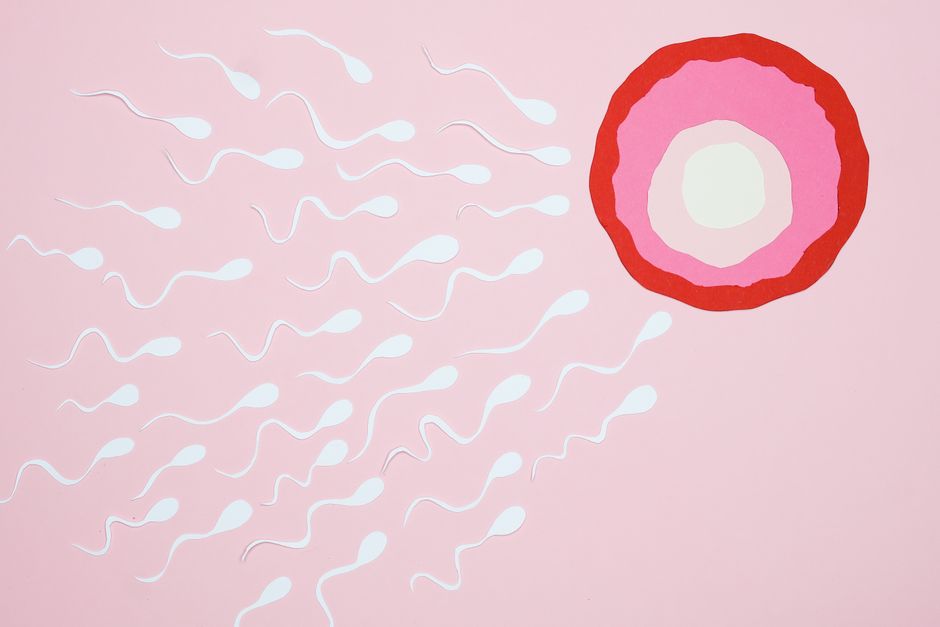
Conception depends on a chain of events that has to go right: healthy sperm, fertile cervical mucus, well-timed intercourse, and an egg released at the right moment. You cannot control every link. But several steps genuinely improve the odds that sperm meet the egg — and a few popular ideas do not. Here is what the evidence actually supports.
How To Make Sure Sperm Reach The Egg And Fertilize?
No method guarantees fertilization. What you can do is remove obstacles and time intercourse to the fertile window. Sperm can survive in the female reproductive tract for up to about five days, while the egg is viable for roughly 12 to 24 hours after ovulation. That window is why timing matters more than frequency alone.
During intercourse, semen is deposited near the cervix. Sperm then swim through cervical mucus into the uterus and up into the fallopian tubes, where fertilization normally occurs. Healthy cervical mucus changes consistency around ovulation — becoming clearer, wetter, and stretchier — and this change helps sperm travel. Sperm that reach the fallopian tube can wait there for the egg to arrive.
So the practical answer has three parts: have intercourse during the days leading up to ovulation, support the biology that helps sperm move (mucus quality and sperm health), and address any known medical barriers with a clinician. Everything else is secondary.
When Is the Fertile Window and Why Does Timing Matter?
The fertile window is the days just before ovulation plus the day of ovulation itself. Because sperm survive for several days but the egg does not, intercourse before ovulation is more likely to result in conception than intercourse after it.
For people with regular cycles, ovulation typically occurs about 14 days before the next period begins — not necessarily on day 14 of the cycle. Cycle length varies, so counting from the start of the period can mislead. Tracking methods help narrow the window:
- Basal body temperature rises slightly after ovulation. This confirms ovulation happened but does not predict it in advance.
- Cervical mucus changes — increasing wetness and stretchiness — signal approaching ovulation.
- Ovulation predictor kits detect a hormone surge (luteinizing hormone) that usually precedes ovulation by about a day or two.
Having intercourse every day or every other day during the fertile window is reasonable. Some clinicians suggest every other day to maintain sperm quality, though daily intercourse during the window is not harmful for most couples. There is no strong evidence that abstaining for many days beforehand improves outcomes, and long abstinence is not recommended.
Does Sexual Position Affect Whether Sperm Reach the Egg?
No good evidence shows that any sexual position improves conception. Sperm are deposited at the cervix regardless of position, and they swim upward on their own. Positions marketed as “best for conception” are not supported by clinical research.
The same applies to lying with hips elevated or staying flat after intercourse. Some clinicians still suggest lying down for a short time, and it is harmless, but trials have not shown it increases pregnancy rates. The idea that gravity causes sperm to “fall out” does not hold up — what leaks out is a small fraction of the ejaculate, and the sperm that matter have already moved into the cervix.
One practical point that does matter: avoid douching and vaginal washes around intercourse. Douching can disrupt the vaginal environment and remove cervical mucus, and it is not recommended by medical guidance.
What Lifestyle Factors Affect Sperm Health?
Sperm production takes roughly two to three months, so lifestyle changes affect sperm quality on that timescale, not overnight. Several factors have reasonable evidence behind them.
Heat exposure matters because sperm production works best a few degrees below core body temperature. Frequent hot tubs, saunas, and prolonged laptop use on the lap have been studied, with mixed results, but avoiding excessive heat to the testicles is a sensible step. Tight underwear is often mentioned; the evidence is weaker than commonly assumed.
Smoking is associated with lower sperm count and reduced motility, and quitting is one of the more reliable ways to improve sperm parameters over time. Heavy alcohol use is linked to poorer sperm quality; moderate intake is less clear. Obesity is associated with altered sperm quality and hormonal changes, and weight loss may help.
Supplements deserve caution. Antioxidants like zinc, selenium, and coenzyme Q10 have been studied for male fertility, but results are inconsistent, and no supplement is established to reliably improve conception rates. Some clinicians recommend them; the evidence does not yet support routine use as a proven treatment.
What About Diet, Weight, and General Health?
General health affects fertility for both partners. For people trying to conceive, a balanced diet, regular physical activity, and healthy body weight are reasonable goals, though the evidence linking specific foods to conception is limited.
For the partner carrying the pregnancy, folic acid supplementation is well established to reduce the risk of certain birth defects, and standard guidance recommends it before conception and in early pregnancy. Prenatal vitamins are commonly recommended for this reason.
Certain nutrients are linked to fertility in observational studies — for example, diets higher in vegetables, whole grains, and fish, and lower in trans fats, have been associated with better fertility outcomes. These are associations, not proof of cause and effect, and no single food has been shown to guarantee conception. The practical takeaway is a varied, mostly whole-food diet rather than any specific “fertility food.”
When Should You See a Doctor About Fertility?
Fertility evaluation is reasonable after about a year of regular unprotected intercourse without conception. Some guidance suggests earlier evaluation — after six months — for people aged 35 and older, or sooner if there are known risk factors.
See a clinician sooner if any of these apply:
- Irregular or absent periods, which may signal ovulation problems
- Known conditions affecting fertility, such as endometriosis or polycystic ovary syndrome
- Prior pelvic infection, surgery, or injury to the reproductive organs
- Known sperm problems or a partner with a history of testicular issues
- Any concern that feels urgent to you
A clinician can check ovulation, sperm quality, and structural factors. Many causes of infertility are treatable, and some are identified only through testing. Trying harder at home does not fix a blocked fallopian tube or a sperm production problem — that is where medical evaluation changes outcomes.
What Does Not Help — and What Might
A lot of fertility advice online is marketing, not medicine. Here is a clear-eyed look.
Not supported by good evidence: special positions, raising hips after sex, “sperm-friendly” lubricants marketed as fertility boosters (though some lubricants are less hostile to sperm than others), and most fertility supplements for men. None of these has been shown to increase pregnancy rates in trials.
Reasonable and low-risk: timing intercourse to the fertile window, avoiding smoking and heavy alcohol, maintaining a healthy weight, and taking folic acid if you may become pregnant. These are supported by general health evidence and clinical guidance.
Worth discussing with a clinician: ovulation tracking for irregular cycles, evaluation of sperm quality, and any supplement or treatment you are considering. Some approaches used in practice — like specific lubricant recommendations or supplement regimens — are not strongly supported by trials, so ask what the evidence is before spending money.
The biology of conception is not fully controllable. Sperm health, egg quality, and timing all interact in ways that no single habit can override. What you can do is stack the odds in your favor with the steps that are actually supported, and get medical input early if something seems off.
Frequently Asked Questions
How long do sperm live inside the body?
Sperm can survive in the female reproductive tract for up to about five days under favorable conditions. That is why intercourse in the days before ovulation can still lead to conception.
Does lying down after sex help sperm reach the egg?
No good evidence shows it improves conception, though it is harmless. Sperm move into the cervix on their own, and what leaks out afterward is a small fraction of the ejaculate.
How often should we have sex to conceive?
Every day or every other day during the fertile window is reasonable. There is no strong evidence that a specific frequency is best, and long abstinence beforehand is not recommended.
Do fertility supplements for men actually work?
The evidence is inconsistent, and no supplement is established to reliably improve conception rates. Some clinicians recommend them, but ask about the evidence before spending money.
