
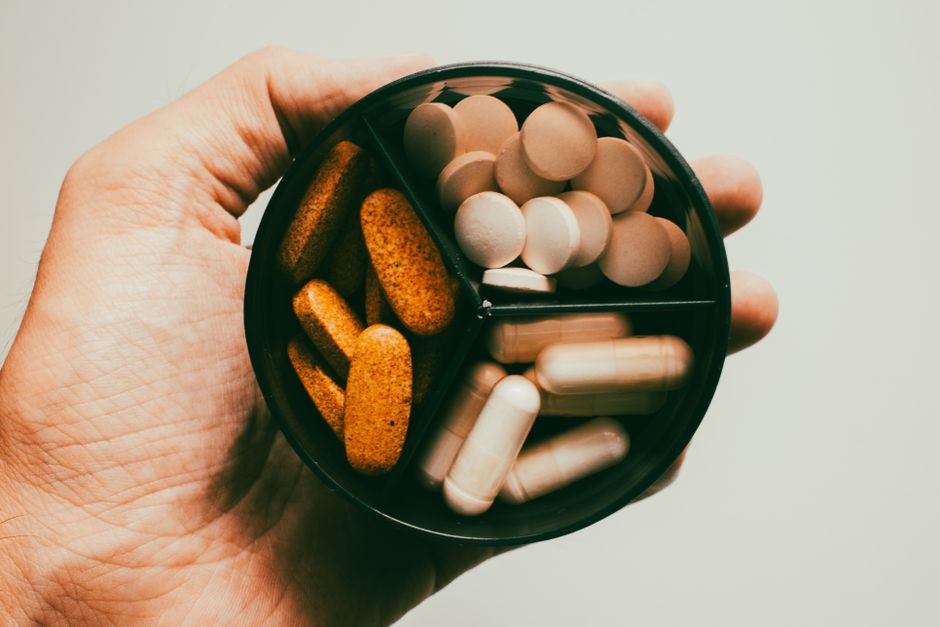
Making a supplement from a formula to a finished product is a multi-stage manufacturing process that moves through ingredient sourcing, blending, forming, testing, and packaging before a bottle ever reaches a shelf. Each stage has its own quality controls, and in the United States the entire process is regulated under current Good Manufacturing Practices (cGMP) enforced by the FDA. Understanding those steps helps explain why two products with similar labels can differ enormously in what is actually inside the capsule.
How To Make Supplements From Formula To Finished Product?
The process starts with a formula — a written specification listing every ingredient, its exact amount, and the form it takes. From there, raw materials are received and tested, ingredients are weighed and blended, the mixture is formed into tablets, capsules, softgels, or powders, and the finished batch is tested and packaged.
The FDA classifies dietary supplements as a category of food, not drugs. That distinction matters. Supplements do not need pre-market approval before they are sold. The manufacturer is responsible for ensuring the product is safe and that its label claims are truthful. The FDA can act after a product reaches the market if problems emerge.
That regulatory structure shapes how the whole process works. Quality depends heavily on the manufacturer’s own systems, not on government review before sale.
What Happens During Ingredient Sourcing and Raw Material Testing?
Raw materials arrive from suppliers around the world, and each lot should be tested before it enters production. Identity testing confirms that the material is what the supplier claims. This is the single most important quality checkpoint in the entire process.
Common tests include:
- Identity testing — confirms the material is the correct substance, often using techniques like high-performance liquid chromatography or mass spectrometry
- Purity testing — checks for heavy metals, residual solvents, and microbial contamination
- Potency testing — measures how much of the active compound is actually present
- Supplier qualification — reviews the supplier’s own testing records and manufacturing practices
This step exists because ingredient fraud is a documented problem. Research has repeatedly found that some botanical ingredients sold as raw material do not match what the label says. A 2013 study published in BMC Medicine used DNA barcoding on herbal products and found that a substantial share contained ingredients not listed on the label. That is why identity testing at the raw material stage matters more than almost anything else.
Not every manufacturer tests every input to the same depth. Some rely on certificates of analysis from suppliers. The FDA expects identity testing for dietary ingredients, but the depth of additional testing varies by company and by product.
How Are Ingredients Weighed and Blended?
Once materials pass testing, they are weighed according to the formula. Accuracy at this stage determines whether the finished product matches the label. A scale that drifts, or a technician who misreads a batch record, can throw off an entire production run.
Blending follows. The goal is a uniform mixture, meaning every scoop or capsule contains roughly the same amount of each ingredient. This is harder than it sounds. Ingredients differ in particle size, density, and flow characteristics. A light powder and a dense mineral can separate during handling if the blend is not managed carefully.
Manufacturers use several approaches to control this:
- Matching particle sizes through milling or granulation
- Controlling humidity and temperature in the blending room
- Running blend uniformity tests on samples taken from different points in the batch
- Using geometric dilution, where a small amount of a potent ingredient is mixed gradually into a larger volume
Blend uniformity is one of the most common failure points in supplement manufacturing. If the active ingredient is not evenly distributed, one capsule might contain far more than intended and another far less — even though the batch as a whole tests correctly.




How Are Tablets, Capsules, and Softgels Actually Formed?
The blended powder is converted into a dosage form. Each form has different requirements and different challenges.
Tablets are made by compression. The powder blend is fed into a die and pressed between punches. Formulators add excipients — binders, fillers, disintegrants, and lubricants — to help the powder flow, hold together, and break apart after swallowing. Getting a tablet to be hard enough to survive shipping but still dissolve properly in the gut is a genuine engineering tradeoff.
Two-piece capsules are filled by machines that separate the cap from the body, dose the powder into the body, and rejoin the halves. The powder must flow evenly and not stick. Capsule shells are usually gelatin or, for vegetarian products, cellulose.
Softgels hold liquids or oils inside a sealed gelatin or starch shell. They are made on rotary die machines that form, fill, and seal the shell in one continuous operation. Softgels suit oil-based ingredients like fish oil or fat-soluble vitamins.
Powders skip forming entirely. The blend is simply filled into tubs or stick packs. The main quality concerns are uniformity and moisture control.
Each of these processes runs under cGMP requirements covering equipment cleaning, batch records, and in-process checks. A manufacturer must be able to trace a finished bottle back to the specific batch of each ingredient used.
What Testing Happens Before a Product Is Released?
Finished product testing is the last line of defense before release. It confirms that the batch matches the specification set in the formula.
Typical finished product tests include:
- Potency — verifies that each active ingredient is present at the labeled amount
- Microbial limits — checks for bacteria, yeast, and mold
- Heavy metals — tests for lead, arsenic, cadmium, and mercury
- Disintegration and dissolution — confirms tablets and capsules break down properly
- Weight variation — ensures consistent fill
Not all of these tests are required by regulation for every product. The FDA requires that finished products meet specifications for identity, purity, strength, and composition, but the specific test methods are left to the manufacturer. This is where third-party certification programs come in. Organizations like USP, NSF, and ConsumerLab run independent testing and audit programs. A product carrying one of those marks has been checked by someone outside the company that made it.
It is worth being clear about what these marks mean. They indicate that a specific batch or facility met a testing standard. They are not a guarantee of clinical benefit.
How Does Packaging Affect the Finished Product?
Packaging is not just a marketing decision. It affects stability. Many supplement ingredients degrade when exposed to light, heat, moisture, or oxygen. Vitamin C oxidizes. Probiotics lose viability. Oils go rancid.
Manufacturers choose packaging materials to slow that degradation. Amber glass blocks light. Desiccant packets absorb moisture. Nitrogen flushing displaces oxygen inside the container. Blister packs protect individual doses better than a single bottle for some products.
The label must also comply with labeling rules. In the US, a supplement label must carry a Supplement Facts panel, a statement of identity, net quantity of contents, and the name and place of business of the manufacturer or distributor. Structure-function claims — statements about how a nutrient affects the body — must carry a disclaimer that the FDA has not evaluated the claim and that the product is not intended to diagnose, treat, cure, or prevent any disease.
Why Do Two Products With the Same Formula Differ?
Two bottles can list identical ingredients and still not be equivalent. The form of the ingredient matters — magnesium oxide and magnesium glycinate are both “magnesium” but behave differently in the body. The dose matters. The quality of raw materials matters. Whether the product was actually tested matters.
There is no single regulatory seal that guarantees a supplement is well made. The best available signals are third-party certification, transparent labeling that names specific ingredient forms, and a manufacturer willing to publish its testing practices.
Consumers can also check whether a product has been the subject of an FDA warning letter or recall. Those records are public. A recall does not automatically mean a company is careless — it can reflect a supplier problem — but a pattern of recalls is worth noticing.
Frequently Asked Questions
Are dietary supplements approved by the FDA before they are sold?
No. Supplements do not require pre-market approval, unlike prescription drugs. The FDA regulates them as a food category and can take action after a product is on the market if it is unsafe or mislabeled.
What does third-party testing on a supplement label actually mean?
It means an outside organization verified that a specific product or facility met a defined testing standard, often covering potency, purity, and contaminants. It does not mean the product has proven health benefits.
Why can two supplements with the same ingredients work differently?
Ingredient form, dose, raw material quality, and whether the finished product was tested all vary between manufacturers. Identical ingredient lists do not guarantee identical content or absorption.
What is the most important quality check in supplement manufacturing?
Raw material identity testing is widely considered the most critical step, because ingredient fraud and mislabeling at the supplier level are documented problems. If the input is wrong, nothing downstream can fix it.
