
Sulfur is one of the most abundant elements on Earth, and humans have extracted it from rock, gas, and oil for thousands of years. Industrial production today relies on recovering sulfur as a byproduct of oil and gas refining, while laboratory preparation uses smaller-scale chemical reactions under controlled conditions. Understanding both paths helps you see why sulfur is a major industrial chemical and why lab work with it demands careful handling.
This guide explains how sulfur is made at industrial scale and in the lab. It covers the main processes, the safety issues, and the practical limits of each method.
Where Does Sulfur Come From Naturally?
Sulfur exists in underground deposits, often near volcanoes and salt domes, and in minerals such as pyrite (iron sulfide) and gypsum (calcium sulfate). It also appears in crude oil and natural gas as hydrogen sulfide and other sulfur compounds. These natural sources are why sulfur has been collected and traded for centuries.
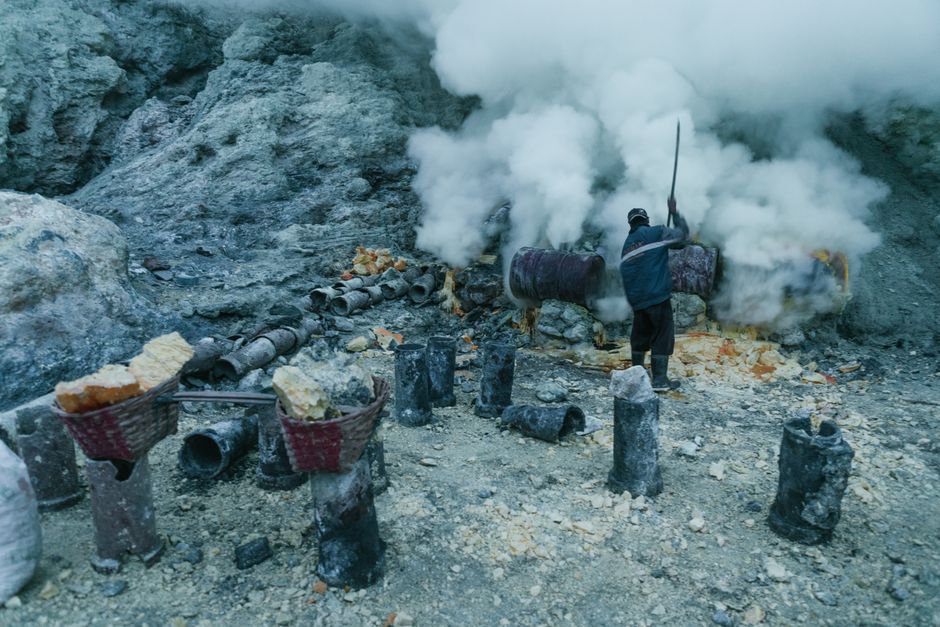
Volcanic regions release sulfur as gas that deposits as yellow crystals when it cools. Historically, people mined these deposits directly. Today, most sulfur is not mined as a primary product at all. It is recovered from fossil fuel processing, which makes it a byproduct rather than a mined resource.
How Is Sulfur Made Industrially?
The dominant industrial method is the Claus process, which recovers elemental sulfur from hydrogen sulfide gas produced during oil and gas refining. It accounts for the large majority of global sulfur supply. The process happens in two stages.
The Claus Process in Simple Terms
First, part of the hydrogen sulfide is burned with oxygen to form sulfur dioxide. Then the sulfur dioxide reacts with remaining hydrogen sulfide to produce elemental sulfur and water. This second step happens over a catalyst, typically activated alumina, at controlled temperatures. The overall reaction converts two molecules of hydrogen sulfide and one of oxygen into sulfur and water.
The sulfur comes out as a liquid because the process runs hot. It is cooled and formed into solid blocks, granules, or prills for shipping. Recovery efficiency is high but not perfect, so refineries often add a tail-gas treatment step to capture remaining sulfur compounds before release.
Other Industrial Routes
- Frasch process: Hot water and compressed air are pumped underground to melt and lift sulfur from deposits. This method is largely obsolete in most countries because of its energy cost and environmental impact.
- Pyrite roasting: Heating iron sulfide minerals releases sulfur dioxide, which is processed into sulfuric acid rather than elemental sulfur. This is common in metal smelting.
- Recovery from sour gas: Natural gas containing hydrogen sulfide is treated to remove the sulfur, which is then converted through the Claus process.
One point worth knowing: the sulfur industry is tied closely to fuel production. When refineries process more sulfur-rich crude oil, they produce more sulfur as a byproduct. This is why sulfur supply can shift with energy markets rather than with demand for sulfur itself.
What Is the Chemistry Behind Sulfur Production?
Sulfur chemistry centers on the element’s ability to form compounds in several oxidation states. In hydrogen sulfide, sulfur has an oxidation state of minus two. In sulfur dioxide, it is plus four. In sulfuric acid, it is plus six. Industrial processes move sulfur between these states to capture it in a usable form.
The Claus reaction is a disproportionation, meaning the same element is both oxidized and reduced. Some sulfur goes from minus two to zero, and some goes from plus four to zero. The result is elemental sulfur, the yellow solid most people recognize.
Understanding these states matters because they determine how sulfur behaves in the environment. Sulfur dioxide released to the air can form acid rain. That is why industrial processes capture sulfur rather than venting it. Regulatory limits on sulfur emissions have driven much of the technology behind modern recovery.
How Do You Make Sulfur in a Lab?
Laboratory preparation of sulfur is usually done in small amounts for teaching or research. The most common approach is to react sodium thiosulfate with a dilute acid, which produces sulfur as a fine precipitate along with sulfur dioxide gas. Another route is heating iron filings with sulfur to form iron sulfide, though that produces a compound rather than elemental sulfur.
Here are general lab tips that apply to sulfur work:
- Work in a fume hood. Sulfur dioxide and hydrogen sulfide are both hazardous to breathe.
- Wear gloves and eye protection. Sulfur itself is low in acute toxicity, but its reaction products are not.
- Keep heat sources controlled. Sulfur melts at about 115 degrees Celsius (239 degrees Fahrenheit) and can release irritating fumes when heated further.
- Vent gases properly. Do not let sulfur dioxide build up in an enclosed space.
- Follow your institution’s chemical hygiene plan. Local rules vary and should take priority over general guidance.
The evidence here is straightforward: these are established safety practices, not optional extras. Sulfur dioxide is a recognized respiratory irritant, and hydrogen sulfide is toxic at higher concentrations. Treat both with respect.
What Are the Safety Risks of Working With Sulfur?
Elemental sulfur is not highly toxic by itself, but the risks come from its reactions and its physical behavior. Sulfur dioxide causes airway irritation and can worsen asthma. Hydrogen sulfide is more dangerous. At low levels it smells like rotten eggs, but at higher levels it can deaden the sense of smell and cause serious harm without warning.
Finely divided sulfur dust can ignite, and sulfur fires are difficult to extinguish. Molten sulfur can cause severe burns. In industrial settings, these hazards are managed with ventilation, temperature control, and strict ignition controls.
For anyone handling sulfur at home or in a school lab, the honest position is that this is not a casual activity. The reaction products require ventilation and proper protective equipment. If you are not trained in chemical handling, do not attempt sulfur preparation outside a supervised setting.
How Is Sulfur Used After Production?
Most recovered sulfur is converted into sulfuric acid, which is one of the most widely used industrial chemicals in the world. Sulfuric acid goes into fertilizer production, metal processing, and battery manufacturing. A smaller share of sulfur is used directly in products such as fungicides, rubber vulcanization, and some medications.
Sulfur also appears in agriculture as a soil amendment and in some pesticide formulations. In medicine, sulfur compounds are used in certain skin treatments, though the evidence for specific uses varies and should be discussed with a clinician rather than assumed.
The key distinction is between elemental sulfur and its compounds. They behave differently, have different risks, and serve different purposes. Mixing them up is a common source of confusion.
What Are the Environmental Concerns?
Sulfur recovery exists largely because releasing sulfur compounds into the air causes harm. Sulfur dioxide contributes to acid rain, which can damage forests, soils, and water bodies. Regulations in many countries require refineries and smelters to capture sulfur rather than emit it.
The flip side is that sulfur recovery creates a large supply of a material that must be stored or used. Stockpiles of sulfur can be substantial, and handling them raises questions about dust and runoff. These are real industrial challenges, not solved problems.
Some research suggests that sulfur applications in agriculture can affect soil chemistry in ways that need monitoring. The evidence is mixed on long-term effects across different soil types, so broad claims in either direction are not well supported.
Frequently Asked Questions
How is sulfur made industrially?
Most industrial sulfur comes from the Claus process, which recovers elemental sulfur from hydrogen sulfide gas during oil and gas refining. It is a byproduct process rather than a primary manufacturing method.
Can you make sulfur at home safely?
Making sulfur at home is not recommended because the reactions produce hazardous gases such as sulfur dioxide that require proper ventilation and equipment. This work belongs in a supervised lab or industrial setting.
What is the difference between elemental sulfur and sulfuric acid?
Elemental sulfur is the yellow solid element, while sulfuric acid is a strong acid made by combining sulfur with oxygen and water. They have different chemical properties, uses, and safety risks.
Why is sulfur production tied to oil refining?
Crude oil and natural gas contain sulfur compounds that must be removed during refining, and the Claus process converts that waste into usable sulfur. This makes sulfur supply depend on fuel production rather than direct demand.
