
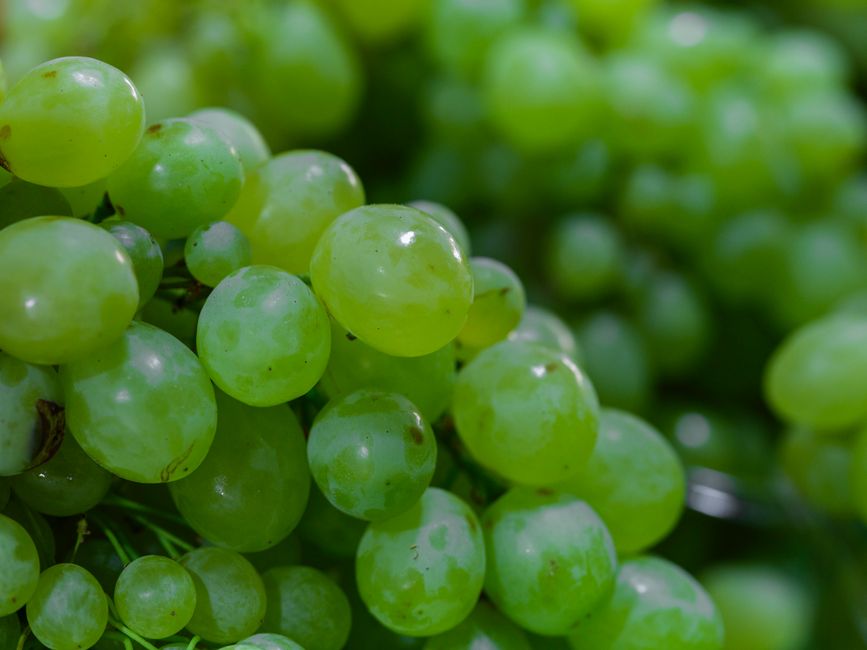
Seedless grapes are not a modern invention, but the science behind them is fascinating. They are created through a natural genetic mutation that has been cultivated for thousands of years. You cannot simply plant a seed from a seedless grape, because those grapes rarely produce viable seeds. Instead, growers propagate them through cuttings, a process that clones the parent vine.
How Are Seedless Grapes Actually Made?
Seedless grapes occur when a mutation prevents the seed from developing a hard outer coat. The grape still forms the beginnings of a seed, but it stops growing and remains soft and undeveloped. To the eater, this feels seedless.
This mutation happened naturally in ancient grapevines. Early growers noticed these unusual fruits and kept them by replanting cuttings from the same vine. Every seedless grape today traces back to this same propagation method. The vines are genetically identical clones of a parent plant.
Modern breeders use this same principle. They cross a seedless grape variety with a seeded variety that has desirable traits like disease resistance or better flavor. The offspring are then screened for seedlessness. This is a slow process that can take years to produce a new commercial variety.
Can You Grow Seedless Grapes From Seed?
No. This is the most common misconception. If you plant the small, soft remnants found inside a seedless grape, they will not grow into a vine. These structures are not viable seeds.
Growers must use cuttings or grafts. A cutting is a piece of vine stem that is planted in soil. It develops its own roots and grows into a new plant that is genetically identical to the parent. This is the only reliable way to grow seedless grapes.
Some commercial nurseries also graft cuttings onto rootstock. This is done to protect the vine from soil-borne pests and diseases. The grafted vine produces the same seedless fruit as the original cutting.
What Is The Science Behind Seedlessness?
Seedlessness in grapes is a trait controlled by multiple genes. It is not a simple single-gene switch. The primary mechanism involves a process called stenospermocarpy.
In stenospermocarpy, fertilization occurs, but the developing seed stops growing early. The embryo and endosperm fail to mature. The seed coat never hardens, leaving only a small, soft trace that is barely noticeable when eating.
This trait is dominant in some crosses and recessive in others. This is why breeders cannot predict with certainty which offspring will be seedless. They must grow out many seedlings and observe the fruit to know which ones carry the trait.





How To Make Seedless Grapes: The Breeding Process
Creating a new seedless grape variety is a long process. It starts with selecting parent vines. One parent is usually a seedless variety. The other is a seeded variety chosen for specific traits.
The flowers are hand-pollinated. This ensures the cross happens between the two chosen parents. After pollination, the resulting grapes contain seeds. Those seeds are planted, and each seedling is a unique new variety.
Growers wait several years for the seedlings to produce fruit. At that point, they evaluate each vine for seedlessness, flavor, color, and disease resistance. Most seedlings are discarded. Only a small fraction show promise.
Promising seedlings are then propagated by cuttings and grown in test plots. This evaluation phase can last a decade or more before a new variety reaches the market. The process is slow, but it is the only proven method for developing new seedless grapes.
Can You Force A Seeded Grape To Become Seedless?
No. There is no treatment, chemical, or growing technique that will turn a seeded grape variety into a seedless one. Seedlessness is determined entirely by genetics.
Some growers apply plant hormones like gibberellic acid to seedless varieties. This makes the grapes larger and improves fruit set. It does not make a seeded grape seedless. The hormone only enhances the fruit of varieties that already carry the seedless trait.
Gibberellic acid is also used on some seeded varieties to make the berries longer and thinner. The seeds remain present. The treatment changes the shape and size of the fruit, not its genetic makeup.
Are Seedless Grapes Genetically Modified?
No. Seedless grapes are not genetically modified organisms. They are the result of traditional crossbreeding and natural mutation.
Genetic modification involves directly inserting or editing genes in a laboratory. This has been done experimentally with grapes, but no genetically modified seedless grape is commercially available to consumers. The seedless grapes you buy at the store are products of conventional breeding.
This distinction matters because some shoppers are concerned about GMO foods. Seedless grapes do not fall into that category. They are a naturally occurring mutation that humans have cultivated for thousands of years.
How Long Does It Take To Grow Seedless Grapes?
From planting a cutting to harvesting fruit takes about three years. The first year, the cutting establishes roots and grows a single cane. The second year, the vine grows larger and may produce a small crop. Full production typically begins in the third year.
Developing a new variety from a cross takes much longer. From the initial pollination to a commercial release, expect 10 to 15 years. This timeline includes seedling evaluation, propagation, and multi-site testing.
Home gardeners should be patient. A newly planted cutting will not produce a meaningful harvest in its first year. The vine needs time to develop a strong root system and woody structure before it can support fruit.
Do Seedless Grapes Taste Different From Seeded Grapes?
Not inherently. The flavor of a grape depends on the variety, not on whether it has seeds. Some seedless varieties are exceptionally sweet. Others are more tart.
However, the breeding process has shifted the market toward seedless varieties that are crisp and sweet. This is a consumer preference, not a biological necessity. Seeded varieties like Concord grapes have a distinct flavor that many people prefer for juice and jelly.
Some wine producers argue that seeds contribute tannins and complexity to wine. This is true for wine grapes, which are almost always seeded. Table grapes are a different category, and seedlessness is a major selling point.
Frequently Asked Questions
Can I plant the seeds from a seedless grape?
No. The small structures inside a seedless grape are not viable seeds and will not grow. You must use a cutting from an existing vine to grow seedless grapes.
Are seedless grapes bad for you?
No. Seedless grapes have the same nutritional profile as seeded grapes. The only difference is the absence of mature seeds, and the soft traces left behind are harmless to eat.
How do farmers make seedless grapes without GMO?
Farmers use traditional crossbreeding and propagate the resulting plants through cuttings. This is a natural genetic trait, not a laboratory modification.
Why are seedless grapes more expensive?
They cost more because they require more labor and care during growing. The vines are propagated by cuttings, and the fruit often needs hand thinning and hormone treatments to reach commercial quality.
