

Roman cement with self‑healing properties is not a single recipe you can mix from memory. It combines the essential ingredients of ancient Roman concrete—volcanic ash, lime, and aggregate—with modern additives that repair cracks automatically. The self‑healing comes from either unreacted lime particles left inside the Roman mixture or from engineered components like bacteria or polymers that are added today. Below you will learn what Roman cement is, how it can heal itself, and what it takes to make a modern version.
What Is Roman Cement?
Roman cement is a modern term for the hydraulic building material used by the ancient Romans. It is not the same as Portland cement, which is common today. Roman concrete was made by mixing volcanic ash (called pozzolana) with lime and water. The volcanic ash reacted with the lime to form a durable binder that could set under water. This material built structures like the Pantheon and the aqueducts, some of which still stand after 2,000 years.
The key difference from modern cement is that Roman concrete contained large amounts of unhydrated lime clasts—small chunks of lime that never fully reacted. These clasts were long thought to be a flaw, but research suggests they actually give Roman concrete a unique self‑healing ability. When cracks form, water seeps in and reacts with the leftover lime to form new mineral deposits that seal the crack.
How Did Roman Concrete Naturally Self‑Heal?
Scientists have known for decades that Roman structures resist weathering better than many modern concretes. A 2023 study published in Science Advances provided a clear explanation. The researchers found that the small lime clasts in Roman concrete act as a repair system. When a crack develops, water dissolves some of the lime, creating a calcium‑rich solution. That solution then recrystallizes as calcium carbonate, filling the crack.
This process happens naturally over time. It is slow—cracks can take months or years to seal depending on moisture and crack width. But it does not require any human intervention or special additives. The self‑healing capacity is a built‑in property of the original Roman recipe, not something added later.
Modern concretes typically do not have this feature because they are made with finely ground cement that reacts almost completely during mixing. There is little unhydrated material left to trigger self‑repair.
What Are Modern Self‑Healing Cement Technologies?
Today engineers have developed several ways to make concrete self‑heal. None are exact copies of the Roman method, but they draw inspiration from it. The main approaches are:
- Bacterial self‑healing. Spores of certain bacteria are mixed into the concrete along with a calcium‑based nutrient. When water enters a crack, the bacteria become active and precipitate calcium carbonate, plugging the gap. This method is commercially available but adds cost and requires careful handling.
- Encapsulated polymer healing. Tiny capsules or hollow fibers containing a healing agent (such as a polymer or adhesive) are embedded in the concrete. When a crack breaks the capsules, the agent is released and seals the crack. This works well but the healing agent is consumed and cannot heal multiple cracks in the same spot.
- Mineral admixtures. Adding materials like fly ash, slag, or limestone powder that continue to react with water over time can provide some self‑healing, though typically less than the bacterial or polymer methods.
Each method has trade‑offs in cost, durability, and how many times a single crack can heal. None have been proven to match the longevity of Roman concrete because Roman structures have stood for millennia, while modern self‑healing concretes have only been tested for a few decades.
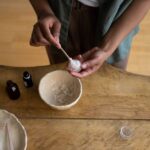




How to Make a Self‑Healing Roman‑Style Cement at Home?
This section is informational only. Do not attempt to make structural cement without professional engineering advice. Homemade mixtures can be unpredictable and may fail under load.
If you want to experiment with a small, non‑structural batch inspired by Roman methods, here is the general approach:
- Source volcanic ash or pozzolan. Genuine pozzolana from Italy is not widely available. Alternatives include fly ash from coal‑burning power plants or finely ground volcanic rock from landscape suppliers. You want a material high in silica and alumina that will react with lime.
- Mix with lime. Use hydrated lime (calcium hydroxide) from a hardware store. A common ratio in Roman recipes is about 2 parts volcanic ash to 1 part lime by volume, though exact proportions vary. Add enough water to make a thick paste.
- Add coarse aggregate. Small stones or crushed brick increase strength and mimic Roman construction. The Romans often used broken pottery or tuff.
- Include a self‑healing additive (optional). To boost self‑healing, you can add a small amount of calcium‑carbonate‑precipitating bacteria (available from specialty suppliers) or encapsulated polymer healing agents. However, these materials are expensive and not intended for small‑scale use.
- Allow slow curing. Roman concrete was often set in seawater or kept moist for long periods. Keep your mixture damp and covered for at least a week. Curing length affects final strength and the amount of unreacted lime left for self‑healing.
Even with correct ingredients, a homemade version will not have the same durability as ancient Roman concrete. The Romans used careful proportions, specific volcanic sources, and curing techniques that are not fully understood.
Is Roman Self‑Healing Cement Available Commercially?
No commercial product is marketed as “Roman self‑healing cement.” Several companies sell self‑healing concrete products, but they use bacterial or polymer technology, not the Roman lime‑clast mechanism. These products are more expensive than standard concrete and are used mainly in infrastructure projects where crack repair is costly, such as tunnels, bridges, and parking garages.
Some research groups are working to reproduce Roman concrete exactly. For example, a team at MIT has been analyzing Roman recipes and creating test batches. They have found that the hot mixing technique (mixing lime with volcanic ash while the lime is still hot from production) creates more lime clasts and improves self‑healing. But this process is difficult to scale and is not yet available to the public.
Limitations and Safety Considerations
Self‑healing concrete is not a miracle product. The healing process requires water. In dry environments, cracks may never seal. The self‑healed area is also often weaker than the original material. For Roman concrete, the healed calcium carbonate is less strong than the surrounding binder, so structural repairs may still be needed.
For anyone considering making cement at home: Portland cement is already difficult to work with safely. Lime can cause skin burns and eye damage. Volcanic ash may contain crystalline silica, which is a lung hazard if inhaled as dust. Always wear gloves, goggles, and a dust mask. Never use homemade cement for any load‑bearing structure. The exact failure behavior is unknown.
Finally, no evidence currently proves that a homemade Roman‑style mix will self‑heal as effectively as ancient concrete. The natural self‑healing observed in Roman structures took centuries and may depend on conditions that cannot be replicated in a backyard batch.
Frequently Asked Questions
Can I make self‑healing Roman cement at home?
Yes, you can make a small non‑structural batch using volcanic ash, lime, and aggregate, but the self‑healing property will be unpredictable. Commercial self‑healing additives are expensive and not designed for home use.
Does Roman cement really heal itself like modern self‑healing concrete?
Roman concrete can self‑heal naturally over time when unreacted lime particles inside it react with water to form calcium carbonate. This process is slower than engineered self‑healing, but it has kept Roman structures intact for two millennia.
What is the main ingredient that makes Roman concrete self‑heal?
The key ingredient is the unhydrated lime clasts—small lumps of calcium hydroxide that remain in the hardened concrete. Water entering cracks dissolves these clasts, and the calcium turns into carbonate crystals that fill the crack.
Is self‑healing concrete stronger than regular concrete?
Self‑healing concrete is not inherently stronger initially. Its advantage is that it can seal small cracks automatically, which can extend the structure’s life by preventing water and chemicals from reaching the interior. The healed area is usually not as strong as the original material.
