
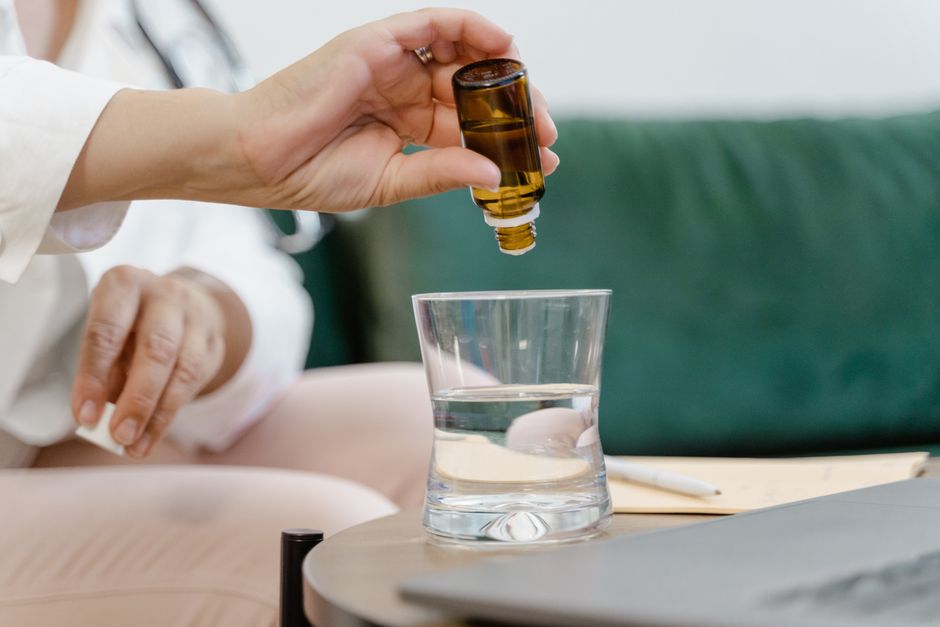
Placenta tincture is made by steaming a small piece of placenta, covering it with high-proof alcohol, and letting it sit for about six weeks before straining. People use it as a folk remedy for energy, mood, and recovery after birth. No clinical trial has shown it works, and the main risks are infection and contamination if the placenta is not handled properly.
What Is Placenta Tincture?
Placenta tincture is a liquid made by soaking placenta tissue in alcohol. The idea is that alcohol pulls compounds out of the tissue, and the resulting liquid is taken in small drops under the tongue or added to water.
This practice comes from traditional Chinese medicine and from a broader folk tradition called placentophagy — eating or consuming one’s own placenta after birth. Modern interest grew in the 2000s, largely through blogs, birth communities, and celebrity coverage rather than through medical research.
Two forms are common. One is a mother’s own placenta, prepared at home or by a paid placenta encapsulation specialist. The other is a commercial product sold as a supplement, sometimes made from animal placenta. These are not the same thing, and the evidence for either is thin.
It helps to separate what a tincture physically is from what people claim it does. A tincture is an alcohol extract. Whether it contains anything biologically active in a meaningful amount is a separate question — and one that has barely been studied.
How To Make Placenta Tincture: Materials And Steps
The standard method is simple in principle. The hard part is doing it without introducing bacteria, and that is where most home preparations fall short.
Here is the process as it is commonly described by people who make it. This is a description of a practice, not a recommendation.
Materials
- A small piece of placenta, roughly the size of a walnut
- High-proof alcohol, typically 80 proof (40% alcohol) or higher — some makers use vodka, others use grain alcohol
- A clean glass jar with a tight lid
- A knife and cutting board that have been washed and sanitized
- Cheesecloth or a fine strainer
- A dark glass dropper bottle for storage
Steps
- Handle the placenta promptly. Tissue left at room temperature spoils quickly. Most guides say to refrigerate it right away and prepare it within a few days.
- Rinse and trim. Rinse off blood and membrane. Cut away any visibly unusual areas.
- Steam the piece. Many guides call for steaming for a short period, often 10 to 20 minutes. Steaming is intended to reduce bacteria, though it does not sterilize tissue the way an autoclave would.
- Cool and place in the jar. Put the piece in the glass jar and cover it completely with alcohol. The tissue should stay submerged.
- Seal and store in a dark place. Let it sit for about six weeks, shaking the jar occasionally.
- Strain. Pour through cheesecloth into a clean bottle. Discard the tissue.
- Label and refrigerate. Write the date on the bottle. Store it in the refrigerator.
That is the process. Whether it produces anything worth taking is a different matter, and the honest answer is that no one has measured it.
Does Placenta Tincture Actually Work?
No clinical trial has tested placenta tincture for any health outcome. There is no published human study showing it improves mood, energy, milk supply, or recovery.
The research that does exist is mostly about placenta capsules — dried, ground placenta taken in pill form — which is a different preparation. Even there, the results are discouraging. A small randomized trial of placenta capsules in new mothers found no measurable difference in mood or fatigue compared with a placebo. Other reviews of the evidence have reached similar conclusions: the claimed benefits are not supported by controlled data.
Some studies have measured hormones in placenta tissue and in capsules. Researchers have found that the amounts present are generally low, and that many hormones are broken down during processing and digestion. A tincture is not the same as a capsule, but the same logic applies — extracting tissue into alcohol does not guarantee that a useful amount of any compound survives.
There is also a basic biological point that gets lost in these discussions. The placenta is an organ that filters and transfers substances between mother and fetus. It is not a reservoir of concentrated nutrients waiting to be reclaimed. The idea that eating it “gives back” what pregnancy took is a story, not a finding.
One more thing worth saying plainly: the placebo effect is real and can feel powerful, especially in the weeks after birth when emotions are intense and unpredictable. Feeling better after taking something does not prove the something caused it.
What Are The Risks Of Making Placenta Tincture?
The main risk is contamination. Placenta is blood-rich tissue, and blood is an ideal medium for bacteria to grow. Home kitchens are not sterile environments.
Bacterial contamination is the most concrete concern. Even with steaming, tissue can carry bacteria that survive and multiply. Alcohol at 40% slows some organisms but does not reliably kill all of them, and the tissue sits in that liquid for weeks.
There are also concerns specific to the placenta itself. The organ can carry bloodborne pathogens if the mother has certain infections. In hospital settings, placentas are handled as potentially infectious material for this reason. Some hospitals will not release a placenta to a parent if there is a known infection risk, and policies vary widely.
Beyond infection, there is the question of what else concentrates in placenta tissue. The placenta can accumulate heavy metals and other substances from the environment. How much ends up in a tincture has not been well studied, but it is a reasonable concern rather than a hypothetical one.
For anyone considering this, the practical points are these: the evidence of benefit is absent, the evidence of risk is real though not fully quantified, and the preparation is not something a home setup can make sterile.
Is Placenta Tincture Regulated Or Safe To Buy?
Placenta tincture is not regulated as a medicine in the United States. It falls into a gray area — sold as a supplement or a “traditional preparation” rather than a drug, which means no requirement to prove efficacy or meet pharmaceutical manufacturing standards.
Commercial placenta products vary enormously in how they are made and what they contain. Some are made from animal placenta, some from human placenta sourced in ways that are difficult to verify. Labels may not list what is actually in the bottle.
Placenta encapsulation — the more common service — is also largely unregulated. Training and certification for placenta specialists vary by state and are not standardized nationally. Some states have moved toward requiring training or licensing, but there is no uniform national standard.
This does not mean every product is unsafe. It means there is no system in place to catch the ones that are, and no way for a buyer to verify quality from the label alone.
What Should You Know Before Trying It?
Talk to your obstetric provider before consuming your placenta in any form. This is not a formality — your provider knows your infection status, your delivery details, and your medical history, and those things change the risk picture.
Some situations make placenta consumption clearly inadvisable. If there was any concern about infection during pregnancy or delivery, or if the placenta was not handled under clean conditions, the risk of contamination goes up substantially. Hospitals have different policies about releasing placentas, and those policies usually exist for a reason.
If you are considering it for postpartum mood or energy, it is worth knowing that postpartum depression is a real and treatable condition. The evidence-based options — therapy, peer support, and medication when appropriate — have actual trial data behind them. A tincture does not.
If you decide to proceed anyway, the most defensible steps are to have the placenta handled and stored properly from the start, to work with someone experienced rather than improvising at home, and to stop and seek medical care if you develop fever, unusual discharge, or feel unwell after taking it.
None of this is a recommendation for or against. It is the state of the evidence, stated as clearly as it can be.
Frequently Asked Questions
How long does placenta tincture take to make?
Most guides call for about six weeks of steeping in alcohol before straining. Some people let it sit longer, but no research establishes an ideal duration.
Is placenta tincture safe to take while breastfeeding?
There is no reliable safety data on placenta tincture during breastfeeding, and no clinical guidelines exist for this situation. Because the tincture contains alcohol and the contents are not well characterized, this is a case to discuss with a doctor rather than decide alone.
Does placenta tincture help with postpartum depression?
No controlled study has shown that placenta tincture helps with postpartum depression. Postpartum depression is a treatable condition, and the options with real evidence behind them include therapy and medication.
Can I make placenta tincture at home safely?
A home kitchen cannot be made sterile, so bacterial contamination is a genuine risk with any home preparation. If you are considering it, talk to your obstetric provider first and understand that no evidence shows a benefit.
