
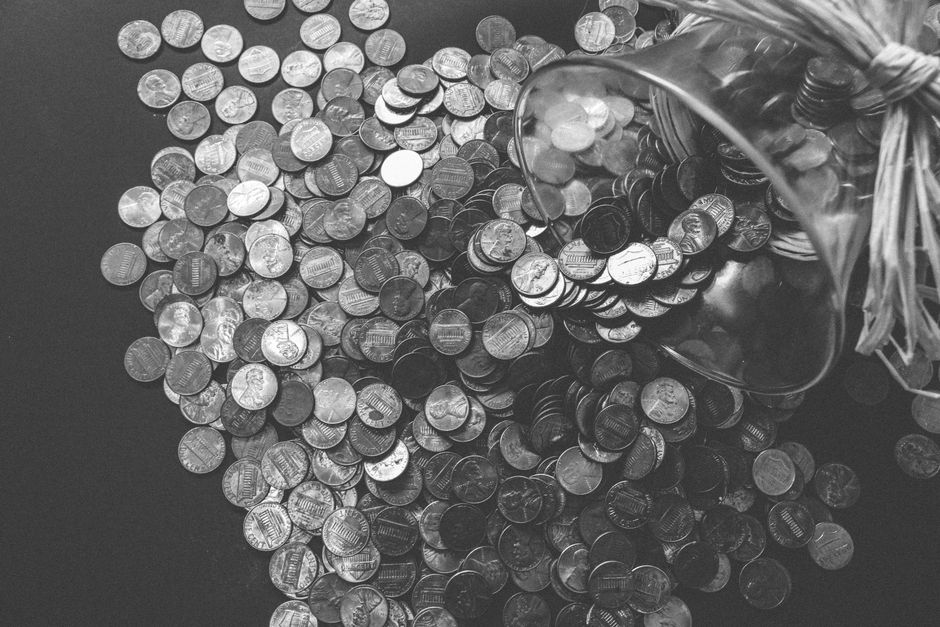
You cannot make a penny larger. The United States Mint has produced pennies at the same size since 1857, and no home method can permanently change that. The question usually comes up in one of two ways: people want to stretch a small amount of money into something bigger, or they want to know whether the old trick of turning a penny into a giant copper coin is real. Both have honest answers, and neither involves a secret technique that banks and the Mint are hiding.
How To Make Pennies Large? Expert Tips
There is no method that makes a real penny physically bigger. The closest thing to a genuine answer is that a penny can appear larger through perspective or magnification, and a small amount of money can grow in value through saving and compound interest over time. Those are different goals, and it helps to separate them.
If you have seen videos or photos of an oversized penny, the explanation is almost always one of these:
- Forced perspective — the coin is closer to the camera than the object behind it, so it looks huge.
- Magnification — a lens, microscope, or phone macro setting makes it appear larger on screen.
- A novelty item — oversized “pennies” sold as souvenirs or props, which are not legal tender.
- Digital editing — the image was altered after the photo was taken.
None of these change the actual coin. A penny is 19.05 millimeters in diameter, a standard that has held for well over a century. That figure comes from the Mint’s own specifications and is not something you can alter at home.
Why Can’t You Physically Enlarge a Penny?
Metal does expand when heated, but the change is far too small to matter and it reverses on cooling. A copper-plated zinc penny heated enough to change its size noticeably would first damage the thin copper plating, then melt the zinc core. Zinc melts at about 787°F (419°C), which is well within reach of a kitchen torch — and that is exactly why this is a bad idea to try.
Heating pennies can release zinc oxide fumes. Breathing those fumes can cause metal fume fever, a flu-like illness with fever, chills, and muscle aches. In poorly ventilated spaces, the exposure can be more serious. There is no safe home setup for melting coins, and there is no reason to do it.
Stretching or hammering a penny flattens it. It does not enlarge it uniformly, and it destroys the coin. Under U.S. law, defacing currency with the intent to render it unfit for reissue is a crime. The Mint’s own guidance is clear that coins are meant to circulate, not to be altered for novelty.
Can You Make a Small Amount of Money Grow Larger?
Yes, but slowly and honestly. A penny saved is not going to become a dollar through any trick. It grows through time and interest, and the growth is modest at first.
Compound interest is the mechanism. When interest is added to your balance, the next round of interest is calculated on the larger amount. Over years, this produces growth that is larger than simple interest would. The effect is real and well documented, but it is not fast. A single penny earning a typical savings rate would take decades to double, and even then the absolute amount stays tiny.
The practical version of this is a savings account, a certificate of deposit, or a retirement account. The amount you start with matters less than the habit of adding to it regularly. This is not a secret. It is the boring arithmetic that financial planners have repeated for generations.
Is the “Penny Doubling” Challenge Real?
The doubling challenge is a thought experiment, not a plan. It asks: if you double a penny every day for 30 days, how much do you have? The answer is over five million dollars. That math is correct, and it is also completely disconnected from reality.
No bank, investment, or savings product doubles your money daily. Nothing legitimate does. If someone offers you a daily doubling, that is a hallmark of a Ponzi scheme or a scam, and the money is gone when the scheme collapses. The doubling challenge is useful for teaching how exponential growth works. It is not a financial strategy.
This is one of the clearest cases where a viral idea is mathematically true and practically worthless. The math checks out. The offer never does.
What About “Large Cents” and Old Pennies?
This is where the confusion often starts. The U.S. did once mint coins that were physically larger than today’s penny. These are called large cents, and they were produced from 1793 to 1857. They were roughly the size of a modern half dollar or larger, depending on the year.
Large cents are collectibles, not something you can create. Their value comes from age, condition, and rarity, and it varies enormously. A worn common large cent might sell for a modest amount, while a rare date in good condition can be worth far more. Anyone can look up auction results, but no one can turn a modern penny into a large cent.
If you have an old coin and want to know what it is worth, a reputable coin dealer or a grading service is the place to start. Online listings are often wildly inflated compared to what a coin actually sells for.
What Should You Do If You Want a Large Penny?
Buy a novelty one. Oversized copper-colored “pennies” are sold as souvenirs, paperweights, and gag gifts. They are clearly not legal tender, and no one is pretending they are. That is the honest way to get a large penny if you simply want the object.
If your real interest is money, the answer is different. A penny cannot be made large, but a small savings habit can grow into something meaningful over years. That is not a trick and it is not fast, but it is the only version of this question with a real answer.
Be skeptical of anyone selling a method, a device, or a course that promises to enlarge coins or multiply small amounts of money quickly. There is no such thing. The physics and the law both rule it out.
Frequently Asked Questions
Can you make a penny bigger with heat?
No. Metal expands slightly when heated, but the change is tiny, reverses on cooling, and heating a penny enough to notice would damage or melt it. Melting zinc-plated pennies can also release harmful fumes.
How much does a penny double to in 30 days?
Doubling a penny every day for 30 days gives you over five million dollars on paper. No real savings or investment product doubles money daily, so this is a teaching example, not a plan.
Why are some old pennies bigger than today’s pennies?
The U.S. minted physically larger “large cents” from 1793 to 1857 before switching to the smaller format used today. They are collectible antiques and cannot be recreated from a modern penny.
Is it illegal to alter a penny?
Defacing currency with the intent to render it unfit for reissue is against U.S. law. Simply flattening or heating a penny for fun is not something you should do, and it destroys the coin either way.
