
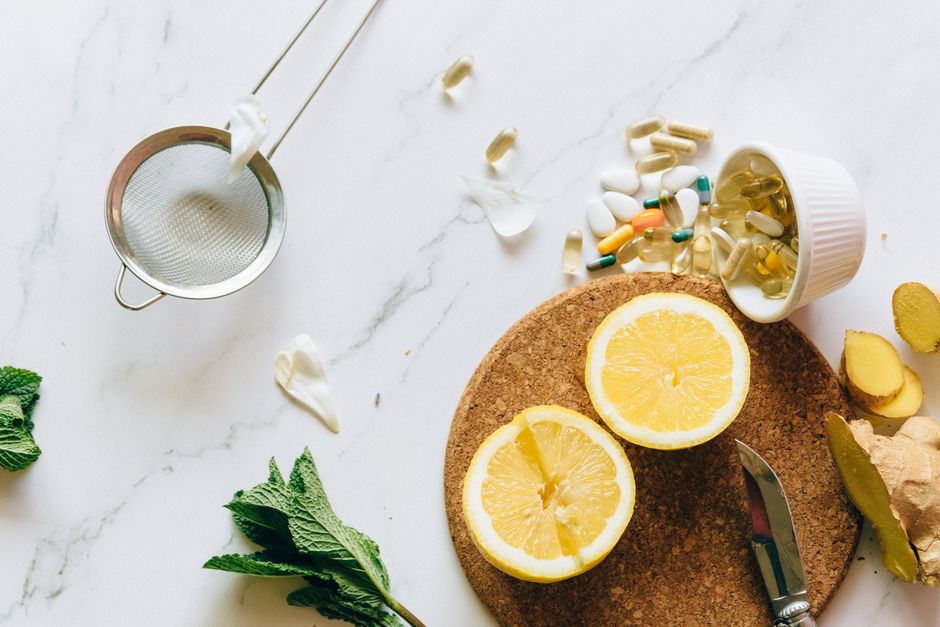
You can make pectin from lemon scraps by simmering the peels, pith, and membranes in water, then straining the liquid and reducing it. The white pith and inner membranes hold the most pectin, so the parts you would normally throw away are exactly the parts you want. The result is a thick, slightly cloudy liquid you can stir into jams and jellies to help them set.
What Is Pectin and Why Do Lemon Scraps Have So Much of It?
Pectin is a natural carbohydrate found in the cell walls of fruits. It is what gives structure to plant tissue, and when it is heated with sugar and acid, it forms a gel. That gel is what turns runny fruit juice into jam.
All fruits contain some pectin, but the amount varies widely. Underripe fruit generally has more than ripe fruit, because pectin breaks down as fruit matures. Citrus fruits are among the richest natural sources. Within a lemon, pectin is concentrated in the white spongy layer just under the outer peel — called the albedo — and in the inner membranes that separate the segments.
The yellow outer zest has plenty of aromatic oils but comparatively little pectin. The juice has almost none. So when a recipe calls for lemon juice “for pectin,” that is a slight misunderstanding. Lemon juice helps jams set mainly by adding acid, which is a separate job from what pectin does. If you want actual pectin from a lemon, you want the scraps.
How To Make Pectin From Lemons Using Scraps
The process is simple and takes about an hour of mostly hands-off simmering. You need scraps from roughly four to six lemons, plus enough water to cover them.
Here is the basic method:
- Save the peels, pith, and membranes after juicing or zesting lemons. Remove any seeds, which can add bitterness.
- Chop the scraps roughly and place them in a saucepan.
- Add water — roughly two cups of water for every cup of packed scraps. More water is safer than less; you can always reduce it later.
- Bring to a simmer, then lower the heat. Simmer gently, uncovered, for about 45 minutes to an hour. The liquid should reduce by roughly half.
- Strain through a fine mesh sieve or a layer of cheesecloth. Do not squeeze hard — pressing forces cloudy particles through. Let it drip.
- The strained liquid is your pectin. It should look slightly thick and coat the back of a spoon.
You can reduce it further on the stove if it seems thin. A simple test: put a spoonful on a cold plate. If it gels as it cools, it has enough pectin to be useful.
This liquid keeps in the refrigerator for about a week, or you can freeze it in ice cube trays for longer storage. Freezing does not appear to damage its gelling ability in home use.
One thing worth knowing: homemade citrus pectin is not standardized. Commercial pectin is sold with a known “grade” that tells you exactly how much it will set. Your batch will vary depending on the lemons, how ripe they were, and how long you simmered. That means you may need to use more of it than a recipe specifies for commercial pectin, and results can differ from batch to batch.
Why Does Lemon Pectin Sometimes Fail to Set?
Pectin needs three things to form a gel: sugar, acid, and the right temperature. If any one is missing, you get syrup instead of jam. This is true whether you use homemade or commercial pectin.
Sugar does more than sweeten. It pulls water away from the pectin molecules so they can bond with each other. Without enough sugar, the pectin stays dissolved and never forms a network. Acid lowers the pH, which helps those bonds form. Lemon juice is often added to low-acid fruit jams for exactly this reason.
Temperature matters too. A full rolling boil — the kind that cannot be stirred down — is generally needed to reach the concentration where gelling happens. A gentle simmer usually will not get there.
Homemade lemon pectin adds one more variable: its strength is unknown. If your jam did not set, the most likely culprits are too little pectin, too little sugar, too little acid, or not enough boiling. You can often rescue a runny jam by reheating it with a little more of your pectin liquid and boiling hard again.





Does Homemade Lemon Pectin Work as Well as Store-Bought?
It works, but not identically. The two are not interchangeable in a one-to-one swap.
Commercial pectin is made to a consistent standard. It is often extracted from citrus peel or apple pomace in a controlled process, then dried and blended so a given amount sets a predictable volume of fruit. Some types are “rapid set” for jams and others are “slow set” for jellies, and they behave differently.
Homemade liquid pectin is more like a stock than an ingredient with a fixed strength. It also contains more water, so adding it dilutes your fruit mixture, which means you may need to cook longer to reach the right concentration.
The practical difference: with commercial pectin you follow the package. With homemade, you cook, test, and adjust. Both approaches can produce good results. The homemade version just asks more of you.
Can You Use the Whole Lemon Instead of Just the Scraps?
You can, and some people do. Whole lemons contain pectin throughout the peel and pith, so simmering chopped whole fruit in water will extract it.
The trade-off is bitterness. The pith and membranes that carry the most pectin also carry bitter compounds. The longer you simmer them, the more bitterness comes through. Using only the scraps after juicing is a way to get the pectin without as much of the bitter edge.
If you do use whole lemons, a common approach is to simmer them whole or halved first to soften them, then proceed. Some cooks discard the first round of simmering water to reduce bitterness, though this also washes away some pectin. There is no single right answer here — it depends on how much bitterness you are willing to accept in the final product.
Is There Any Evidence That Lemon Pectin Has Health Benefits?
Pectin is a soluble fiber, and soluble fiber as a category has well-established effects. It can help lower LDL cholesterol and slow the rise in blood sugar after a meal. These effects are supported by decades of research and are reflected in dietary guidance.
What is less clear is whether pectin extracted from lemon scraps at home delivers these benefits in any meaningful way. The amounts used in jam-making are small, and the extraction process is not standardized. Claims that citrus pectin specifically “detoxifies” the body or treats serious disease are not supported by strong human evidence. Some preliminary research has looked at modified citrus pectin in specific contexts, but that is a different product from what you make on your stove, and the findings are not established clinical guidance.
Treat homemade lemon pectin as a cooking ingredient, not a supplement. That is the honest position.
What Else Can You Do With Lemon Scraps?
If you are already saving peels, a few other uses are worth knowing.
- Lemon zest can be dried and stored for baking and seasoning.
- Peels can be steeped in vinegar to make a citrus-infused cleaning solution.
- Simmering peels in water releases fragrance and can add moisture to dry indoor air.
- Some people candy the peel by simmering it in sugar syrup.
None of these are complicated, and all of them keep usable material out of the trash. The pectin batch is simply the most practical one if you make jam.
Frequently Asked Questions
How long does homemade lemon pectin last?
Stored in a sealed container in the refrigerator, it keeps for about a week. For longer storage, freeze it in ice cube trays and use the cubes as needed.
Can I make pectin from lemon peels only, without the pith?
You can, but the pith holds most of the pectin, so peel-only batches tend to be weaker. Including the pith and membranes gives you a more effective result.
Do I need to add lemon juice to jam if I already used lemon pectin?
Often yes, because the two do different jobs. The pectin helps the jam gel, while the juice adds the acid that helps that gel form properly.
Why did my lemon pectin turn out bitter?
Bitterness usually comes from simmering the pith and membranes too long or from leaving seeds in the pot. Shorter simmer times and removing seeds before cooking reduce it.
