
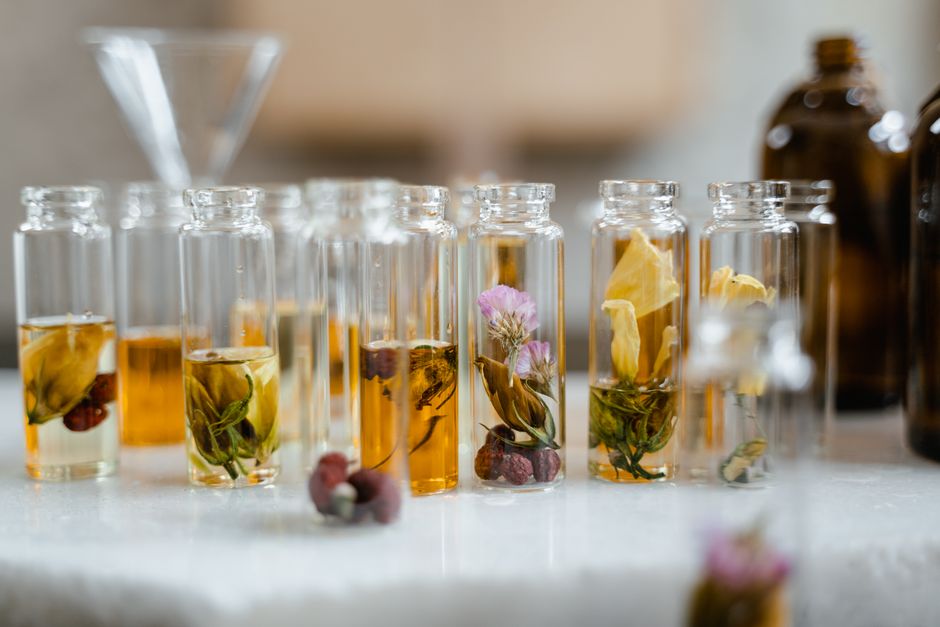
Patchouli oil comes from the leaves of Pogostemon cablin, a bushy plant in the mint family. You can make a scented infusion by steeping dried patchouli leaves in a carrier oil, but true patchouli essential oil requires steam distillation of the dried leaves. The two methods produce very different products, and knowing which one you are making matters for both scent and safety.
What Is the Difference Between Patchouli Infusion and Patchouli Essential Oil?
An infusion is a carrier oil that has absorbed some of the plant’s scent and fat-soluble compounds. An essential oil is a concentrated volatile extract produced by distillation. They are not interchangeable.
When you steep patchouli leaves in jojoba or sweet almond oil, you get a mild, earthy-smelling oil. The fragrance is faint compared to the essential oil. It also contains plant waxes, pigments, and other compounds that dissolve in oil. The shelf life is shorter because carrier oils go rancid over time.
Patchouli essential oil is made by passing steam through dried leaves. The steam carries volatile aromatic compounds out of the plant material. When the steam cools and condenses back into liquid, the essential oil separates from the water. The result is a dark, thick oil with a strong, long-lasting scent. Patchouli essential oil is one of the few that actually improves with age — the sharp, musty top notes fade over months and years, leaving a smoother, deeper aroma.
This aging process is well documented in the perfume industry. Fresh patchouli oil can smell harsh or muddy. After a year or more of storage, the scent profile rounds out significantly. That is why some suppliers sell “aged” patchouli at a premium.
How Do You Make Patchouli Oil Infusion?
Making an infusion is straightforward. The main variables are the ratio of leaves to oil, the steeping time, and the temperature.
Start with dried patchouli leaves. Fresh leaves contain moisture, which can cause mold in an oil infusion. Dried leaves are also more concentrated in aromatic compounds. You can dry them yourself by hanging stems in a warm, dark, well-ventilated space for one to two weeks, or buy them already dried.
Use a clean glass jar with a tight-fitting lid. Fill it roughly one-third full with crumbled dried leaves. Pour a mild, stable carrier oil over the leaves until they are fully submerged, leaving about an inch of headspace. Jojoba oil is a good choice because it resists rancidity better than many other plant oils. Fractionated coconut oil also works well.
Seal the jar and place it in a warm spot out of direct sunlight. Shake it once a day. Let it steep for two to four weeks. The oil will gradually take on a greenish-brown tint and a soft earthy scent.
When the steeping period is done, strain the oil through a fine mesh strainer lined with cheesecloth or a coffee filter. Squeeze the leaves to recover as much oil as possible. Pour the strained oil into a clean, dark glass bottle and store it in a cool, dark place.
For a stronger infusion, you can repeat the process with fresh leaves and the same oil. This is called a double infusion. Each round adds more scent, though it will never match the intensity of essential oil.
A Note on Heat
Some people use gentle heat to speed up the infusion. A yogurt maker or a double boiler set to low heat can work. Keep the temperature below 140°F (60°C). Higher heat can degrade the delicate aromatic compounds and cause the carrier oil to break down faster. There is no strong evidence that heated infusions are superior to cold ones — the trade-off is speed versus quality.
How Do You Distill Patchouli Oil at Home?
Steam distillation is the standard method for producing patchouli essential oil. It requires equipment that most people do not have in their kitchen.
The basic setup includes a distillation flask or pot, a heat source, a condenser, and a receiving vessel. You pack dried patchouli leaves into the flask, add water, and bring it to a boil. Steam rises through the plant material, carrying volatile oils with it. The steam then passes through a condenser — a coiled tube surrounded by cold water — where it turns back into liquid. That liquid drips into a receiving flask.
Because oil and water do not mix, the essential oil floats on top of or sinks below the water, depending on its density. Patchouli oil is denser than water, so it sinks. You separate the oil using a separatory funnel or a pipette.
The yield is low. Patchouli leaves contain roughly 1-3% essential oil by weight, and home distillation setups often recover less than commercial operations. A large batch of leaves may produce only a few milliliters of oil.
Home distillation carries real risks. Open flames near flammable solvents, pressurized equipment, and hot steam can cause burns or fires. If you are not experienced with distillation, this is not a good beginner project.
What Equipment Do You Need for Patchouli Distillation?
A basic steam distillation setup includes:
- A large pot or flask for holding the plant material and water
- A heat source — a hot plate or stove
- A condenser tube or coiled copper pipe
- A cold water source and container for cooling the condenser
- A receiving flask or jar
- A separatory funnel or glass pipette for separating the oil
- Thermometer to monitor temperature
You can buy pre-made distillation kits online. Quality varies widely. Copper stills are traditional and conduct heat well, but they can react with certain plant compounds. Glass is inert and easier to clean. Stainless steel is durable and widely used in commercial production.
If you are serious about distilling essential oils at home, a glass lab-style distillation apparatus is the most controllable option. It is also the most expensive.
Is Homemade Patchouli Oil Safe?
The infusion is generally low-risk when made and stored properly. The main concerns are mold growth if fresh leaves are used, and rancidity if the carrier oil is old or stored poorly.
Essential oil is a different matter. Patchouli essential oil is generally considered safe for topical use when diluted. It can cause skin irritation in some people, especially if applied undiluted. A common guideline is to dilute essential oils to 1-2% in a carrier oil for general skin use, though individual tolerance varies.
Never ingest homemade essential oil. Commercial essential oils are not meant for internal use unless specifically labeled as food-grade, and even then, dosing requires professional guidance. No clinical guidelines support drinking patchouli essential oil for any health purpose.
Patchouli oil is sometimes marketed for anxiety, depression, inflammation, and skin conditions. The evidence for these uses is limited. Some small studies and traditional uses suggest possible calming effects, but large human trials are lacking. No study has confirmed that patchouli oil treats any medical condition.
If you are pregnant, breastfeeding, or giving oil to a child, check with a healthcare provider first. No clinical guidelines currently exist for patchouli oil use in these populations.
How Should You Store Patchouli Oil?
Store both infusion and essential oil in dark glass bottles with tight caps. Keep them in a cool, dark place away from heat and sunlight. Heat and light speed up oxidation and degrade the scent.
Infused oils last about six to twelve months, depending on the carrier oil. Jojoba lasts longer than most. Check for a rancid smell — it will smell like old nuts or crayons — and discard if that happens.
Essential oil lasts much longer. Patchouli essential oil can last for years and often improves with age. Some perfumers age it for five years or more. Store it in a cool, dark place and it will keep well.
Frequently Asked Questions
Can I make patchouli oil without a still?
Yes, you can make an infused oil by steeping dried leaves in a carrier oil, but this is not essential oil. True patchouli essential oil requires steam distillation.
How long does patchouli infusion take?
Two to four weeks of cold steeping is typical. Gentle heat can shorten the time, but higher temperatures may degrade the scent.
Is homemade patchouli essential oil safe to use on skin?
Dilute it in a carrier oil before applying to skin, as undiluted essential oils can cause irritation. If you have sensitive skin, test a small area first.
Why does patchouli oil smell better with age?
The sharp, musty compounds in fresh oil gradually oxidize and fade, leaving a smoother, deeper scent. This aging process is well known in perfumery.
