
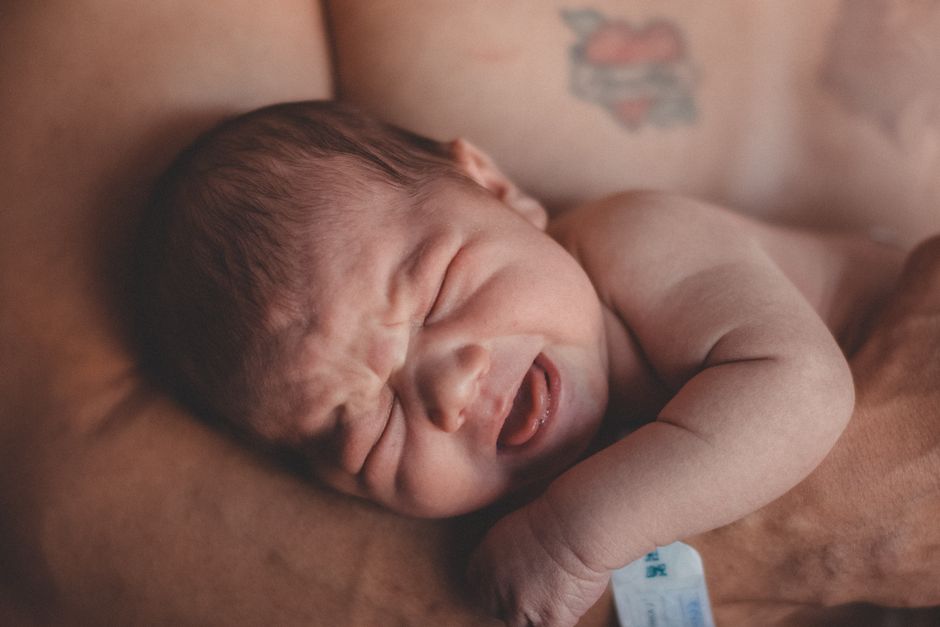
Every newborn cries. It is how they communicate before they can speak. Most crying peaks in the first two to three months of life and then gradually settles. If you want to make a newborn stop crying, the most reliable approach is to work through their basic needs in order: feeding, a clean diaper, warmth, sleep, and physical closeness. When those are met and crying continues, a set of calming techniques that mimic the womb — swaddling, side or stomach holding, shushing, swinging, and sucking — often helps. Crying that is high-pitched, persistent, or paired with fever or poor feeding needs medical attention, not just a calming technique.
This is not a trick or a single magic move. It is a process of ruling things out and then using what we know about how a newborn’s nervous system works.
Why Do Newborns Cry So Much?
A newborn’s brain is still developing the systems that regulate emotion and calm the body. Crying is not manipulation and it is not a sign you are doing something wrong. It is a reflex and a signal.
In the first weeks, babies cry for hunger, discomfort, tiredness, overstimulation, and the simple need to be held. Some crying has no obvious cause at all. Research on infant crying patterns shows a typical curve: crying tends to increase over the first several weeks, peak around six to eight weeks of age, and then decline by around three to four months. This pattern is so consistent across cultures that researchers describe it as normal developmental crying.
That timeline matters. If your baby is six weeks old and crying more than last week, that is often expected rather than a sign something is broken.
What Are the Basic Needs to Check First?
Before reaching for any calming technique, run through the physical basics. Most crying in a healthy newborn traces back to one of these.
- Hunger. Newborns feed often — typically every two to three hours in the early weeks. Early hunger cues include rooting, hand-to-mouth movements, and lip smacking. Crying is a late hunger cue.
- A wet or dirty diaper. Some babies are bothered immediately; others are not. Check anyway.
- Temperature. Babies can be too warm or too cool. A general guide is to dress them in roughly one more layer than you would wear comfortably in the same room.
- Tiredness. An overtired newborn often cries harder, not less. Watch for yawning, eye rubbing, and staring off.
- Overstimulation. Too much noise, light, or handling can overwhelm a young nervous system.
- Discomfort. A tight clothing tag, a hair wrapped around a finger or toe, or a scratchy seam can all cause distress.
If all of these check out and crying continues, the next step is calming techniques rather than more problem-solving.
How To Make Newborns Stop Crying Using Calming Techniques
The techniques that work best copy the conditions of the womb. Inside the uterus, a baby was held tightly, heard constant loud whooshing sounds, and was rocked by their mother’s movement. The “five S” approach — swaddle, side or stomach position, shush, swing, and suck — is built around those conditions. It was popularized by pediatrician Harvey Karp and is widely used in newborn care.
Here is how each one works in practice.
- Swaddle. A firm, snug wrap with arms down limits the startle reflex that can wake or upset a baby. Use a thin blanket and keep it loose around the hips so the legs can bend. Stop swaddling once a baby shows signs of rolling over.
- Side or stomach hold. Holding a baby on their side or stomach, in your arms, can calm them. This position is for soothing only. Always place a baby on their back to sleep.
- Shush. A loud, steady shush near the ear mimics womb sound. It needs to be as loud as the crying to get attention at first.
- Swing. Small, fast, jiggly movements — supporting the head and neck — copy the motion a baby felt in the womb. Never shake a baby.
- Suck. A pacifier or a clean finger can be very calming. If you are breastfeeding, many clinicians suggest waiting until feeding is established before offering a pacifier, though guidance on timing varies.
These techniques are widely used and generally considered helpful, but it is honest to say the formal evidence base is limited. They rest more on clinical experience and the biology of infant calming than on large controlled trials.
Does Skin-to-Skin Contact Help?
Yes. Skin-to-skin contact — holding a naked or diaper-only baby against your bare chest — is one of the better-supported calming methods. It is standard practice right after birth and is associated with reduced crying and more stable heart rate and breathing in newborns.
It works for both parents and for any caregiver. The effect is thought to come from warmth, familiar heartbeat and breathing sounds, and the physical closeness itself. For a fussy newborn, undressing them down to a diaper and holding them against your skin under a blanket is a reasonable thing to try early.
What About Colic and Persistent Crying?
Some babies cry far more than others, and no amount of technique seems to fully settle them. When a healthy, well-fed infant cries for more than three hours a day, more than three days a week, for more than three weeks, clinicians have historically used the term colic. That “rule of three” is a traditional definition, and researchers still debate how useful it is, since crying patterns vary widely.
What matters practically is this: colic is generally a description of a pattern, not a disease. Most colicky crying improves on its own by around three to four months. There is no single proven cure.
Approaches sometimes tried include:
- Reducing stimulation and using calming techniques consistently
- Checking for feeding issues with a clinician
- Considering a trial of a hydrolyzed formula in formula-fed babies, under medical guidance
- Probiotic drops, which some studies suggest may help in breastfed infants, though results are mixed and products vary
The evidence for most colic treatments is limited and inconsistent. Be cautious of any product or program that claims to cure colic.
When Should You Worry About Crying?
Most crying is normal. Some crying is a signal that something needs medical attention. Seek care promptly if a newborn:
- Has a rectal temperature of 100.4°F (38°C) or higher
- Is feeding poorly or refusing to eat
- Has fewer wet diapers than usual
- Cries in a high-pitched, weak, or unusual way that sounds different from normal
- Is unusually sleepy, floppy, or hard to wake
- Is vomiting, has blood in the stool, or has a swollen or firm belly
- Has trouble breathing
Fever in a newborn under three months is always a reason to call a clinician right away. Do not wait to see if it passes.
Persistent, unrelenting crying that you cannot soothe, especially if it comes with any of the signs above, deserves a medical evaluation rather than more home techniques.
What Helps the Parent or Caregiver?
A crying newborn is stressful, and that stress is real. Prolonged infant crying is one of the most common triggers for parental exhaustion and frustration.
If you feel yourself reaching a breaking point, it is safe and important to put the baby down in a safe sleep space, like a crib, and step away for a few minutes. A crying baby left safely in a crib is far better than a baby being handled by a caregiver who is losing control.
Ask for help. Hand the baby to another trusted adult if one is available. Call a support line or your clinician if you feel overwhelmed. This is not a sign of failure — it is a normal response to a genuinely hard situation.
Frequently Asked Questions
Why does my newborn cry even after feeding and changing?
Newborns also cry from tiredness, overstimulation, or the simple need for closeness. If basic needs are met and crying continues, try swaddling, shushing, gentle swinging, or skin-to-skin contact.
How long does normal newborn crying last?
Crying typically increases over the first several weeks, peaks around six to eight weeks, and declines by about three to four months. This pattern is considered normal developmental crying.
Is it safe to let a newborn cry it out?
The “cry it out” method is generally not recommended for newborns, whose crying is a genuine signal of need. For a caregiver who feels overwhelmed, placing the baby safely in a crib and stepping away briefly is a safe and reasonable option.
When should I call a doctor about my baby’s crying?
Call right away if a newborn has a rectal temperature of 100.4°F (38°C) or higher, is feeding poorly, has fewer wet diapers, or cries in an unusual high-pitched way. Fever in a baby under three months always needs prompt medical attention.
