
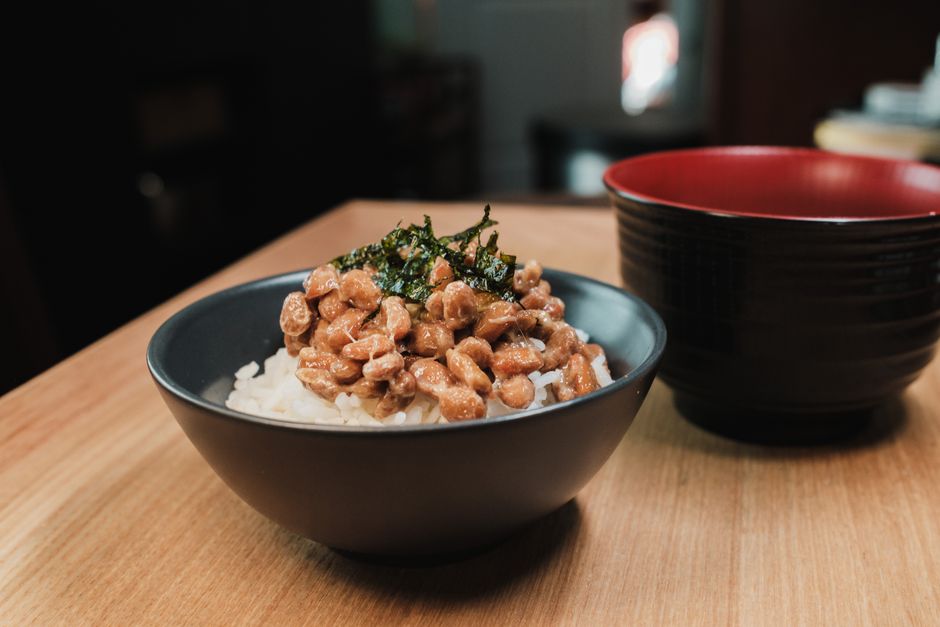
Nattokinase is an enzyme produced during the fermentation of soybeans by a specific bacterium, Bacillus subtilis var. natto. To make it at home, you ferment cooked soybeans with a starter culture of this bacterium at roughly 100°F (38°C) for about 24 hours, then let the finished natto cure in the refrigerator for a day or two. The enzyme forms as a byproduct of that bacterial fermentation — you are not adding nattokinase directly. You are growing the organism that makes it.
That single fact shapes everything that follows. Home nattokinase production is really home natto production. Get the fermentation right and the enzyme is there. Get it wrong and you have a tray of spoiled beans.
What Is Nattokinase and Where Does It Come From?
Nattokinase is a serine protease — a protein-cutting enzyme — first identified in Japanese natto in the 1980s by researcher Hiroyuki Sumi. The name describes both its source and its function: “natto” plus “kinase,” a type of enzyme.
The enzyme is not present in raw soybeans. It appears only after Bacillus subtilis var. natto colonizes the beans and secretes it during fermentation. The bacteria also produce the characteristic stringy, sticky coating and the strong ammonia-like smell that define traditional natto.
Natto has been eaten in Japan for centuries, most commonly at breakfast over rice. The enzyme itself is what most modern interest centers on. Nattokinase is available as a dietary supplement, usually in capsule form, and it is the reason natto shows up in discussions about circulation and cardiovascular health.
One clarification worth stating plainly: eating natto and taking a nattokinase capsule are not the same thing. A capsule delivers a concentrated, standardized dose of the isolated enzyme. Fermented beans deliver the enzyme plus protein, fiber, vitamin K2, and live bacteria. The two are studied differently and should not be treated as interchangeable.
What Equipment and Ingredients Do You Need?
You need four things: soybeans, a Bacillus subtilis var. natto starter, a way to hold a steady warm temperature, and clean containers. Nothing exotic. The starter is the one item you likely cannot find at a standard grocery store.
Here is what to gather:
- Dry soybeans — small or medium varieties work best. Larger beans ferment less evenly.
- Natto starter — sold as freeze-dried spore powder or as frozen commercial natto used to seed a new batch. Spore powder is more reliable.
- A fermentation vessel — a yogurt maker, an oven with a proof setting, a dehydrator, or a cooler with a heat source.
- A thermometer — accurate to within a degree or two. This matters more than any other tool.
- Clean glass or food-grade plastic containers with loose covers.
You do not need a pressure cooker, though one speeds up the bean preparation. A regular pot works if you cook the beans long enough.
Skip any recipe that tells you to use a random soil sample or wild fermentation. You want a known Bacillus subtilis var. natto culture, not whatever happens to be in your kitchen air. Wild fermentation is unpredictable and can grow organisms you do not want to eat.
How Do You Prepare the Soybeans?
Soak the dry beans overnight, then cook them until they are soft enough to crush easily between your fingers. This step is not optional and cannot be rushed.
Soaking typically takes 12 to 16 hours at room temperature. The beans roughly double or triple in size. Discard the soaking water afterward.
For cooking, you have two main options. Boiling takes one to three hours depending on the bean size and how long they soaked. Pressure cooking cuts that to roughly 30 to 45 minutes. Either way, the target is the same: a bean that mashes with light pressure but still holds its shape.
Undercooked beans are the most common reason a first batch fails. The bacteria cannot penetrate a hard bean, so fermentation stays on the surface and the interior stays bland and firm. When in doubt, cook longer.
After cooking, drain the beans well. Excess water creates a wet, slimy environment that encourages the wrong organisms. Let them cool to around 100°F before adding starter — hot beans can kill the culture.




How To Make Nattokinase Home Fermentation Basics: The Step-by-Step Process
The fermentation itself is straightforward once the beans are ready. The two variables that decide success are temperature and time.
Here is the sequence:
- Dissolve the starter powder in a small amount of cooled, boiled water. This spreads it evenly.
- Mix the starter solution into the cooled beans until every bean is coated.
- Transfer the beans to shallow containers, no more than about an inch deep. Thin layers ferment more evenly.
- Cover loosely. The culture needs some airflow, but you also want to keep contaminants out. A lid set slightly ajar or a breathable cover works.
- Hold at approximately 100°F (38°C) for 22 to 24 hours.
Temperature is the part people get wrong. Too cool and fermentation stalls. Too hot and you kill the bacteria. A yogurt maker set to its lowest setting, or an oven with only the light on, often lands close to the right range. Check with a thermometer rather than trusting a dial.
Around the 20-hour mark, the beans should develop a white bloom on the surface and a stringy texture when you pull them apart with a spoon. That stringiness is the visual sign the culture took hold. A faint ammonia smell is normal. A strong rotten or sour smell is not — that batch should be discarded.
Once fermentation is complete, the beans go into the refrigerator. The cold stops the bacterial activity and lets the flavor and texture settle over the next one to two days. This curing period is when natto develops its full character.
What Temperature and Time Actually Matter?
Temperature and time are the two levers that determine whether you get natto or a spoiled batch. Both have fairly narrow working ranges.
| Factor | Target Range | What Happens Outside It |
|---|---|---|
| Fermentation temperature | About 100°F (38°C) | Too cool stalls growth; too hot kills the culture |
| Fermentation time | 22 to 24 hours | Too short leaves bland beans; too long increases ammonia and bitterness |
| Bean cooking | Until easily crushed | Hard beans ferment only on the surface |
| Curing time | 1 to 2 days refrigerated | Shorter is edible but less developed in flavor |
These are practical ranges drawn from standard natto-making practice, not from controlled clinical trials. They reflect what reliably works for home fermenters. Small variations are tolerable.
One point worth stressing: the enzyme nattokinase is heat-sensitive. If you cook the finished natto, you likely destroy much of the enzyme activity. Traditional natto is eaten cold or at room temperature for this reason. If your goal is the enzyme specifically, do not heat the finished product.
What Are the Safety Risks of Home Fermentation?
Home fermentation carries real food-safety risks, and natto is no exception. The main concern is contamination by unwanted bacteria or mold during the warm fermentation period.
Because you are deliberately holding moist, protein-rich food at warm temperatures for a full day, conditions also favor organisms you do not want. Clean equipment, a known starter culture, and proper temperature control are your main defenses.
Watch for these warning signs and discard the batch if you see them:
- Fuzzy mold in colors other than white — green, black, orange, or pink
- A sharp, sour, or putrid smell rather than a mild ammonia note
- Slimy texture that is not the expected sticky, stringy coating
- Any sign of the beans turning brown or gray
People with weakened immune systems, pregnant women, and young children should be cautious with any home-fermented food. Bacillus species are generally considered safe in fermented foods, but individual risk varies, and no clinical guidelines specifically address home natto consumption for these groups.
There is also a separate consideration about the enzyme itself, covered below.
Does Eating Homemade Natto Give You Nattokinase Benefits?
This is where honesty matters more than enthusiasm. Nattokinase has been studied in humans, but most research uses standardized supplements, not home-fermented beans. The two are not equivalent.
Some studies suggest nattokinase may affect blood clotting and circulation. The evidence is not strong enough to call it established, and results vary across studies. Importantly, no clinical guidelines recommend homemade natto as a treatment for any condition.
A genuine safety concern: nattokinase may interact with blood-thinning medications such as warfarin. Anyone taking anticoagulants or antiplatelet drugs should talk to a doctor before eating large amounts of natto or taking nattokinase supplements. This is not a minor caution — it is a real interaction risk.
Natto is also very high in vitamin K2, which directly affects how warfarin works. For people on that medication, natto intake needs to be consistent and discussed with a clinician, not adjusted on your own.
If you enjoy natto as a food, that is a reasonable reason to make it. If you are making it hoping for a specific medical effect, the evidence does not support that expectation, and the interaction risks are real.
Frequently Asked Questions
How long does homemade natto last in the fridge?
Homemade natto typically keeps for about three to four days in the refrigerator before quality declines. For longer storage, it can be frozen for several months, though texture changes slightly after thawing.
Can I make nattokinase without a starter culture?
No reliable method exists for making natto without a known Bacillus subtilis var. natto starter. Wild fermentation is unpredictable and risks growing harmful organisms, so a purchased or saved culture is the safe approach.
Does cooking homemade natto destroy the nattokinase?
Nattokinase is heat-sensitive, so cooking the finished natto likely reduces its enzyme activity. Traditional natto is eaten cold or at room temperature to preserve it.
Is homemade natto safe for everyone to eat?
It is generally safe for healthy adults, but people with weakened immune systems, pregnant women, and young children should be cautious with home-fermented foods. Anyone on blood-thinning medication should consult a doctor first.
