
Nails that curve or bend as they grow are usually shaped by what happens at the base of the nail, where new cells form. You cannot change the direction a nail grows by trimming or filing it. To get straighter growth, you have to protect the nail matrix — the tissue under the cuticle that builds the nail — and address any health condition affecting it. Most mild curving is harmless and related to genetics, injury, or nail care habits. Pronounced downward curving of the fingertips, though, can be a sign of an underlying medical problem that needs a doctor’s attention.
Why Do Nails Curve Instead of Growing Straight?
Nail shape is determined before the nail ever becomes visible. The nail matrix sits just under and behind the cuticle, and cells there divide and harden into the nail plate. If that matrix is even slightly uneven, damaged, or compressed, the emerging nail reflects it.
The nail plate itself is made of keratin, the same protein found in hair and skin. It is not living tissue, so a nail that has already grown out curved cannot be reshaped permanently. Filing changes the edge, not the growth pattern. The only way to influence shape is to influence the matrix and the nail bed beneath the plate.
Common causes of curving include:
- Genetics. Many people simply have nails that curve gently downward or inward at the sides. This is normal variation, not a disorder.
- Injury to the matrix. A slammed finger, repeated pressure, or a deep cut near the cuticle can scar the matrix and produce a permanently altered nail shape.
- Nail biting and picking. Chronic trauma to the cuticle area and nail folds can distort how the nail grows.
- Fungal infection. Fungal nail infections can thicken and distort the nail plate, sometimes causing visible curving.
- Skin conditions. Psoriasis and eczema affecting the nail unit can change nail shape and surface.
- Systemic disease. In some cases, curved nails reflect a medical condition elsewhere in the body.
Age matters too. Nails grow more slowly and can become thicker or more brittle over time, and minor matrix changes become more visible as nails age.
What Is the Difference Between Normal Curving and Clubbing?
A gentle curve across the nail is common and usually harmless. Clubbing is different, and it is the pattern worth knowing about.
In clubbing, the ends of the fingers enlarge and the nail curves downward around a rounded fingertip. The angle between the nail and the skin at the base of the nail flattens or reverses. This is not a cosmetic issue. Clubbing is associated with chronic lung disease, certain heart conditions, and some gastrointestinal and liver diseases. It can also run in families without any underlying illness.
Here is the distinction that matters: a nail that curves side to side is usually a local nail issue. A fingertip that has become bulbous with a downward-curving nail is a systemic sign. If you notice new clubbing, or a change in the shape of your fingertips, see a doctor. The same applies to a dark streak under the nail, a nail that lifts from the nail bed, or sudden changes in many nails at once.
One clarification worth making: clubbing develops slowly over months or years in most cases. It is not something that appears overnight after a minor knock.
How To Make Nails Grow Straight And Stop Curving
You can support straighter growth by protecting the matrix and keeping the nail unit healthy. You cannot force a nail to grow in a different shape, but you can remove the things that distort it.
Stop pressing on the cuticle. Cuticle removers, aggressive pushing, and cutting the cuticle all injure the area closest to the matrix. The cuticle is a seal that protects the nail from infection. Leave it mostly alone and push back only softened, dead tissue gently.
Keep nails short while they recover. A shorter nail is less likely to catch, bend, or lift. If a nail has been injured, trimming it back reduces leverage on the matrix while it regrows.
File in one direction. Sawing back and forth with a file can cause the free edge to split and peel. A gentle one-direction file with a fine-grit file is gentler on the nail plate.
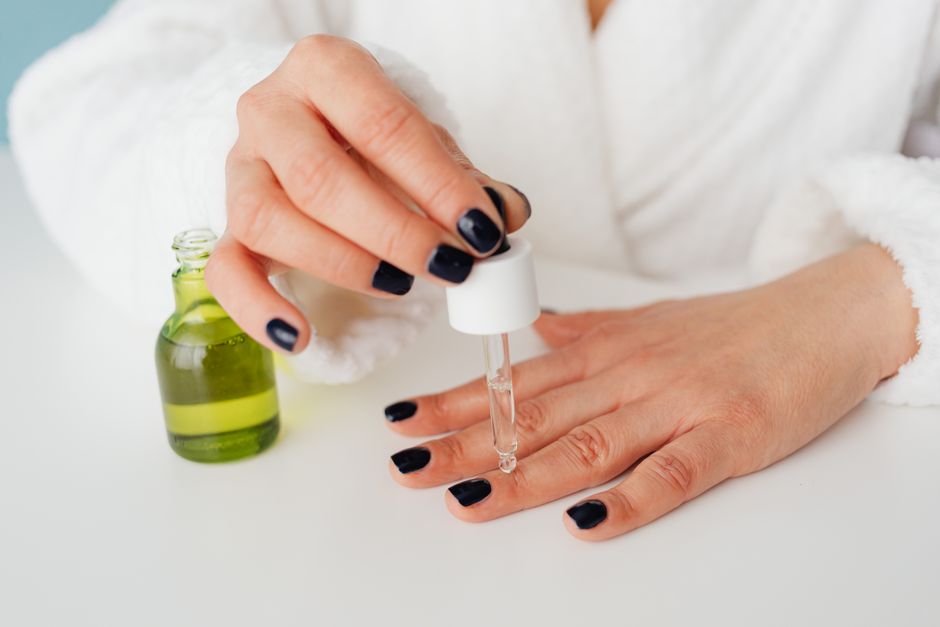
Moisturize the nail and cuticle. Dry, brittle nails crack and split more easily. A plain moisturizer or cuticle oil applied regularly helps keep the nail plate flexible. There is no strong evidence that any specific oil makes nails grow faster or straighter, but keeping the area moisturized supports nail integrity.
Wear gloves for wet work and chemicals. Repeated soaking and exposure to cleaning products weakens the nail plate. Gloves protect both the nail and the skin around it.
Take breaks from gel and acrylic nails. These products require filing the nail surface and can cause trauma when removed. Over time, repeated application and removal can thin and distort nails. A break allows the nail to recover.
Treat infections. If a nail is thickened, discolored, or crumbling, a fungal infection may be the cause. Over-the-counter treatments have limited evidence for nail fungus, and oral prescription treatment is often needed. A doctor or pharmacist can advise.
Do not bite or pick. This is the hardest habit to break and one of the most damaging to nail shape. Bitter-tasting polishes and habit-reversal techniques help some people.
Does Diet or Any Supplement Make Nails Grow Straighter?
No supplement has been shown to change the direction a nail grows. Growth direction is set by the matrix. Nutrition can affect nail strength and growth speed, but not the curve.
That said, severe nutritional deficiencies can affect nails. Iron deficiency is associated with brittle, spoon-shaped nails in some people. Protein, biotin, and zinc all play roles in normal nail formation. Correcting a genuine deficiency matters. Taking supplements when you are not deficient is a different question.
Biotin is heavily marketed for nails, and the evidence is weaker than the marketing suggests. Some small studies have suggested benefit for brittle nails, but results are inconsistent and the studies are limited. Biotin can also interfere with certain lab tests, including thyroid tests and troponin tests used in cardiac care, which is a real safety concern worth knowing. Talk to a doctor before starting it, especially if you take other medications or have lab work planned.
The safest approach is a normal, varied diet. If you suspect a deficiency, ask for testing rather than guessing. No clinical guidelines recommend supplements specifically to straighten nail growth.
When Should You See a Doctor About Curved Nails?
Most curved nails do not need medical attention. Some patterns do.
See a doctor if you notice:
- New clubbing of the fingertips, or a change in fingertip shape
- A dark streak or spot under the nail that is new or changing
- A nail that lifts away from the nail bed without injury
- Thickening, crumbling, or discoloration that does not improve
- Swelling, redness, or pus around the nail
- Changes affecting many nails at once
- Nail changes along with other symptoms such as fatigue, shortness of breath, or joint pain
These signs do not mean something serious is present. They mean the cause should be identified rather than assumed. A clinician can examine the nail unit and, if needed, test for underlying conditions.
Can You Actually Change How a Nail Grows?
Only partly. If the matrix is intact and the curving comes from habits or surface damage, protecting the nail unit gives it the best chance to grow normally. If the matrix is scarred, the shape change may be permanent.
This is the part most people do not realize: a nail takes months to fully replace itself. Fingernails grow at roughly 3.5 millimeters per month, and toenails grow more slowly. That means any change in care takes months to show in the visible nail. Patience is not optional here — it is the timeline.
For nails that curve because of genetics, there is no treatment that changes the underlying shape. Care focuses on keeping nails healthy, trimmed, and free of infection. Cosmetic options exist, but they cover the shape rather than change it.
Frequently Asked Questions
Can curved nails be straightened permanently?
No, a nail that has already grown out curved cannot be permanently reshaped by filing or trimming. Only the new growth from the matrix can change, and that depends on the cause.
What deficiency causes curved nails?
Iron deficiency is the best-known nutritional cause of nail changes, including spoon-shaped nails in some people. Curving alone is not a reliable sign of any specific deficiency, so testing is needed before assuming one.
Do nails grow straighter if you stop biting them?
Often yes, because biting repeatedly injures the cuticle and nail folds that shape new growth. Results take months, since fingernails grow slowly and the damage must grow out.
Is clubbing of the nails always serious?
No, clubbing can run in families without any underlying disease. New or unexplained clubbing should still be checked by a doctor, because it is linked to lung, heart, and other conditions.
