
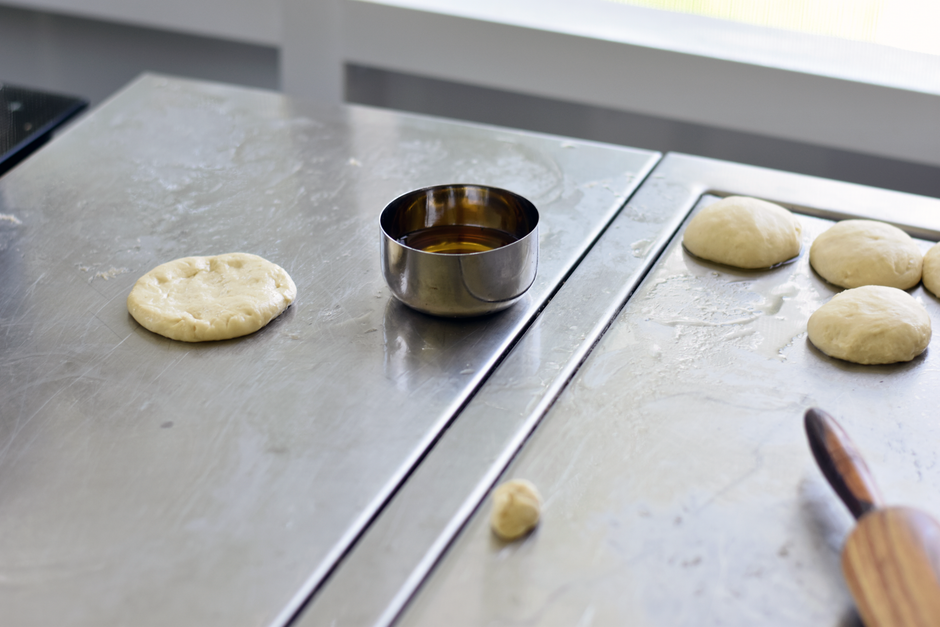
You can make naan bread without yeast because traditional naan often doesn’t use yeast in the first place. The leavening comes from chemical agents like baking powder and baking soda, or from a self-rising flour blend. These react with moisture and heat to create steam and gas, which puffs the dough and gives it a soft, slightly chewy texture. The result is a flatbread you can cook on a hot skillet in minutes, no rising time required.
How To Make Naan Bread Without Yeast
The core method is simple. You mix flour, a chemical leavener, salt, and a liquid, then rest the dough briefly and cook it on a very hot surface.
A basic no-yeast naan dough uses all-purpose flour, baking powder, salt, and a liquid such as milk or water. Many recipes also add yogurt, which brings acidity and fat. That acidity matters because it helps baking soda react and produce gas. The yogurt also makes the dough more tender and adds a tangy flavor that mimics the taste of traditional naan.
Here is the general process:
- Whisk the dry ingredients together so the leavener is spread evenly.
- Add the wet ingredients and mix until a soft dough forms.
- Knead briefly, just until the dough comes together and feels smooth.
- Cover and rest the dough for a short time — often 15 to 30 minutes — so the flour hydrates and the dough becomes easier to roll.
- Divide into portions, roll each one thin, and cook on a very hot, dry skillet or griddle until bubbles form and brown spots appear.
- Flip and cook the second side.
The skillet needs to be genuinely hot. Heat is what drives the puffing. When the dough hits a hot surface, the moisture inside turns to steam quickly, and that steam pushes the dough upward. A lukewarm pan gives you a flat, pale, tough bread instead.
What Can You Use Instead of Yeast in Naan?
Baking powder is the most common substitute, and it works well on its own for a simple flatbread. Baking powder already contains both an acid and a base, so it only needs moisture and heat to start producing gas.
Baking soda is a base and needs an acid to react. That is why recipes pairing baking soda with yogurt or buttermilk work — the yogurt supplies the acid. Using baking soda alone in a dough with no acid source will not give you much lift.
Self-rising flour is another option. In the United States, self-rising flour is typically a blend of all-purpose flour, baking powder, and salt. If you use it, you generally do not need to add more baking powder, though you may still want a pinch of salt depending on the brand.
One clarification worth knowing: baking powder and baking soda are not interchangeable in equal amounts. Baking soda is far stronger by weight. Substituting one for the other without adjusting the quantity can leave your bread flat or give it a soapy, metallic taste from unreacted soda. Follow the recipe’s specified leavener rather than swapping freely.
Why Does Naan Without Yeast Still Puff Up?
The puff comes from gas and steam, not from yeast fermentation. Two things happen at once when the dough meets high heat.
First, the chemical leavener releases carbon dioxide. Baking powder begins reacting when it gets wet, and many baking powders also release more gas when heated. That gas expands inside the dough.
Second, the water in the dough turns to steam. Steam takes up far more space than liquid water, and inside a dough that is setting quickly on the outside, that expanding steam creates pockets and lifts the bread.
The stretchiness of the dough matters here. Gluten, the protein network that forms when you knead wheat flour, gives the dough enough elasticity to hold the gas and steam instead of letting it escape immediately. That is why a brief knead and a short rest help. The rest also lets the flour absorb water fully, which makes the dough easier to roll without tearing.
How Is No-Yeast Naan Different From Traditional Naan?
Traditional naan is usually made with yeast and often includes yogurt, and the dough is left to rise for a period of time. That fermentation develops flavor and a slightly different texture. Much of the naan sold in restaurants is baked against the wall of a very hot tandoor oven, which gives it its characteristic char and puff.
No-yeast naan skips the fermentation. The trade-off is time and a little depth of flavor. You gain speed — the bread can go from mixing bowl to table in well under an hour. The texture is soft and slightly chewy, close to traditional naan but generally a bit less complex in taste.
You cannot fully replicate tandoor char on a home stove. A cast-iron skillet or a heavy griddle preheated well gets you a good approximation with browned spots and a tender interior.
Can You Make Naan Without Yeast Using Yogurt?
Yes, and yogurt is one of the most useful ingredients in a no-yeast naan. It does three jobs at once.
It supplies acid, which helps baking soda react and produce gas. It adds fat and moisture, which keeps the bread tender rather than dry. And it contributes a mild tang that many people associate with traditional naan.
Plain, unflavored yogurt works best. Greek yogurt is thicker and can require adjusting the liquid in the recipe, since a thicker yogurt means less water in the dough. If you use Greek yogurt, you may need to add a little milk or water to reach a workable consistency. Flavored or sweetened yogurt will change the taste of the bread and is not a good substitute here.
What Are Common Mistakes When Making Naan Without Yeast?
The most frequent problem is an underheated pan. If the skillet is not hot enough, the dough will not puff and will dry out before it browns. Preheat the pan properly before the first piece goes on.
Overmixing or over-kneading is another. Without yeast, there is no need to develop a strong gluten network the way you would for yeast bread. Knead just until the dough is smooth. Too much working makes the bread tough.
Rolling the dough too thick is a third common issue. Thick dough cooks unevenly — the outside browns while the center stays raw. Roll it thin and even.
Finally, using old leaveners. Baking powder and baking soda lose potency over time. If yours has been open for a long while, it may not give you the lift you expect. This is a real and often overlooked cause of flat bread.
How Should You Store and Reheat No-Yeast Naan?
No-yeast naan is best eaten fresh, but it keeps reasonably well. Store cooled bread in an airtight container at room temperature for a short period, or freeze it for longer storage. Homemade bread without preservatives does not keep as long as commercial products, so use your judgment and discard anything that smells off or shows mold.
To reheat, a dry skillet over medium heat works well and restores some of the texture. A microwave will soften it but can make it chewy or rubbery. Wrapping it briefly in foil in a warm oven is another option. Reheating on a hot pan is generally the closest to fresh.
For food safety, treat homemade bread like any perishable-ish food once it has been handled and cooked. If it develops visible mold, discard it rather than cutting around the spot, since mold roots can extend below the surface in soft breads.
Frequently Asked Questions
Can you make naan bread without yeast?
Yes. Baking powder, baking soda with an acid like yogurt, or self-rising flour can leaven naan without yeast. The bread puffs from released gas and steam rather than fermentation.
What can I use instead of yeast in naan?
Baking powder is the most common substitute and works on its own. Baking soda works when paired with an acid such as yogurt or buttermilk, and self-rising flour is another option.
Why did my naan not puff up?
The most common causes are a pan that is not hot enough, old or expired leaveners, or dough rolled too thick. A properly preheated skillet is essential for the steam that lifts the bread.
Does naan without yeast taste the same?
It is close but not identical. No-yeast naan is soft and slightly chewy, but it lacks the deeper flavor that yeast fermentation develops over time.
