
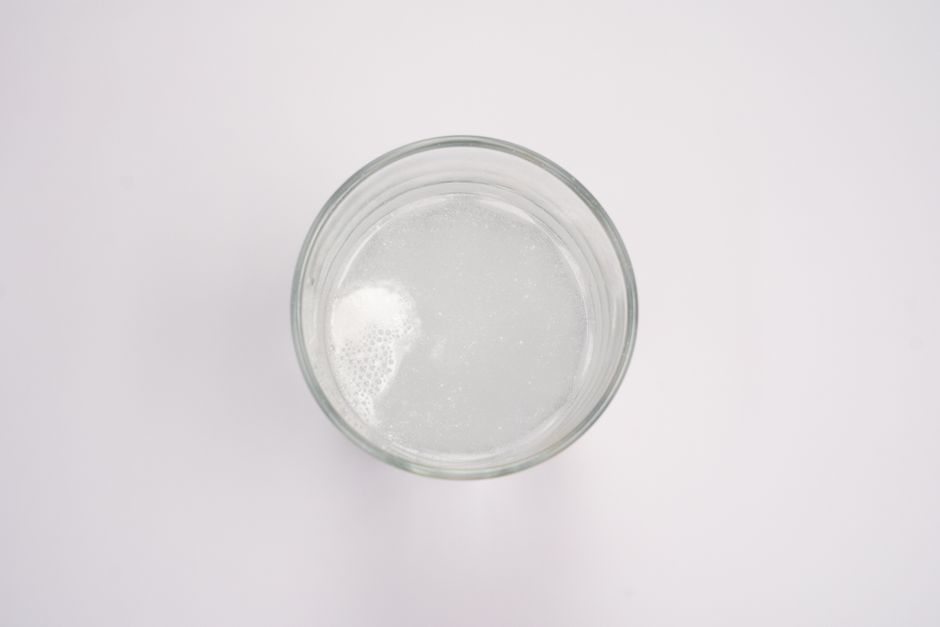
You can make magnesium bicarbonate water at home by combining a magnesium hydroxide solution with carbonated water. The carbonation supplies carbon dioxide, which reacts with the magnesium hydroxide to form dissolved magnesium bicarbonate. The basic recipe is one liter of plain carbonated water mixed with a small measured amount of concentrated magnesium hydroxide solution, then chilled and stored in a sealed bottle to slow the loss of carbonation.
That is the short answer. The longer answer involves getting the chemistry right, because most homemade versions fail on one of two points: the magnesium never fully dissolves, or the drink loses its carbonation and the magnesium settles out as a white powder. This guide explains what is actually happening, how to build the concentrate, and where the honest limits of the evidence sit.
What Is Magnesium Bicarbonate Water?
Magnesium bicarbonate is not a common mineral you can buy as a powder. It exists only in solution. In water, magnesium bicarbonate is what forms when magnesium ions and bicarbonate ions are both present and dissolved. If you try to dry it out, it breaks down into magnesium carbonate, which is poorly soluble and shows up as a white residue.
That is the reason the drink is made fresh from two ingredients rather than scooped from a jar. The dissolved form is the whole point.
Naturally occurring “magnesium bicarbonate water” comes from springs that pass through magnesium-rich rock while absorbing carbon dioxide. Several bottled mineral waters are marketed on this basis. The homemade version mimics the same chemistry in a kitchen.
How To Make Magnesium Bicarbonate Water At Home?
The method has two stages: make a concentrated magnesium hydroxide solution, then carbonate it. Skipping the concentrate and simply stirring magnesium powder into water does not reliably produce the dissolved bicarbonate form.
Stage 1: Make the magnesium hydroxide concentrate
You need two things: plain magnesium hydroxide powder (sometimes sold as “milk of magnesia” powder, though check that it is pure and not a flavored laxative product) and plain carbonated water with no added minerals or flavoring.
The classic approach uses a two-liter bottle of carbonated water. You add a measured amount of magnesium hydroxide powder, cap the bottle tightly, and shake it well. The carbon dioxide in the water reacts with the magnesium hydroxide. The mixture is then left to settle, and any undissolved powder falls to the bottom.
What remains on top is a clear liquid containing dissolved magnesium bicarbonate. You pour off the clear portion and discard the sediment.
Important safety note: magnesium hydroxide powder is caustic in concentrated form. It can irritate skin and eyes. Handle it carefully, avoid breathing the dust, and keep it away from children. This is a reason to buy a prepared concentrate from a supplier that sells one specifically for drinking water rather than handling raw powder if you are at all unsure.
Stage 2: Dilute to drinking strength
The clear concentrate is far too concentrated to drink straight. It is mixed into plain drinking water or into more carbonated water at a small ratio. The exact ratio depends on the strength of your concentrate, which is why suppliers of prepared concentrates usually print a dilution guide on the label.
Do not guess at the ratio. Overly concentrated magnesium solutions can cause loose stools, and the magnesium content of a homemade batch is not standardized.
Why Does the Mixture Need Carbonated Water?
Carbon dioxide is the active ingredient that makes the reaction work. When carbon dioxide dissolves in water it forms carbonic acid, which lowers the pH slightly. That mild acidity lets magnesium hydroxide dissolve into a form the body can absorb more readily than plain magnesium oxide powder sitting in water.
Without carbonation, you are mostly drinking a suspension of poorly dissolved magnesium. With carbonation, you get a clear solution.
This is also why the drink goes flat over time. As carbon dioxide escapes, the solution becomes less stable and magnesium can precipitate out as a white sediment. A sealed bottle kept cold holds its carbonation longer. An open glass left on the counter does not.
How Much Magnesium Does It Actually Deliver?
This is where honesty matters most. The magnesium content of a homemade batch is genuinely variable. It depends on how much powder you started with, how much dissolved, how cold the water was, and how much carbonation remained. There is no standard figure you can rely on.
What is well established is the general adult requirement. The National Institutes of Health lists the recommended dietary allowance for magnesium as 400 to 420 mg per day for adult men and 310 to 320 mg per day for adult women, with higher needs during pregnancy. Those figures refer to total dietary intake, not to any single drink.
No clinical guidelines exist for a specific “dose” of homemade magnesium bicarbonate water. If you are using it to top up your intake, treat it as a supplement of unknown strength rather than a measured dose.
Is There Evidence That Magnesium Bicarbonate Water Works?
The evidence is thin and mostly indirect. Magnesium is an essential mineral with well-documented roles in muscle function, nerve signaling, blood pressure regulation, and bone health. Deficiency is real and can cause symptoms. Those facts are solid.
What is not established is that magnesium bicarbonate water specifically offers advantages over other magnesium sources, or that it treats any particular condition. Some research suggests bicarbonate-rich mineral waters may affect digestion and hydration, but the studies are small and the formulations vary widely. No large human trials have confirmed that homemade magnesium bicarbonate water delivers unique benefits.
Marketing around this drink often leans on the idea that it “alkalizes” the body. That claim deserves a direct response: the body tightly regulates blood pH on its own, and drinking alkaline water does not meaningfully change it. The buffering systems in your blood and kidneys handle that continuously. Any health effect of this drink, if there is one, would come from the magnesium, not from shifting your body’s pH.
What Are the Risks and Cautions?
Magnesium from supplements and water is generally handled well by healthy kidneys, but there are real cautions.
- Kidney disease: People with impaired kidney function cannot clear excess magnesium efficiently. Magnesium supplementation can be dangerous in this group. Talk to a doctor before using any magnesium product.
- Loose stools: Magnesium has a laxative effect at higher intakes. This is the same mechanism behind milk of magnesia. Exceeding what your gut tolerates causes diarrhea.
- Drug interactions: Magnesium can interfere with absorption of certain antibiotics and other medications. Timing matters. A pharmacist can advise on spacing.
- Unmeasured strength: Because homemade batches vary, it is easy to take more than intended without knowing it.
- Pregnancy and breastfeeding: No clinical guidelines exist for using homemade magnesium bicarbonate water in these groups. Ask a clinician before starting.
None of this means the drink is unsafe for a healthy adult using a sensible dilution. It means the cautions are real and the dose is not standardized.
Does It Beat Other Magnesium Sources?
No head-to-head trials establish that it does. Magnesium is available from food, from well-studied supplement forms like magnesium citrate, magnesium glycinate, and magnesium oxide, and from some mineral waters. Each form has different absorption characteristics and different tolerability.
Food sources remain the most reliable route. Nuts, seeds, legumes, whole grains, and leafy greens all supply magnesium. For most people, dietary intake covers the requirement.
Magnesium bicarbonate water is one option among several. It is not established as superior, and its main practical drawback is that its strength is unpredictable.
How Should You Store and Use It?
Keep it cold and sealed. Cold water holds carbon dioxide better than warm water, and a tight cap slows the escape that causes precipitation. Use a glass or food-grade plastic bottle with a good seal. Avoid metal containers, which can react with the contents.
Expect some sediment over time. That is normal and reflects the chemistry, not spoilage. Shake gently before pouring if you want to redistribute it, or pour off the clear top layer.
Make small batches. A batch made fresh and consumed within a few days keeps its character better than one stored for weeks.
Frequently Asked Questions
Can I make magnesium bicarbonate water with magnesium oxide powder?
Magnesium oxide is poorly soluble and does not reliably convert to the dissolved bicarbonate form the way magnesium hydroxide does. The standard approach uses magnesium hydroxide.
How much magnesium bicarbonate water should I drink per day?
No clinical guidelines set a specific amount for homemade magnesium bicarbonate water because its strength is not standardized. Follow the dilution instructions from your concentrate supplier and count it toward your total magnesium intake.
Why does my magnesium bicarbonate water turn cloudy or leave white powder?
That white residue is magnesium carbonate forming as the water loses carbonation. Keeping the bottle sealed and cold slows this, but some precipitation over time is expected.
Is magnesium bicarbonate water safe for people with kidney disease?
People with impaired kidney function should not use magnesium supplements or magnesium-rich waters without medical advice, because the kidneys may not clear excess magnesium properly.
