
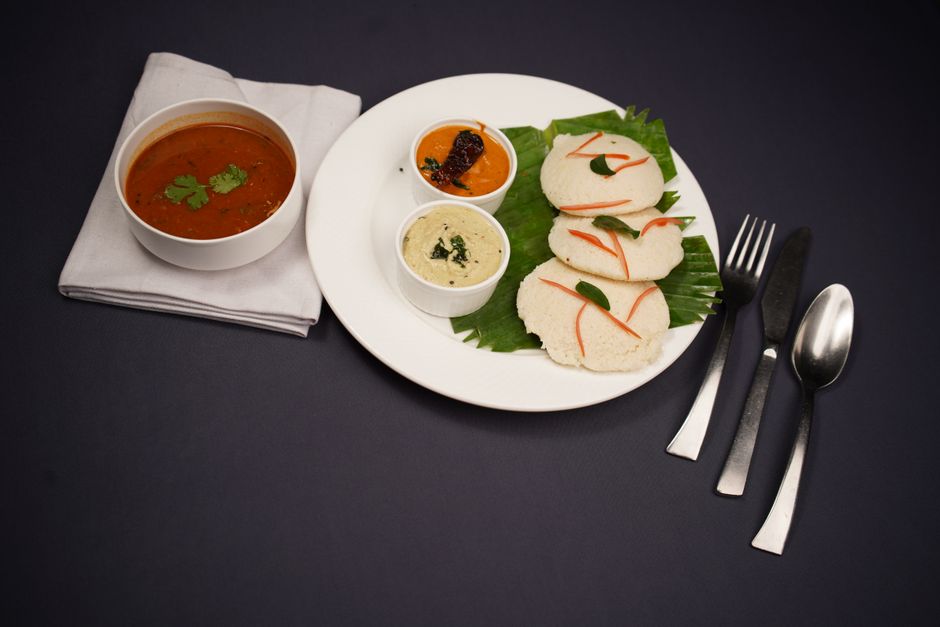
Soft, fluffy idlis start with one thing: a properly fermented batter made from rice and dehulled black gram, also called urad dal. You soak the two separately, grind them to the right textures, mix them with salt, and let the mixture ferment until it rises and turns lightly sour. Get the fermentation right and the idlis steam up airy and tender. Get it wrong and you get flat, dense discs.
The process is simple but not forgiving of shortcuts. Temperature, grinding texture, and the ratio of rice to dal all matter. This guide explains what happens at each step and why, so you can fix problems instead of guessing.
What Is Idli Batter Made Of?
Traditional idli batter has just four ingredients: rice, urad dal, water, and salt. Some cooks add a small amount of fenugreek seeds, which appear to help fermentation and give the batter a slightly nutty note.
The classic proportion is about 4 parts rice to 1 part urad dal by volume, though households vary this. More rice gives a softer, more delicate idli. More dal gives a denser, sturdier one. There is no single correct ratio, and regional styles differ.
Two types of rice are commonly used together. Parboiled rice, sometimes sold as idli rice, gives structure. Raw rice adds softness. Many South Indian kitchens use a mix of both. Plain white long-grain rice also works, but the texture of the finished idli changes.
The dal matters too. You want whole or split urad dal with the black skin removed. The skin is not digestible in the same way and can leave speckles and a slightly bitter taste.
Why Do You Soak Rice And Dal Separately?
Rice and urad dal need different soaking times because their grains absorb water at different rates. Urad dal softens faster. Rice takes longer to become soft enough to grind.
As a general guide, soak urad dal for about 4 hours and rice for about 5 to 6 hours. These are common practice rather than fixed rules. In warm weather, shorter soaking works. In cold weather, longer helps.
Soaking does more than soften. It lets the grains absorb water so they grind into a smooth batter. It also gives naturally present microbes on the grains a chance to become active. Those microbes are central to fermentation.
Rinse both well before soaking and again after. Use clean water. Do not soak so long that the grains start to smell sour or ferment on their own in a way you did not plan.
How Do You Grind The Batter Correctly?
Grinding texture is where many batters fail. The dal and the rice need different treatments.
Grind the urad dal first, using cold water, until it becomes light, fluffy, and pale. A good sign is that a small dollop floats in a bowl of water. This shows the batter has taken in enough air, which helps the final idli rise.
Grind the rice separately until it is smooth but still slightly grainy. Rice ground to a fine paste gives a dense idli. A little coarseness gives the batter something to hold onto as it rises.
A wet grinder gives the best texture because it grinds slowly and does not heat the batter much. A blender works, but it heats the batter quickly, and heat can damage the texture and the microbes you need. If you use a blender, grind in short bursts and keep the batter cool.
Once both are ground, mix them together with salt. Use about 1 to 1.5 teaspoons of salt per cup of rice used, adjusting to taste. Salt affects fermentation, so do not skip it or add it at the very end.
How Does Fermentation Make Idli Batter Rise?
Fermentation is the step that turns a plain grain paste into a risen, tangy batter. Naturally present lactic acid bacteria and wild yeasts get to work on the sugars in the grains.
These microbes produce acids and gases. The acids give the batter its mild sourness. The gases get trapped in the batter’s structure and make it rise, sometimes doubling in volume. This is what creates the airy crumb in a finished idli.
Fermentation is sensitive to temperature. The batter rises best in a warm place, roughly 30 to 35 degrees Celsius, which is about 86 to 95 degrees Fahrenheit. In a cool kitchen, fermentation slows or stalls. In very hot conditions, it can move too fast and turn the batter overly sour.
Give the batter room to grow. Fill your container only about half full. Cover it but do not seal it so tightly that gas cannot escape.
How long fermentation takes varies widely. In warm conditions it may take 6 to 8 hours. In cooler conditions it can take 12 hours or more. Watch the batter rather than the clock. It is ready when it has risen noticeably, looks spongy, and smells pleasantly sour.
Why Did My Idli Batter Not Ferment?
A batter that does not rise usually points to one of a few causes. Cold is the most common. If your kitchen is cool, the microbes slow down and the batter sits flat. Moving it to a warmer spot, or placing it in an oven with only the light on, often helps.
Over-grinding can also be a problem. If the rice is ground into a very fine paste, the batter loses the structure that traps gas. A slightly grainy rice texture gives the batter something to hold onto.
Too much salt can slow fermentation. So can very old grains or grains that were stored poorly, because the natural microbes may be less active.
If the batter tastes sharply sour and smells unpleasant rather than pleasantly tangy, it may have fermented too long or picked up unwanted microbes. In that case, it is safer to discard it.
Some cooks add a small amount of previously fermented batter or a pinch of baking soda to help a stubborn batch. Adding a spoonful of active fermented batter can help seed the process. This is common practice, though results vary.
How Do You Steam Idlis For The Softest Result?
Once the batter has risen, stir it gently. You want to deflate it slightly and mix it evenly, but not knock out all the trapped gas.
Grease your idli plates lightly. Pour the batter into the molds, filling each about three-quarters full. Do not overfill, because the batter expands as it steams.
Steam over medium heat. High heat can make idlis tough, and it can cause the surface to set before the inside cooks. Medium, steady steam gives a softer result. A standard batch typically steams in about 10 to 12 minutes, but this depends on your steamer and mold size.
Do not open the lid constantly. Each time you lift it, heat escapes and the cooking slows. Let the idlis steam undisturbed, then check one with a toothpick or skewer. If it comes out clean, they are done.
Let the idlis rest for a minute or two before removing them. A short rest helps them release from the mold cleanly. Use a wet spoon to lift them out.
Can You Store Idli Batter?
Yes, and many people make a large batch to last several days. Once fermented, store the batter in the refrigerator. Cold slows fermentation and keeps the batter from turning overly sour.
Use a container with some headroom, because the batter may continue to rise slowly in the fridge. Keep it covered.
Freshly fermented batter gives the softest idlis. As the batter sits, it becomes more sour and the texture can change. If it becomes too sour, you can stir in a small amount of fresh rice flour or a pinch of baking soda to balance it, though this changes the flavor.
Do not leave fermented batter at room temperature for long periods. It will keep fermenting and can become unpleasantly sour or spoil.
What Affects The Final Texture Most?
If you want consistently soft idlis, three things matter more than anything else: the grinding texture, the fermentation, and the steaming heat.
- Grinding: fluffy dal, slightly grainy rice. This gives the batter structure to trap gas.
- Fermentation: warm, not hot, and watched rather than timed. The batter should rise and smell pleasantly sour.
- Steaming: medium, steady heat. High heat toughens the idli.
Small changes in any of these shift the outcome. That is why two cooks using the same recipe can get different results. The recipe sets the direction; your conditions decide the finish.
Frequently Asked Questions
How long should idli batter ferment?
In warm conditions it often takes 6 to 8 hours, and in cooler conditions 12 hours or more. Watch for the batter to rise and smell pleasantly sour rather than relying on a fixed time.
Why is my idli batter not rising?
Cold temperature is the most common cause, followed by over-grinding the rice or using too much salt. Move the batter somewhere warm and give it more time.
Can I make idli batter without a wet grinder?
Yes, a blender works, but grind in short bursts and keep the batter cool. A blender heats the batter quickly, and heat can harm both texture and fermentation.
How do I know when idli batter is spoiled?
Signs include a sharply sour or unpleasant smell, discoloration, or a slimy surface. If the batter smells wrong rather than pleasantly tangy, it is safer to discard it.
