
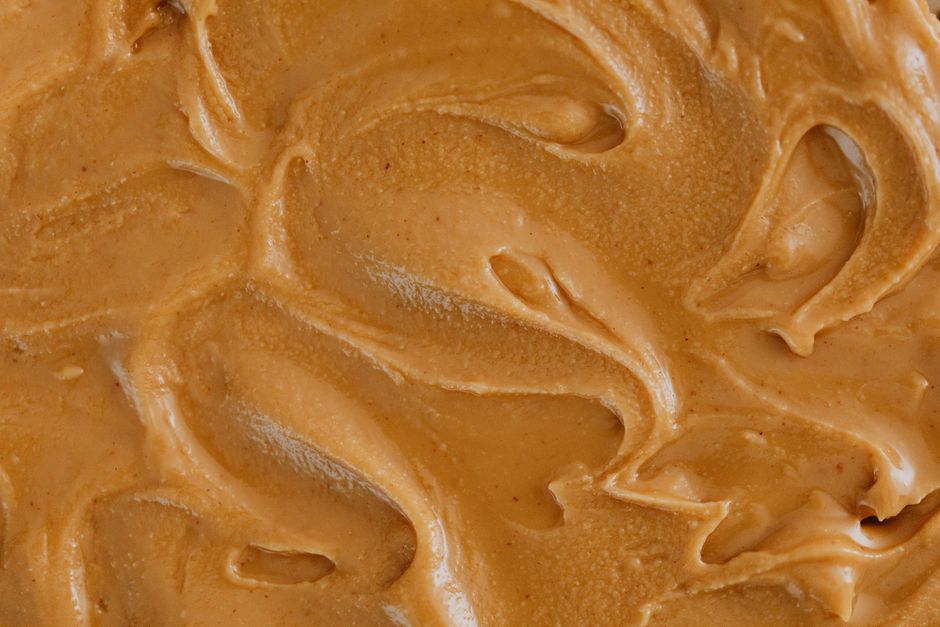
Making homemade peanut butter from raw peanuts takes about 15 minutes and three ingredients: raw peanuts, salt, and a little oil if you want a smoother spread. You roast the peanuts, let them cool slightly, then grind them in a food processor until they break down from crumbs into a creamy paste. That’s the whole process. The peanuts’ own oil does most of the work.
How To Make Homemade Peanut Butter From Raw Peanuts?
Here is the method, start to finish.
Step 1: Roast the peanuts. Spread raw shelled peanuts in a single layer on a baking sheet. Roast at 350°F for about 10 to 15 minutes, stirring once or twice. Watch them closely near the end. Peanuts go from toasted to burnt quickly, and burnt peanuts make bitter butter.
You can also roast them in a dry skillet on the stovetop over medium heat, stirring often, for roughly 5 to 10 minutes. Either way, you want them fragrant and a shade darker.
Step 2: Cool them briefly. Let the peanuts cool for 5 to 10 minutes. Very hot peanuts can release steam in a sealed food processor, and warm peanuts also grind into a stickier paste. Slightly warm is fine and actually easier to process than cold.
Step 3: Process. Put the peanuts in a food processor and turn it on. Add about 1/4 teaspoon of salt per 2 cups of peanuts, or to taste. If your machine is small, work in batches.
Here is where most people give up. For the first few minutes, the peanuts will look like coarse crumbs. Then they’ll form a ball that thumps around the bowl. Keep going. Scrape down the sides every minute or so. After several minutes of continuous processing, the peanuts release their oil, the ball breaks down, and the mixture turns into a smooth paste.
This can take anywhere from 3 to 10 minutes depending on your machine. A high-powered processor gets there faster. A small or older machine may need more scraping and more patience.
Step 4: Adjust. If the butter is too thick for your taste, add a neutral oil like peanut or canola, one teaspoon at a time, while the machine runs. Add a pinch more salt if needed. For a sweeter butter, add a small amount of honey or sugar, though traditional peanut butter doesn’t need it.
Step 5: Store. Scrape into a clean jar with a tight lid. Keep it in the refrigerator.
Why Does Peanut Butter Go From Crumbs to Cream Without Added Liquid?
Peanuts are roughly half oil by weight. That oil is stored inside the nut’s cells, held in place by cell walls and proteins.
When you grind the peanuts, you break those cell walls open. The oil is released and coats the peanut particles. Keep grinding and the particles get smaller and smaller, until the mixture shifts from a suspension of solid bits in oil to a smooth, spreadable paste. The peanuts essentially make their own liquid.
This is why you don’t need to add water. Water would actually work against you. Oil and water don’t mix, and added water can make the butter seize or turn grainy. It also introduces moisture that shortens shelf life.
The ball stage that alarms people is normal. It’s the point where the released oil hasn’t yet fully blended with the finely ground solids. Patience, not extra ingredients, gets you past it.
Should You Use Raw or Roasted Peanuts?
Roasted peanuts make better peanut butter. Roasting develops the flavor compounds that give peanut butter its characteristic taste, and it makes the nuts easier to grind.
Raw peanuts will blend into a paste, but the result tastes flat and slightly green. It also tends to be stiffer. If you start with raw peanuts, plan to roast them yourself.
One clarification that surprises people: “raw” peanuts sold in stores are usually not truly raw in the botanical sense. They’ve typically been dried and may have been heat-treated. That doesn’t affect your peanut butter much, but it’s why they still roast up well.
You can buy pre-roasted unsalted peanuts and skip straight to grinding. That saves time. The trade-off is you lose control over roast level and freshness.
What Kind of Peanuts Work Best?
Any shelled peanut works, but the variety affects flavor and texture.
- Runner peanuts are the most common US variety and make a well-balanced, familiar-tasting butter.
- Spanish peanuts are smaller, higher in oil, and produce a slightly stronger, nuttier flavor.
- Valencia peanuts are sweeter and often used for natural-style butter.
- Virginia peanuts are large and crunchy, better for snacking than smooth butter.
Blanched peanuts (with skins removed) give you a lighter-colored, smoother butter. Peanuts with skins still on produce a darker butter with a slightly more bitter edge. Both are fine. Skins add fiber and some antioxidants, though the difference is small.
Why Does Homemade Peanut Butter Separate?
Natural peanut butter separates because it has no stabilizer. Commercial brands often add hydrogenated oil, which keeps the oil from rising to the top. Yours has nothing holding the oil in place, so it will separate over time, especially in a warm cupboard.
This is normal and not a sign of spoilage. Stir it back in with a knife or spoon. Storing the jar in the refrigerator slows separation and helps keep the texture uniform, though cold butter is stiffer and harder to spread straight from the fridge.
If separation bothers you, a small amount of a solid fat can help hold it together. Some people add a tablespoon of coconut oil per cup of peanuts. This changes the flavor slightly and firms the butter when chilled. It’s a preference, not a requirement.
How Long Does Homemade Peanut Butter Last?
Homemade peanut butter keeps for about one to two months in the refrigerator in a clean, tightly sealed jar. Some sources suggest longer, but without preservatives the safe window is shorter than commercial products.
Refrigeration matters. Peanut oil can go rancid, and warmth speeds that up. Signs of spoilage include a sharp or paint-like smell, a bitter taste, and visible mold. If you notice any of these, discard the jar.
Cleanliness matters too. Always use a dry, clean utensil to scoop. Introducing moisture or crumbs from bread shortens shelf life.
Small batches are the practical answer. Make what you’ll eat in a few weeks rather than a large jar that sits.
Is Homemade Peanut Butter Healthier Than Store-Bought?
It depends entirely on what you compare it to. Homemade peanut butter lets you control the ingredients, which is its real advantage.
Many commercial peanut butters contain added sugar, added salt, and hydrogenated vegetable oils. Some “natural” brands contain only peanuts and salt. If you’re already buying a two-ingredient product, homemade offers little nutritional gain. It mainly offers freshness and flavor.
Nutritionally, peanuts are a good source of protein, healthy fats, vitamin E, niacin, and magnesium. Two tablespoons of peanut butter provide roughly 190 calories and about 7 grams of protein, though exact values vary by brand and recipe. Homemade butter with no added sugar will have slightly fewer calories than a sweetened commercial version, but the difference is modest.
One caution worth stating plainly: peanut butter is calorie-dense, and it’s easy to eat more than you intend. That’s true of homemade and commercial alike.
Peanut allergies are among the most common food allergies, and they can be severe. If you have a known peanut allergy, none of this applies to you. If you’re preparing food for others, be clear about what’s in the jar, since homemade butter won’t carry an ingredient label.
Do You Need a Food Processor or Will a Blender Work?
A food processor is the right tool. Its wide bowl and S-blade handle thick, sticky mixtures well.
A standard blender struggles with peanut butter. The mixture is too thick for the blades to circulate, and you’ll spend a lot of time stopping to scrape and push the paste down. High-powered blenders with a tamper can manage it, but it’s slower and harder on the machine. Small batch sizes help.
A heavy-duty food processor is the most reliable choice. If you don’t own one, some people make small batches in a blender with frequent scraping, accepting that it takes longer.
Frequently Asked Questions
How long does it take to make peanut butter from raw peanuts?
About 15 to 25 minutes total, including roasting and processing. Most of that time is hands-off, though you’ll need to scrape the food processor bowl several times.
Why is my homemade peanut butter not getting creamy?
You likely stopped processing too early, during the crumb or ball stage. Keep the machine running and scrape the sides every minute until the peanuts release their oil and smooth out.
Do I have to refrigerate homemade peanut butter?
Yes, refrigeration is recommended to slow rancidity and extend shelf life. Homemade butter has no preservatives, so it keeps for about one to two months chilled.
Can I make peanut butter from raw peanuts without roasting them?
Yes, but the result tastes flat and is harder to grind. Roasting develops flavor and makes the peanuts easier to process into a smooth butter.
