
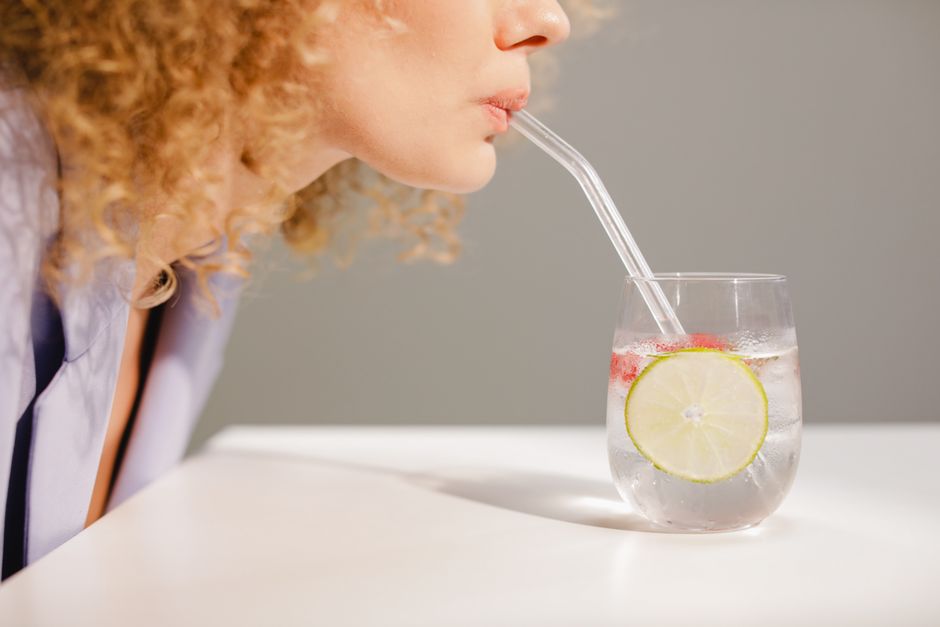
Hibiscus water for skin is simple to make. Steep dried hibiscus petals in hot water, let the liquid cool completely, then strain it. Use the cooled water as a facial rinse, a toner applied with a cotton pad, or a base for a clay mask. Keep it refrigerated and use it within a few days.
The plant behind this is Hibiscus sabdariffa, the same species used for hibiscus tea. Its deep red color comes from anthocyanins, the pigment compounds found in berries and red cabbage. Those compounds are antioxidants, and antioxidants are why hibiscus shows up in skin care discussions at all. What follows is the practical method, plus an honest look at what the evidence does and does not support.
What Do You Need To Make Hibiscus Water For Skin?
You need four things: dried hibiscus petals, water, a heatproof container, and a strainer. Everything else is optional. Dried petals are the practical choice because fresh hibiscus flowers are seasonal and spoil quickly. Look for food-grade dried hibiscus, the kind sold for tea. That grade is held to food safety standards, which matters when you are putting the liquid on your face.
Here is a basic supply list:
- About one tablespoon of dried hibiscus petals per cup of water
- Filtered or distilled water
- A clean glass or ceramic bowl
- A fine mesh strainer or cheesecloth
- A clean glass bottle for storage
Avoid metal bowls if you can. Anthocyanins can react with certain metals, and glass or ceramic sidesteps the question entirely. Skip anything that has held food without being washed thoroughly. Skin contact with leftover oils or residues is a common cause of irritation that people blame on the plant.
How To Make Hibiscus Water For Skin Step By Step
The method is closer to making tea than to making a cosmetic. That simplicity is the point. Here is the sequence.
Step 1: Boil the water. Bring about one cup of water to a boil. Boiling does two things. It extracts the color and water-soluble compounds from the petals, and it reduces the microbial load in the finished liquid.
Step 2: Add the petals. Put roughly one tablespoon of dried hibiscus into your glass or ceramic bowl, then pour the hot water over them. Stir once so all the petals are submerged.
Step 3: Steep. Cover the bowl and let it sit for about 10 to 15 minutes. The liquid should turn a deep red. A longer steep makes a stronger, more astringent liquid, which is not necessarily better for skin.
Step 4: Strain well. Pour through a fine mesh strainer or cheesecloth into a clean container. Small plant fragments left in the liquid can clog pores or feel gritty on the skin, so strain thoroughly rather than quickly.
Step 5: Cool completely. Let the liquid come to room temperature before it touches your skin. Hot liquid on the face is a burn risk, and warm liquid in a storage bottle encourages bacterial growth.
Step 6: Store it cold. Pour the cooled water into a clean glass bottle and refrigerate it. Use it within a few days. This is not a product with preservatives. It is a water-based plant infusion, and water-based liquids without preservatives grow bacteria over time.
Step 7: Patch test first. Apply a small amount to the inner forearm and wait 24 hours before using it on your face. This is standard advice for any new topical product, and it applies here too.
How Do You Actually Use It On Your Skin?
There are three common ways to apply hibiscus water, and they differ in how much contact your skin has with the liquid.
As a facial rinse. After cleansing, splash the cooled water over your face and pat dry. This is the gentlest option and the easiest to tolerate.
As a toner. Soak a cotton pad and swipe it across the face, avoiding the eyes. Because a toner stays on the skin rather than being rinsed away, this method gives more contact time. It is also the method most likely to reveal sensitivity.
As a mask base. Mix the water with clay powder to form a paste, apply, and rinse off after it dries slightly. Do not let clay masks dry to a crack. That pulls moisture from the skin.
One clarification worth making: hibiscus water is a rinse and a vehicle, not a treatment. It does not replace a cleanser, a moisturizer, or sunscreen. Anyone using it as a substitute for sun protection is making a mistake with real consequences.
Does Hibiscus Water Actually Help Skin?
The evidence is limited and mostly preliminary. That is the honest position. Hibiscus extracts contain anthocyanins and other polyphenols, and laboratory studies show these compounds have antioxidant activity. Antioxidants can neutralize free radicals, which are unstable molecules that contribute to skin aging and damage. That mechanism is well established in general terms.
What is much less established is whether applying hibiscus water to human skin produces measurable benefits. Most of the research on hibiscus and skin comes from cell cultures and animal models. Those are useful for generating hypotheses, not for confirming results in people. Some small human studies exist, but they are not large or numerous enough to support firm claims.
There is also a distinction worth understanding. A compound showing antioxidant activity in a lab dish does not automatically behave the same way on skin. It has to penetrate the outer layer, remain stable, and reach a meaningful concentration. Hibiscus water is a dilute infusion, so the amount of active compound in a splash of it is modest.
Where hibiscus water has a more defensible role is as a soothing rinse. It is mildly astringent, and some people find it pleasant and refreshing on oily or combination skin. That is a comfort claim, not a treatment claim. No clinical evidence currently confirms that hibiscus water clears acne, fades dark spots, or reduces wrinkles.
What Are The Risks And Who Should Be Careful?
Hibiscus water is generally well tolerated when applied to intact skin, but it is not risk-free. The most common issue is irritation, especially in people with sensitive skin or a history of eczema. Redness, stinging, or itching after application means stop using it.
Several groups should be more cautious:
- People with known allergies to hibiscus or related plants
- Anyone with broken, cracked, or sunburned skin, where the liquid can sting and where infection risk is higher
- People using prescription topical treatments, who should ask their clinician before layering anything new
- Anyone who develops a rash, which may indicate contact dermatitis
Do not apply hibiscus water near the eyes. Do not use a batch that has been in the refrigerator for more than a few days, or one that smells off or looks cloudy. Homemade water-based preparations are not sterile, and the absence of preservatives means spoilage is a real possibility rather than a theoretical one.
There is one more caution that gets overlooked. Hibiscus tea is sometimes discussed for blood pressure effects when consumed. That is a separate question from skin application, but if you are on blood pressure medication, mention hibiscus to your clinician before making it a regular drink. Topical use is not the same as drinking it, and the evidence for either is not strong enough to treat hibiscus as a therapy.
Can You Use Store-Bought Hibiscus Water Instead?
Yes, with a caveat about labels. Some products sold as hibiscus water are simply the infusion in a bottle, while others are formulated toners with added preservatives, humectants, and sometimes alcohol or fragrance. Neither is inherently better, but they are different things.
If you buy a prepared product, read the ingredient list. Fragrance and alcohol are common irritants for sensitive skin, and their presence changes how the product is likely to behave. A prepared toner also has preservatives that a homemade infusion lacks, which makes it safer to keep for longer. That trade-off is worth understanding rather than dismissing.
Making it at home gives you control over what goes in. Buying it gives you stability and a longer shelf life. Choose based on which matters more to you, and patch test either way.
Frequently Asked Questions
How long does homemade hibiscus water last?
Refrigerated homemade hibiscus water should be used within a few days. It contains no preservatives, so it can spoil and grow bacteria over time.
Can I use hibiscus water on my face every day?
Some people use it daily without issue, but start with a patch test and a few times a week. Cut back if you notice redness, stinging, or dryness.
Does hibiscus water lighten dark spots?
No clinical evidence currently confirms that hibiscus water fades dark spots or pigmentation. Sunscreen and proven ingredients like retinoids or vitamin C have far better supporting evidence.
Can I drink the hibiscus water I made for my skin?
It is the same basic infusion as hibiscus tea, but the batch made for skin has been handled and stored for topical use. Make a fresh batch if you want to drink it.
