
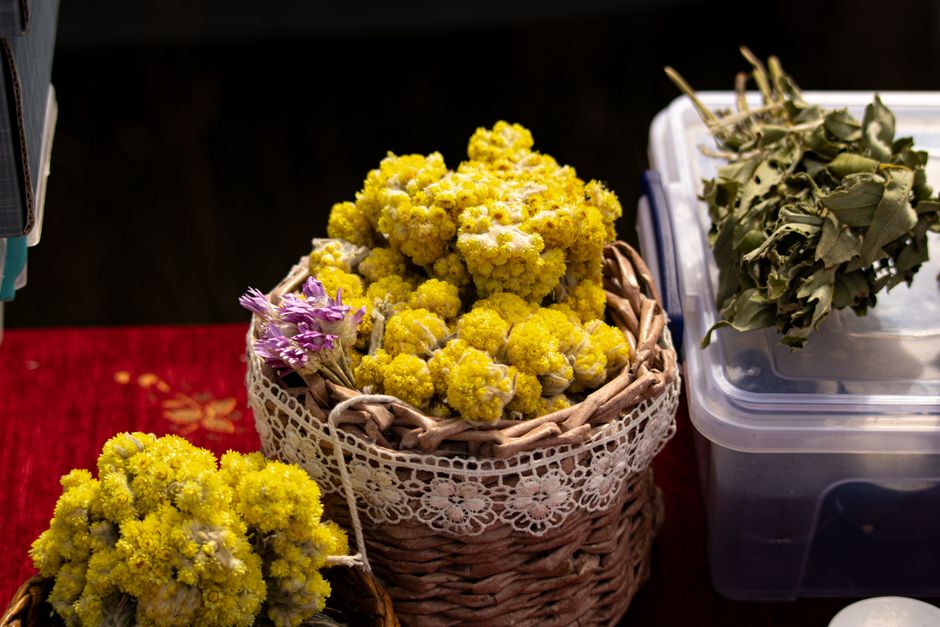
Making helichrysum infused oil at home means steeping dried helichrysum flowers in a carrier oil so the plant’s fat-soluble compounds transfer into the oil over time. You can do this two ways: a slow cold infusion that takes several weeks, or a gentle warm infusion that takes a few hours. Both use the same basic steps — dry flowers, cover them completely with oil, keep the mixture warm or at room temperature, then strain and store the finished oil in a dark bottle.
The method matters less than the details. Moisture, heat, and light are the three things that ruin infused oils, and each one is easy to control once you know what you are watching for.
What Is Helichrysum Infused Oil, And How Is It Different From Essential Oil?
These are two different products made from the same plant, and people often use the names interchangeably when they should not.
Helichrysum infused oil is a carrier oil — olive, jojoba, sunflower, or similar — that has been steeped with the dried flowers. What ends up in the oil is a mix of the plant’s fat-soluble compounds, including some flavonoids and terpenes that dissolve into oil. The result is a mild, pleasantly scented oil that can be applied directly to skin.
Helichrysum essential oil is a concentrated distillate produced by steam distillation. It takes a large amount of plant material to produce a small amount of essential oil, which is why it is expensive and why it is normally diluted before use. It is not something you can make at home with kitchen equipment.
This distinction matters for safety. Infused oils are generally gentle enough to apply undiluted to intact skin. Essential oils are not, and many should be diluted before touching skin at all. If a recipe calls for “helichrysum oil” and you are not sure which one it means, that is worth clarifying before you use it.
One more thing worth knowing: helichrysum goes by several names, including immortelle and everlasting. If you are buying dried flowers, check the botanical name — usually Helichrysum italicum — rather than relying on the common name alone.
What Supplies Do You Need To Make Helichrysum Infused Oil At Home?
The supply list is short. Most of what you need is probably already in your kitchen.
- Dried helichrysum flowers — dried, not fresh. Fresh flowers carry water, and water is the main cause of spoiled infused oils.
- A carrier oil — olive, sunflower, sweet almond, jojoba, or fractionated coconut oil all work. Choose based on how you plan to use the finished oil and how quickly you want it to absorb.
- A clean glass jar with a tight lid — a mason jar works well.
- A fine mesh strainer, cheesecloth, or muslin — for separating the oil from the plant material.
- A dark glass bottle for storage — amber or cobalt glass slows down oxidation from light.
- A slow cooker or double boiler — only if you are using the warm method.
On the oil itself: olive oil is traditional and shelf-stable, but it has a strong scent that can mask the helichrysum. Sunflower and sweet almond oils are lighter and more neutral. Jojoba is technically a liquid wax and resists spoilage well, though it is pricier. There is no single correct choice — the best oil is the one suited to how you will use it.
How Do You Make Helichrysum Infused Oil Using The Cold Method?
The cold method is slower but requires almost no attention. It also preserves more of the plant’s delicate aromatic compounds, since nothing is exposed to heat.
Fill a clean glass jar about one-third to one-half full with dried helichrysum flowers. Pour your carrier oil over the flowers until they are completely covered, with at least an inch of oil sitting above the plant material. Flowers poking above the oil surface can grow mold.
Stir gently to release any trapped air bubbles, seal the jar, and set it somewhere out of direct sunlight. A cupboard works. So does a pantry shelf.
Shake the jar once a day for the first week, then every few days after that. The oil will gradually pick up color and scent from the flowers. Most cold infusions are ready somewhere between four and six weeks, though the exact timing depends on the flowers, the oil, and the temperature of the room. Warmer rooms infuse faster.
When the oil smells and looks the way you want, strain it. Line a fine mesh strainer with cheesecloth or muslin and pour the mixture through. Squeeze the cloth gently to recover the oil trapped in the flowers — but not so hard that you force out fine plant particles, which will cloud the oil and shorten its shelf life.
Strain a second time if you see sediment. Then pour the finished oil into your dark glass bottle.




How Do You Make It Faster Using The Warm Method?
The warm method uses gentle heat to speed up extraction. Done correctly, it takes a few hours. Done carelessly, it cooks the flowers and produces an oil that smells dull or burnt.
Combine the dried flowers and carrier oil in a clean, dry glass jar or bowl, using the same proportions as the cold method. Set that container inside a slow cooker or saucepan filled with water — a double boiler setup. The water creates a buffer so the oil never touches direct heat.
Keep the water at a low simmer. The oil itself should feel warm to the touch but never hot, and it should never bubble or smoke. If you can comfortably hold your finger in the oil for a second, the temperature is in a reasonable range. If it stings, turn the heat down.
Let it steep for two to four hours, stirring occasionally. Then turn off the heat and let everything cool completely before straining.
Strain the same way you would with the cold method — through cheesecloth or muslin, into a dark glass bottle.
One clarification worth making: some people describe this as “cooking” the oil. It is not. You are warming it gently to help the plant compounds move into the oil faster. The moment the oil starts to smell cooked rather than floral, the heat is too high.
How Should You Store Helichrysum Infused Oil?
Store it in a sealed dark glass bottle, in a cool, dark place. A cupboard away from the stove is better than a windowsill.
How long it keeps depends mostly on the carrier oil you used. Olive and jojoba oils resist oxidation well. Sunflower and other polyunsaturated oils go rancid faster. As a general rule, plan to use infused oils within six to twelve months, and check them before each use.
Signs the oil has gone off include a crayon-like or bitter smell, a sticky texture, or visible cloudiness that was not there before. Rancid oil should be discarded. It will not perform the way fresh oil does, and it can irritate skin.
If you want to extend shelf life, you can add a small amount of vitamin E oil, which is a common antioxidant used in homemade skincare. It is widely done, though the evidence that it meaningfully extends shelf life in a home setting is limited. It will not rescue an oil that was made with wet flowers or stored in the light.
What Are The Common Mistakes And Safety Considerations?
Most failed batches trace back to moisture. If even a small amount of water gets into the jar — from fresh flowers, a damp jar, or a wet spoon — mold and bacteria can grow. Always start with thoroughly dried flowers and dry equipment.
Other common problems:
- Not enough oil. Flowers need to be fully submerged. Any exposed plant material is a mold risk.
- Too much heat. High heat degrades the oil and the plant compounds. Gentle warmth is the goal.
- Straining too roughly. Squeezing hard pushes fine particles into the oil, which speeds spoilage.
- Clear glass storage. Light breaks down oils over time. Dark glass matters more than most people expect.
On safety: infused oils are generally well tolerated on intact skin, but reactions are possible. Anyone can develop a sensitivity to a plant or an oil at any point, even after using it before. If you have sensitive skin or a history of contact dermatitis, test a small amount on your inner forearm and wait a day before applying it more widely.
Do not apply infused oils to broken skin, open wounds, or burns. Do not use them on infants or young children without checking with a pediatrician first — no clinical guidelines exist for helichrysum infused oil in these groups. And if you are pregnant or breastfeeding, talk to your healthcare provider before using any new botanical product, since evidence on topical botanical use during pregnancy is limited.
Finally, a note on what infused oil is and is not. It is a skincare and massage oil. It is not a treatment for any medical condition, and there is no clinical evidence that applying it will resolve skin disease, heal injuries, or replace prescribed treatment. If you have a skin condition that is not improving, that is a conversation for a clinician, not a jar of homemade oil.
Frequently Asked Questions
Can I use fresh helichrysum flowers instead of dried ones?
No, dried flowers are strongly preferred because fresh flowers contain water, which causes mold and spoilage in infused oils. If you only have fresh flowers, you would need to dry them thoroughly first.
How long does homemade helichrysum infused oil last?
Plan to use it within six to twelve months, with the exact time depending mainly on which carrier oil you used. Olive and jojoba oils keep longer than sunflower or other polyunsaturated oils.
Can I make helichrysum infused oil with a slow cooker?
Yes, using a double boiler setup where the jar of oil sits in water rather than touching direct heat. Keep the water at a low simmer and the oil warm but never hot, for two to four hours.
Is helichrysum infused oil the same as helichrysum essential oil?
No, they are different products. Infused oil is a carrier oil steeped with dried flowers and is generally gentle enough for direct skin application, while essential oil is a concentrated distillate that is normally diluted before use.
