
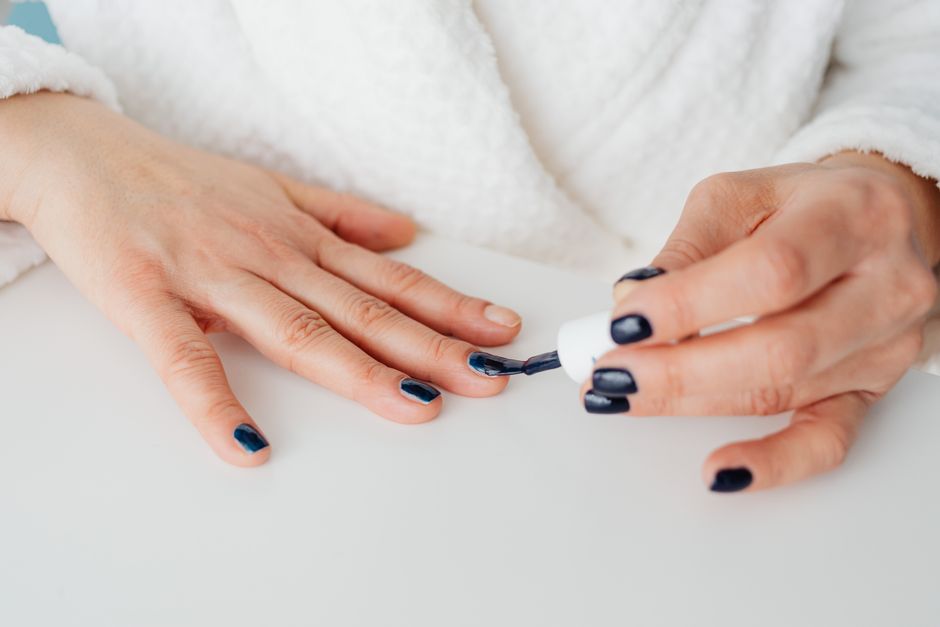
If your gel polish is still sticky after curing, the tacky layer you feel is almost certainly the inhibition layer — a thin film of uncured monomers left on the surface. It is a normal part of most gel systems, not a sign that your manicure failed. You remove it by wiping the cured nail with a lint-free pad soaked in isopropyl alcohol or an acetone-based cleanser. If the stickiness returns after wiping, or the surface smears instead of clearing, the gel underneath was undercured and needs another round under the lamp.
That distinction matters. A true inhibition layer wipes away clean and leaves a glossy surface. An undercured nail stays soft, dull, or wrinkled no matter how much you wipe. Learning to tell the two apart solves most sticky-gel problems before they turn into a peeling manicure.
What Is the Inhibition Layer on Gel Polish?
The inhibition layer is a thin, uncured film that forms on the surface of gel polish because oxygen in the air interferes with the curing reaction. Photoinitiators in the gel absorb UV or LED light and start a chemical chain reaction that hardens the product. Oxygen molecules quench that reaction at the very top surface, so the outermost few molecules never fully set.
This is a well-established feature of radical polymerization, not a manufacturing defect. Most gel brands expect it. Their instructions tell you to wipe the sticky layer after curing the color coats, and some brands formulate a separate top coat with a “no-wipe” finish designed to cure without one.
Gel systems differ in how much inhibition layer they produce. A traditional top coat that requires wiping will feel tacky. A no-wipe top coat is formulated to cure to a dry finish and should not feel sticky at all. If a no-wipe top coat is still tacky after a full cure, that points to a lamp or application problem rather than normal chemistry.
How To Make Gel Polish Not Sticky After Curing
Wipe the cured nail with a lint-free pad saturated with isopropyl alcohol. Ninety-one percent or higher is commonly used. Some people prefer an acetone-based cleanser or a dedicated gel cleanser. Press the pad onto the nail and wipe in one direction, then use a fresh section of the pad for the next nail. Reusing a saturated pad spreads the sticky residue back onto nails you already cleaned.
A few practical points make the wipe more reliable:
- Use lint-free pads, not cotton balls or tissues. Lint sticks to the inhibition layer and leaves a rough, cloudy finish.
- Wipe only after the coat has fully cured under the lamp. Wiping too early smears uncured gel across the nail.
- Do not scrub hard. Light pressure with a wet pad removes the layer. Heavy rubbing can dull the top coat.
- If one nail stays tacky after wiping, it was likely undercured rather than simply coated in residue.
Some people skip the wipe entirely when using a no-wipe top coat. That is fine if the product is designed that way. For a standard top coat, the wipe is part of the process, not an optional extra.
Why Is My Gel Polish Still Sticky After Wiping?
If the nail stays sticky after a proper alcohol wipe, the gel underneath did not fully cure. Wiping removes surface residue. It cannot harden gel that never set. This is the most common reason a sticky nail turns into a peeling or smudged manicure a few days later.
Several factors cause undercuring:
- Coats that are too thick. UV and LED light penetrate only so far. A thick coat cures on top while staying wet underneath, and the surface can feel tacky even after wiping.
- An aging or weak lamp. UV bulbs lose output over time and may need replacing. LED lamps generally hold their output longer but can fail. A lamp that no longer cures a test swatch properly is a lamp that will leave sticky nails.
- Nails positioned poorly under the lamp. The thumb and the pinky edge often sit outside the strongest part of the light field. Rotating the hand and curing the thumb separately helps.
- Incompatible products. Mixing brands can cause curing problems if a base or top coat is formulated for a different lamp type or wavelength.
- Color too dark or too pigmented. Very dark shades can block light from reaching the layers beneath. Curing longer or using thinner coats helps.
One detail worth knowing: LED and UV lamps cure gel through the same basic chemistry, but the photoinitiators in some gels are tuned to specific wavelengths. A gel formulated for a broad-spectrum UV lamp may not cure fully under a narrow LED lamp, and vice versa. When in doubt, follow the lamp and gel manufacturer’s pairing recommendations.
Does Every Gel Polish Leave a Sticky Layer?
No. No-wipe top coats are formulated to cure to a dry finish and do not need alcohol. Standard top coats and many color gels do leave an inhibition layer by design. Whether you get a sticky surface depends on the product, not on your technique.
This is where a lot of confusion starts. People switch brands, notice one manicure feels tacky and another does not, and assume they did something wrong. Often the only difference is that one system uses a wipe-required top coat and the other uses a no-wipe formula. Checking the product instructions settles it quickly.
Gel polish also differs from regular nail polish in a fundamental way. Regular polish dries by solvent evaporation. Gel cures by a chemical reaction triggered by light. That is why gel can feel tacky in a way regular polish never does, and why the fix is a wipe rather than more drying time.
Can You Cure Away the Stickiness Instead of Wiping?
No. Additional curing time does not remove the inhibition layer. The oxygen at the surface keeps interfering with the reaction no matter how long the nail stays under the lamp. Once the gel beneath is fully set, more light does nothing useful for the sticky film.
Extra curing can still help in one situation: when the nail is genuinely undercured. If the surface smears, wrinkles, or stays soft after wiping, another cure cycle may finish the job. The test is simple. Wipe the nail. If it comes up glossy and hard, the cure was fine and the stickiness was just the inhibition layer. If it stays dull or soft, cure it again.
Overcuring is not a common concern with standard gel manicures, but heat spikes during curing are. Some people feel a warming or stinging sensation while the gel sets, especially with thicker coats or on sensitive nails. Thinner coats and curing in stages reduce this.
When Sticky Gel Polish Signals a Bigger Problem
Persistent stickiness that survives wiping and re-curing usually means something in the system is off. The most likely culprits are an old lamp, expired gel, or a base coat that no longer performs. Gel products do have shelf lives, and a product that has thickened or separated may not cure properly.
There is also a safety side to this. Uncured gel contains acrylate monomers, which are a well-documented cause of allergic contact dermatitis. Repeated skin contact with uncured gel — from sticky residue on the skin around the nail, or from gel that never fully sets — can sensitize someone over time. Once an acrylate allergy develops, it can affect future reactions to medical and dental materials that contain related compounds. That is a real reason to wipe properly, keep gel off the skin, and not ignore a manicure that stays tacky.
If you notice itching, redness, or swelling around the nails after gel application, stop using the product and see a clinician. Allergic reactions to nail products are common enough that dermatologists see them regularly, and identifying the trigger early matters.
Frequently Asked Questions
Why is my gel polish sticky after curing?
The sticky film is the inhibition layer, a thin layer of uncured gel that forms because oxygen interferes with curing at the surface. It is normal for most gel systems and wipes away with isopropyl alcohol.
What should I use to wipe the sticky layer off gel polish?
Use a lint-free pad soaked in isopropyl alcohol, typically 91 percent or higher, or a dedicated gel cleanser. Cotton balls and tissues leave lint that sticks to the nail.
Why does my gel polish stay sticky even after wiping?
If the nail stays tacky after wiping, the gel underneath was undercured. Thick coats, an aging lamp, or poor hand positioning under the light are common causes.
Do you have to wipe no-wipe top coat?
No. No-wipe top coats are formulated to cure to a dry finish without alcohol. If one still feels sticky after a full cure, check your lamp and coat thickness.
