
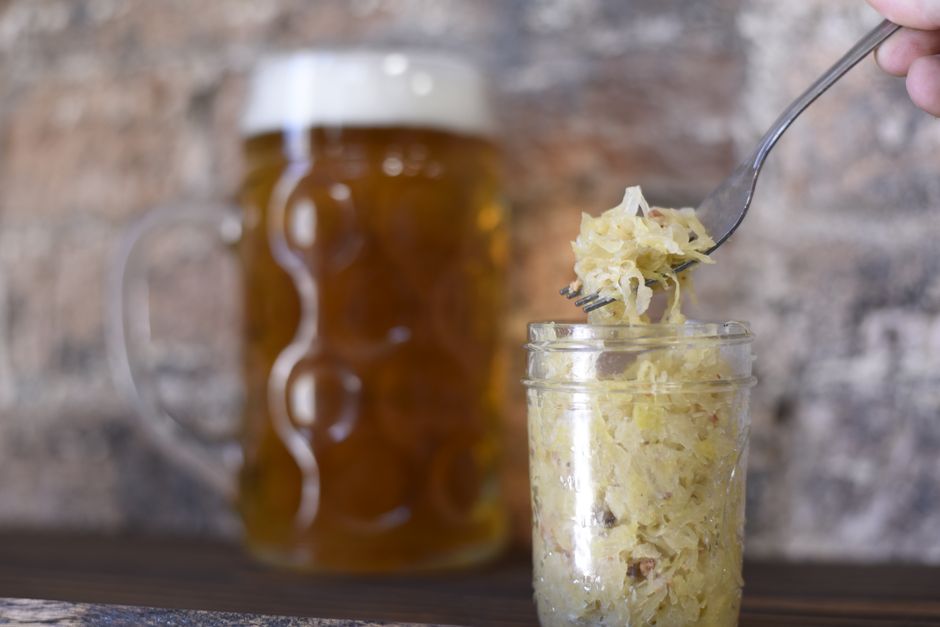
Fermenting vegetables at home comes down to a simple idea: create the right conditions for salt-tolerant bacteria to grow, and keep the wrong microbes out. For sauerkraut and pickles, that mostly means the right amount of salt, vegetables kept under the brine, and a cool spot away from direct sunlight. Get those three things right and the process is far more forgiving than most people expect.
Fermentation is not canning, and it is not the same as pickling with vinegar. It is a controlled microbial process. Lactic acid bacteria already living on the surface of cabbage and cucumbers convert sugars into lactic acid. That acid lowers the pH, which preserves the vegetables and creates the sour flavor. Your job is to give those bacteria an advantage over everything else.
What Actually Happens During Vegetable Fermentation?
Lactic acid bacteria are naturally present on raw vegetables. When you add salt and remove oxygen, you shift the environment in their favor.
The salt does two things. It pulls water out of the vegetable cells, creating brine, and it inhibits many spoilage organisms and pathogens that cannot tolerate high salt. Meanwhile, lactic acid bacteria tolerate salt well and begin multiplying.
There are usually three stages. In the first day or two, a range of bacteria start growing, including some that produce gas. This is why active bubbling early on is normal. As acid builds, those early organisms fade. Then Leuconostoc mesenteroides and related species take over, producing lactic acid and carbon dioxide. In the later stage, more acid-tolerant species like Lactobacillus plantarum dominate and finish the job.
That succession matters for flavor and safety. The pH drops steadily through the process. Most harmful bacteria, including Clostridium botulinum, cannot grow or produce toxin once the environment becomes sufficiently acidic. This is the core reason fermented vegetables are considered safe when made correctly.
Temperature influences which bacteria win. Cooler temperatures slow everything down and generally favor a more complex, tangy flavor. Warmer temperatures speed fermentation but can push it toward softness and off-flavors. A range of roughly 65 to 75°F is commonly cited as a workable middle ground for home fermenting.
How Do You Make Sauerkraut Step by Step?
Sauerkraut needs only two ingredients: cabbage and salt. The technique is about extracting enough water and keeping the cabbage submerged.
The standard approach is to salt shredded cabbage at about 2 percent of the cabbage’s weight. In plain terms, that is roughly 1 tablespoon of fine salt per 2 pounds of cabbage, though weighing is more reliable than measuring by volume because salt crystal sizes vary widely. Massage the salt into the shredded cabbage for several minutes until it becomes limp and releases liquid.
Pack the cabbage tightly into a clean jar or crock. Press down firmly so the liquid rises above the solids. If the cabbage does not release enough brine on its own, you can add a little brine made with 1 teaspoon of salt dissolved in 1 cup of water. Weight the cabbage down so it stays under the liquid. A zip-top bag filled with brine, a clean stone, or a glass weight all work.
Cover the container to keep dust and insects out, but do not seal it airtight during active fermentation. Gas needs to escape. A loose lid, an airlock, or a cloth secured with a band all allow this.
Let it sit at room temperature, out of direct light. Taste it after several days. Many people find it ready somewhere between one and four weeks, depending on temperature and preference. The flavor moves from mild and salty toward sharply sour over time. When it tastes right, move it to the refrigerator, where fermentation slows dramatically.
How Do You Make Fermented Pickles Step by Step?
Fermented pickles, sometimes called sour pickles, use a saltwater brine rather than vinegar. The cucumbers ferment in the liquid.
Choose small, firm cucumbers and trim off the blossom end. The blossom end contains enzymes that can make pickles soft, so removing a thin slice from that end is a common and useful step. A brine of roughly 1 tablespoon of salt per 1 quart of water is a frequently used starting point. Some recipes add grape leaves or other tannin-containing leaves, which are traditionally thought to help keep pickles crisp, though the evidence on how much this matters is limited.
Pack cucumbers into a clean jar with any flavorings like garlic, dill, or peppercorns. Pour the brine over them so they are fully covered. Weight them down, because cucumbers tend to float. Leave headspace for bubbling.
Ferment at room temperature out of direct light. These typically move faster than sauerkraut. Many people check them after three to seven days. They are done when they taste pleasantly sour and the color has shifted from bright green to a duller olive tone. Refrigerate when they reach the flavor you want.




How Do You Keep Fermented Vegetables Safe?
Safety in vegetable fermentation rests on a few well-established principles. The most important is keeping vegetables under the brine.
Vegetables exposed to air can grow mold and, in principle, allow conditions where harmful organisms might survive. Submerging them in an acidic, salty, oxygen-poor environment is what protects the batch. This is not a minor detail. It is the central control point.
Use clean equipment, but you do not need a sterile environment. Fermentation is not a sterile process. Clean jars, clean hands, and clean utensils are enough for most home setups.
Watch for these signs that something has gone wrong:
- Fuzzy mold in colors like green, black, blue, or pink growing on the surface
- A strong, foul, or rotting smell rather than a sour, tangy one
- Slimy, mushy texture throughout the batch
- Pink or reddish discoloration, which can indicate spoilage organisms
A thin white film on the surface is often kahm yeast, which is harmless but can affect flavor. It is different from fuzzy mold. If you are unsure which you are looking at, it is reasonable to discard the batch. When in doubt, throw it out.
One point worth stating plainly: this article describes general home fermentation practice, not clinical or regulatory guidance for every situation. If you are pregnant, immunocompromised, or preparing food for infants, the risk calculation changes. Established food safety guidance for these groups tends to be more cautious about unpasteurized fermented foods. If that applies to you, check with a healthcare provider rather than relying on general home-fermenting advice.
What Is the Difference Between Fermenting and Pickling?
People use these words interchangeably, but they describe different processes.
Fermenting relies on live bacteria to produce acid. The acid is created during the process itself. Pickling typically means preserving food in an acidic liquid, usually vinegar, that is already acidic before the food goes in. Quick refrigerator pickles made with vinegar are pickled, not fermented, even though they are sour.
Both produce tangy, preserved vegetables. Only fermentation involves active microbial activity and the resulting changes in flavor, texture, and nutrient profile. This distinction is why a jar of vinegar pickles will not bubble, and why a fermented batch will.
| Feature | Fermented | Vinegar-Pickled |
|---|---|---|
| Source of acid | Produced by bacteria | Added as vinegar |
| Live cultures | Present | Generally absent |
| Time to make | Days to weeks | Often hours to days |
| Bubbling during process | Common | None |
| Refrigeration | Needed after fermenting | Usually needed |
Are Fermented Foods Actually Good for You?
Fermented vegetables contain live lactic acid bacteria and their metabolic products. Whether eating them delivers meaningful health benefits is a more complicated question than marketing suggests.
Some studies suggest fermented foods can influence the gut microbiome and may affect markers like inflammation, but the research is still developing and results vary. It is fair to say the evidence is mixed and does not yet support strong claims about specific health outcomes from eating sauerkraut or fermented pickles.
What is well established is nutrition. Fermented vegetables are low in calories, provide fiber and vitamin C, and are generally low in fat. They also tend to be high in sodium, which matters if you are watching salt intake. A serving of sauerkraut or pickles can carry a meaningful amount of sodium, so portion awareness is reasonable.
One common misconception is that all the bacteria survive to reach your gut in large numbers. Many do not survive stomach acid. Some do, and fermented foods can contribute to the diet in ways researchers are still working out. But treating a spoonful of sauerkraut as a treatment for a specific condition is not supported by current evidence.
Frequently Asked Questions
How much salt do I use for sauerkraut?
A common guideline is about 2 percent salt by weight of the cabbage, roughly 1 tablespoon of fine salt per 2 pounds. Weighing the salt is more reliable than measuring by volume because crystal sizes differ.
How long does it take to ferment pickles?
Fermented pickles often take about three to seven days at room temperature, though this varies with temperature and taste preference. Check them daily and refrigerate once they reach the sourness you like.
Is white film on top of my ferment safe?
A thin white film is often kahm yeast, which is harmless but can affect flavor. Fuzzy mold in green, black, blue, or pink is different and means you should discard the batch.
Can I ferment vegetables without salt?
Salt is the primary safety control in vegetable fermentation because it inhibits harmful organisms while favoring lactic acid bacteria. Fermenting without it is not recommended based on established food safety principles.
