
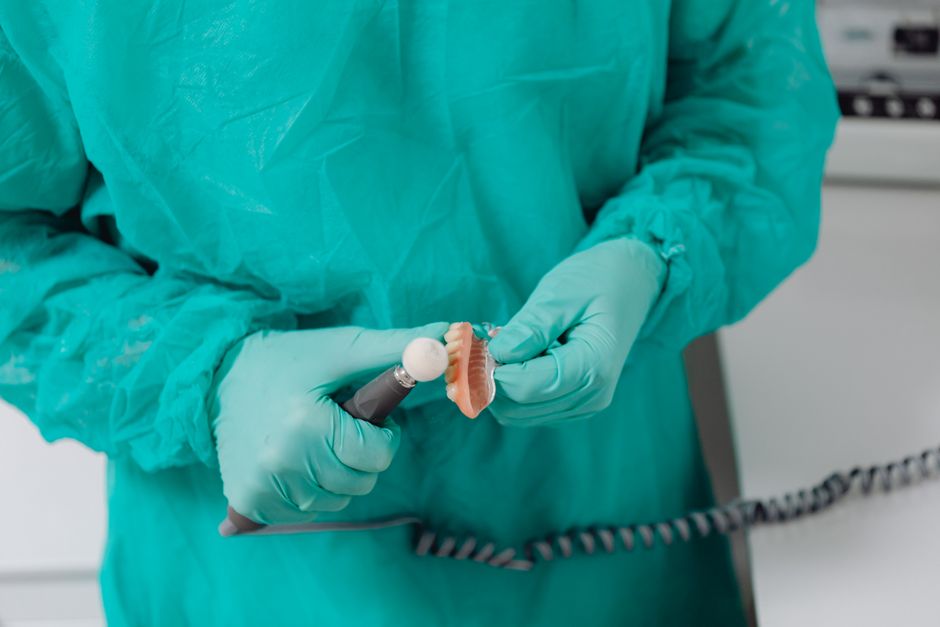
You cannot safely make wearable fake teeth at home with acrylic. The materials used in dentistry — denture base acrylic, orthodontic acrylic, and light-cured resins — require professional equipment, and uncured acrylic contains residual monomer that irritates tissue. What you can do at home is make acrylic teeth for a costume, a model, or a craft project. That process is straightforward: shape a tooth form, build a mold, mix the acrylic, pour or press it, then cure and finish it.
What Is the Difference Between Dental Acrylic and Craft Acrylic?
They are not interchangeable, and this matters more than most people realize.
Dental acrylics are typically polymethyl methacrylate (PMMA) systems supplied as a powder and a liquid monomer. The powder is pre-polymerized PMMA; the liquid is methyl methacrylate monomer. When mixed, the monomer softens and binds the powder particles into a solid mass. Dental professionals control the powder-to-liquid ratio, working time, and curing temperature precisely because those variables affect strength, shrinkage, and how much unreacted monomer remains in the final product.
Craft acrylics — acrylic resin for casting, acrylic paint mediums, and two-part acrylic compounds sold in craft stores — are formulated for different purposes. They are not made to sit against gum tissue or inside a mouth.
Residual methyl methacrylate monomer is a known irritant and a recognized sensitizer. Repeated skin contact can cause allergic contact dermatitis, and the risk rises with exposure. This is one reason dental labs use gloves, ventilation, and controlled curing. A person mixing craft acrylic in a kitchen has none of those controls.
There is also a regulatory layer. In the United States, dentures and other removable dental devices are classified as medical devices. Making a device that goes in someone else’s mouth for them, without a license, is generally not legal. Making a costume prop for yourself is a different activity entirely.
What Do You Need to Make Acrylic Fake Teeth at Home?
Gather everything before you start. Acrylic sets faster than most beginners expect, and stopping mid-mix to hunt for a tool usually ruins the piece.
For the tooth form and mold:
- Sculpting clay or modeling wax for the master tooth shape
- Silicone mold-making compound (a two-part platinum-cure or tin-cure silicone)
- A small mixing cup and stir stick for the silicone
- Petroleum jelly or mold release
For the acrylic itself:
- Two-part casting acrylic resin, or a powder-and-liquid acrylic system sold for craft casting
- Disposable cups and wooden stir sticks
- Nitrile gloves
- Safety glasses
For finishing:
- Wet-or-dry sandpaper in progressively finer grits
- A rotary tool with a polishing bit (optional)
- Acrylic polishing compound
Work in a well-ventilated space. Methyl methacrylate vapor has a strong odor and is not something to breathe in a closed room. Keep the resin away from food surfaces and out of reach of children.
How To Make Fake Teeth With Acrylic Step By Step
The process has five stages: sculpt, mold, mix, cast, and finish. Each one affects the next.
Step 1: Sculpt the Master Tooth
Shape your tooth from clay or wax. A single tooth is easiest for a first attempt. If you want a full set, sculpt one good tooth and mold it repeatedly rather than sculpting each one by hand.
Pay attention to the shape you actually want. A molar has cusps and a broad crown. An incisor is flatter with a chisel edge. Getting the basic silhouette right at this stage saves sanding later.
Step 2: Make a Silicone Mold
Press the sculpted tooth halfway into a block of clay to create a base. Build a small wall around it. Mix the silicone according to its package directions and pour it over the tooth, covering it completely.
Let the silicone cure fully — this typically takes several hours, and the package will specify. Then remove the clay base, apply mold release to the cured silicone, and pour a second layer to form the other half of the mold. This two-part approach lets you remove the finished casting without destroying the mold.
Step 3: Mix the Acrylic
Follow the manufacturer’s ratio exactly. Acrylic resin is not forgiving about ratio errors — too much liquid means more shrinkage and more residual monomer; too little means a weak, crumbly casting.
Mix slowly to avoid trapping air bubbles. Bubbles are the most common reason a first casting looks cloudy or has visible pits.
Step 4: Pour or Press the Acrylic
For a pourable casting resin, fill the mold slowly from one corner and let the resin flow around the cavity. For a dough-style powder-and-liquid acrylic, wait until the mixture reaches a workable dough stage, then press it into the mold and close the two halves.
Clamp or weight the mold if the manufacturer recommends it. Let the acrylic cure for the full time stated on the product — do not test it early. Partially cured acrylic is soft, and disturbing it at that stage permanently weakens the piece.
Step 5: Finish and Polish
Demold the tooth. Trim any flash with a sharp blade or rotary tool. Then wet-sand through progressively finer grits until the surface is smooth, and polish with acrylic compound to bring up a gloss.
Wet sanding matters. Dry sanding acrylic generates fine dust and heat, and heat can melt or craze the surface.



Can You Wear Homemade Acrylic Fake Teeth?
No. Homemade acrylic teeth are not safe to wear in your mouth.
The reasons are practical, not theoretical. Craft acrylics are not evaluated for oral use. The finished surface of a hand-cast, hand-polished tooth is not smooth at a microscopic level, and rough acrylic can abrade gum tissue. Residual monomer may continue to leach from an incompletely cured piece. Sharp edges from hand-finishing can cut soft tissue.
There is also a fit problem. A properly made dental appliance is fabricated from an impression of your specific mouth. A generic cast tooth does not fit anything precisely, which means it will rock, rub, and trap debris.
Costume teeth sold for theatrical use are a different category from dental devices, and they still carry choking risk. Anything placed in the mouth can be aspirated. This is a real hazard, not a remote one.
If you need a replacement tooth or a partial denture, that is a clinical matter. A dentist or prosthodontist takes an impression, works with a dental laboratory, and fits the appliance to your mouth. Some clinicians offer same-day or interim options, though availability and suitability vary by case. No home method substitutes for that process.
What Are the Most Common Mistakes When Casting Acrylic Teeth?
Most failures trace back to a handful of avoidable errors.
Wrong mixing ratio. Estimating instead of measuring produces weak castings and excess shrinkage. Use a scale for powder-and-liquid systems if the manufacturer specifies one.
Trapped air. Stirring fast whips bubbles into the resin. Mix slowly, and tap the mold gently to bring bubbles to the surface before curing.
Demolding too early. Acrylic that looks firm may still be curing internally. Early demolding causes warping and surface defects.
Skipping mold release. Without release agent, the casting bonds to the silicone and tears on removal.
Dry sanding. It generates dust and heat. Always wet-sand.
No ventilation. The monomer vapor is the part beginners most often underestimate. Work outdoors or with strong airflow.
Frequently Asked Questions
Can I make fake teeth with acrylic at home safely?
You can safely make acrylic teeth as craft or costume props with proper ventilation and gloves. You cannot safely make wearable dental appliances at home, because craft acrylics are not evaluated for oral use.
What acrylic is used for fake teeth?
Dental appliances use polymethyl methacrylate, a powder-and-liquid system cured under controlled conditions. Craft casting resins are chemically related but are not formulated or approved for use in the mouth.
How long does acrylic take to cure?
Cure time depends entirely on the specific product, and package directions typically specify anywhere from minutes to several hours. Always follow the manufacturer’s stated full cure time rather than testing early.
Can I use acrylic nail products to make fake teeth?
No. Acrylic nail systems are formulated for nails, not for oral contact, and they are not evaluated for safety inside the mouth. Use them only for external craft purposes, never as a wearable tooth.
