
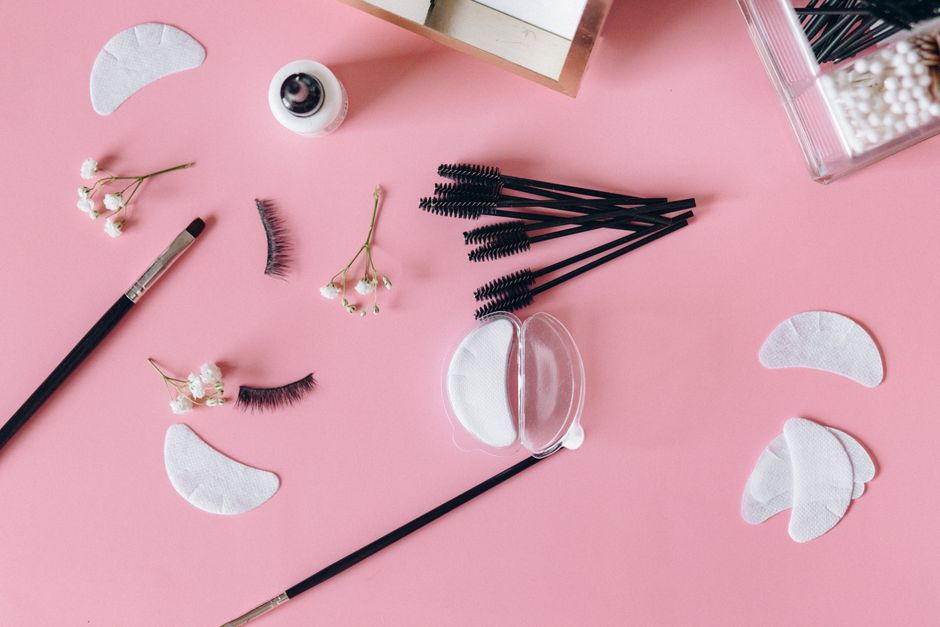
Making eyelash glue at home usually means mixing a sticky base like sugar water, honey, or aloe vera gel with a small amount of a thickening or binding ingredient, then applying it along the lash line with a brush. It works for some people as a light hold for a single day, but homemade glue is not sterile, not standardized, and not tested for use near the eye. The risks include irritation, infection, and lash damage, and those risks are real enough that most eye care professionals advise against it.
How To Make Eyelash Glue DIY Recipes And Risks?
Most DIY eyelash glue recipes follow the same basic pattern: a sticky, water-soluble base combined with something that makes it tacky enough to hold lashes in place. The problem is that no home kitchen can match the manufacturing conditions of a commercial cosmetic lab.
A few of the recipes that circulate online include:
- Sugar and water paste. Dissolve a small amount of sugar in warm water until it forms a syrupy texture. It dries tacky and washes off with water.
- Honey thinned with water. Honey is naturally sticky and has some antimicrobial properties, but it stays wet and attracts dust and bacteria.
- Aloe vera gel with a pinch of sugar. The gel gives body, the sugar adds tack. Both are water-soluble.
- Flaxseed gel. Boiled flaxseed produces a gel that some people use as a natural hair gel, and a few blogs suggest it for lashes.
- Egg white. Dries firm and clear, but raw egg carries a real risk of bacterial contamination.
None of these recipes are standardized. The “recipe” changes from blog to blog, and even the same recipe behaves differently depending on humidity, how much water you use, and how long you cook it. That inconsistency matters when you are putting something within millimeters of your eye.
Why Is Homemade Eyelash Glue Risky For Your Eyes?
The eye is one of the most sensitive and least forgiving places on the body to apply an untested substance. The tissue that lines the eyelid and covers the white of the eye is a mucous membrane, not skin. It absorbs things quickly and reacts to irritants faster than most other surfaces.
Homemade glue creates three distinct problems:
- Contamination. Sugar, honey, aloe, and flaxseed gel are all excellent food sources for bacteria and mold. There is no preservative in a homemade mix, and no sterile packaging. A jar of sugar water sitting at room temperature is a growth medium.
- Irritation and allergic reaction. Natural ingredients are not automatically gentle. Honey, aloe, and egg white can all trigger reactions in people who are sensitive to them. The eyelid skin is thin and reacts strongly to irritants.
- Mechanical damage. Homemade glues often hold unevenly. Removing them means pulling at the lash line, which can loosen or pull out natural lashes over time.
The American Academy of Ophthalmology has warned that cosmetics applied near the eye, including some commercial lash adhesives, can cause allergic reactions, infection, and in rare cases corneal damage. That warning applies to products that have passed safety testing. An untested homemade version carries at least the same risks, without any of the quality controls.
What Is Actually In Commercial Eyelash Glue?
Commercial eyelash adhesives are formulated for one purpose: to hold lashes in place for a set period and then release cleanly without harming the eye. They contain ingredients chosen specifically for that job.
Most strip lash glues use a latex or latex-free polymer base that dries to a flexible film. Some contain cyanoacrylate, the same family of compounds used in medical skin adhesives, though the specific formulation matters a great deal. Lash extension glues, which are a different product from strip lash glue, also use cyanoacrylate compounds and are designed for trained professional application.
Commercial products also include preservatives to prevent bacterial growth and are manufactured under conditions that limit contamination. That is not a marketing point. It is the reason these products can be sold for use near the eye at all.
There is a real distinction here that gets blurred online. Strip lash glue, semi-permanent extension glue, and eyelash adhesive for individual lashes are not interchangeable. They have different cure times, different strengths, and different intended users. Mixing them up is a common source of irritation.





Can You Make A “Safer” DIY Version?
There is no DIY eyelash glue recipe that has been tested for safety on the eye. That is the honest answer, and it does not change based on which natural ingredient you use.
Some ingredients are less likely to cause an immediate reaction than others. Aloe vera gel, for example, is widely used in eye-area products and is generally well tolerated by most people. But “generally well tolerated in a formulated product with preservatives” is not the same as “safe when mixed at home and stored in a jar.”
If you have sensitive skin, allergies, or any history of eye irritation, the risk of a homemade glue is higher, not lower. And if you wear contact lenses, any foreign substance near the eye is a bigger concern, because lenses can trap particles and hold them against the corneal surface.
What Are The Signs Of An Eye Reaction?
If something has gone wrong after using any eyelash glue, homemade or commercial, the symptoms tend to appear within minutes to a few hours. They include redness, itching, a burning or gritty feeling, swelling of the eyelid, and watery or sticky discharge.
More serious signs need medical attention right away:
- Pain in or around the eye that does not settle
- Blurred vision or sensitivity to light
- A feeling that something is stuck in the eye
- Swelling that spreads to the cheek or face
- Discharge that is thick, yellow, or green
These can point to a corneal injury or an infection, both of which can cause lasting damage if they are not treated. Do not wait to see if it clears up on its own.
What Are Safer Alternatives To DIY Eyelash Glue?
If the goal is to avoid the ingredients in standard lash glue, there are better paths than mixing your own.
Look for latex-free and formaldehyde-free commercial adhesives, which are widely available and formulated for sensitive eyes. Some brands make hypoallergenic versions, though “hypoallergenic” is a marketing term rather than a regulated guarantee, so patch testing still matters.
Magnetic lashes and adhesive-free lash strips avoid glue entirely. They use small magnets or a liner that holds the lash in place. They are not risk-free, but they remove the adhesive from the equation.
For a lighter, lower-commitment option, a lash tint or a lash lift done by a trained professional can give the appearance of fuller lashes without any adhesive at the lash line.
Whatever you choose, patch test first. Apply a small amount of any new product to the skin behind your ear or on your inner forearm, wait 24 hours, and check for redness or swelling. It is not a perfect predictor of how your eye will react, but it catches many reactions before they happen near your eye.
Why Does This Myth Keep Circulating?
The appeal is easy to understand. Commercial lash glue can irritate, it can be expensive, and the ingredient list can look intimidating. A recipe made from things already in your kitchen feels simpler and safer.
But “natural” and “safe” are not the same thing. Botulism toxin is natural. So is poison ivy. The question that matters is not where an ingredient comes from, but whether it has been tested for this specific use, at this specific concentration, on this specific tissue.
Homemade eyelash glue has not been tested that way. That is the whole of it.
Frequently Asked Questions
Is homemade eyelash glue safe for your eyes?
No. Homemade eyelash glue is not sterile, not standardized, and has not been tested for use near the eye, so it carries real risks of irritation, infection, and lash damage.
What can I use instead of eyelash glue if I’m allergic?
Latex-free and formaldehyde-free commercial adhesives are formulated for sensitive eyes, and magnetic or adhesive-free lashes avoid glue entirely. Patch test any new product on your forearm for 24 hours before using it near your eye.
Can sugar water really hold false lashes?
Sugar water can create a light, temporary hold for some people, but it stays sticky, attracts bacteria, and does not hold reliably. It is not a safe substitute for formulated lash adhesive.
What should I do if eyelash glue gets in my eye?
Rinse the eye with clean water or saline for several minutes and do not rub it. If you have pain, blurred vision, or swelling that does not settle, seek medical care right away.
