
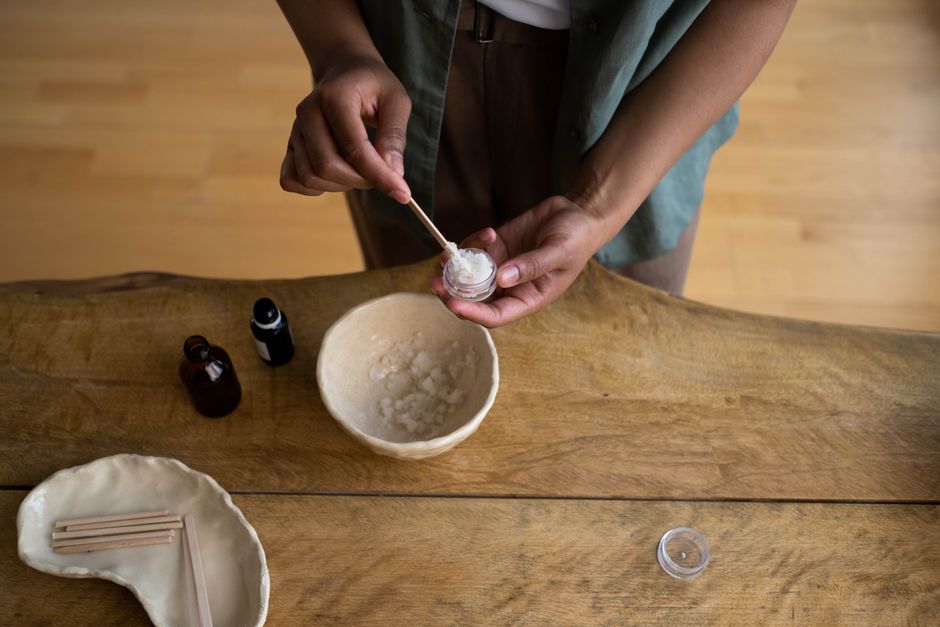
Drawing salve is an old-fashioned remedy that pulls splinters, stings, and minor skin infections to the surface. You can make it at home with just a few ingredients: activated charcoal, kaolin clay, and an oil or beeswax base. The mixture softens the skin around the splinter, which lets the body push the foreign object out on its own. This article explains how to make drawing salve at home and when it is actually worth using.
What Is Drawing Salve and How Does It Work?
Drawing salve goes by several names: black salve, ichthammol ointment, or simply “drawing ointment.” The name comes from what it does — it draws fluid and debris toward the skin’s surface. It is not magic. It works through a mix of physical softening and mild irritation.
The main ingredients do two things. The oil and wax base soften the top layer of skin, called the stratum corneum. Softer skin lets a splinter move closer to the surface. The active ingredients, like ichthammol or activated charcoal, create a mild osmotic effect. This pulls fluid from deeper tissue toward the surface, which can help a small infection or sting come to a head.
It is important to understand what drawing salve can and cannot do. It works best on shallow splinters, bee stings left in the skin, and small boils or ingrown hairs. It will not pull out a deeply embedded object. It will not cure an infection. If you have signs of a serious infection, see a clinician.
How To Make Drawing Salve For Splinters And Bites
The basic recipe is simple and uses ingredients you can find at most drugstores or online. You will need a heat-safe bowl, a small pot for a double boiler, and a clean jar for storage.
Here is a standard home recipe:
- 2 tablespoons beeswax pellets
- 2 tablespoons coconut oil or olive oil
- 1 tablespoon activated charcoal powder
- 1 tablespoon kaolin clay (optional, helps draw fluid)
- 5 drops tea tree oil or lavender oil (optional, for scent and mild antibacterial effect)
Melt the beeswax and oil together in a double boiler over low heat. Stir until the wax is fully melted. Remove from heat and stir in the charcoal powder and clay. Mix until smooth and uniform. Add the essential oil if you are using it. Pour into a small tin or glass jar and let it cool completely. It will firm up into a thick paste.
Store the salve in a cool, dry place. It should last for several months. If it smells rancid or changes color, throw it out.
To use it, clean the area with soap and water. Apply a thick layer of salve over the splinter or bite. Cover it with a bandage. Leave it on for 12 to 24 hours. Then wash it off and check the area. The splinter may be sticking out enough to grab with tweezers. If not, reapply the salve for another 12 to 24 hours.
Is Activated Charcoal Safe on Skin?
Activated charcoal is generally safe for topical use on intact skin. It is not the same charcoal you use for a barbecue. Activated charcoal is processed to be highly porous, which increases its surface area and its ability to bind to substances.
When applied to the skin, it can bind to dirt, oil, and some toxins. That is why it appears in many commercial masks and cleansers. For drawing salve, it helps pull fluid and debris toward the surface.
There are a few cautions. Do not use activated charcoal on open wounds deeper than the top layer of skin. It can be difficult to wash out of a deep wound and may leave black residue that is mistaken for dirt. If you have sensitive skin, test a small patch first. Some people develop contact dermatitis from charcoal or from the essential oils in a homemade salve.
Activated charcoal should never be mixed with a laxative like sorbitol for skin use — that is for emergency ingestion treatment in a hospital setting only. For topical use, plain powdered charcoal is what you want.




Ichthammol vs. Homemade Charcoal Salve
Ichthammol is the active ingredient in most commercial drawing salves. It is a thick, dark, tar-like substance made from shale oil. It has been used in dermatology for over a century.
Ichthammol works differently than charcoal. It is mildly anti-inflammatory and has a softening effect on the skin. It also has mild antibacterial properties. Many clinicians still recommend ichthammol for splinters, ingrown hairs, and small localized infections.
Homemade charcoal salve is a reasonable alternative if you prefer natural ingredients. But it is not identical. Charcoal does not have the same anti-inflammatory action as ichthammol. For a splinter that is already red and angry, ichthammol may be the better choice.
Both approaches have the same limitation: they work best on shallow objects. If a splinter is deep, painful, or in a joint area, do not rely on salve. See a healthcare provider.
What Drawing Salve Cannot Do
Drawing salve has real limitations, and it is worth being direct about them. It cannot pull out a deeply embedded splinter. It cannot remove glass or metal fragments that are below the skin’s surface. It cannot treat a serious infection.
There is also a dangerous product confusion you need to know about. Some products sold online as “black salve” contain bloodroot or zinc chloride. These are corrosive and can destroy healthy skin tissue. They are not the same as drawing salve. They are sometimes marketed for skin cancer and moles, but they can cause severe scarring and disfigurement. Do not use these products. If a product label mentions bloodroot or zinc chloride, put it down.
Signs that you need medical care instead of salve include:
- Redness spreading beyond the immediate area
- Warmth or heat around the wound
- Pus or foul-smelling drainage
- Fever
- A splinter that is deep, painful, or near a joint or eye
- No improvement after 2 to 3 days of salve use
If you have diabetes or a condition that slows wound healing, skip the home remedy. See a clinician for any splinter or bite that does not resolve quickly.
How Does a Splinter Actually Come Out?
Understanding the physiology helps you use the salve correctly. When a splinter enters the skin, the body responds with inflammation. Blood vessels dilate. White blood cells move to the area. Fluid accumulates.
The drawing salve softens the keratin in the top skin layers. This reduces the friction holding the splinter in place. The mild irritation from the salve also increases local blood flow. Over 12 to 24 hours, the body’s own inflammatory response pushes the splinter upward.
This is why the salve needs time. It is not an instant removal tool. It works with your body’s natural processes, not against them. If you check too early, you may not see progress. Give it the full 12 to 24 hours before assessing.
For a bee sting, the same principle applies. The stinger is a small barbed object. Softening the skin and increasing local fluid can help the body eject it. But if the stinger is visible, use tweezers or the edge of a credit card to scrape it out first. Do not squeeze the stinger — squeezing can release more venom.
Are There Any Risks With Homemade Salve?
Homemade salve is generally low-risk, but it is not zero-risk. The main concerns are contamination and allergic reactions.
When you make salve at home, you cannot guarantee sterility. If you are applying it to broken skin, there is a small risk of introducing bacteria. To reduce this risk, use clean tools and containers. Wash your hands before making and applying the salve.
Essential oils are a common source of allergic reactions. Tea tree oil and lavender oil are generally well-tolerated, but some people develop contact dermatitis. If your skin becomes more red, itchy, or irritated after applying the salve, wash it off and stop using it.
Do not use drawing salve on children under two years old without checking with a pediatrician. Their skin is thinner and more absorbent. Also avoid using it on the face, especially near the eyes, nose, or mouth.
Frequently Asked Questions
How long should I leave drawing salve on a splinter?
Leave it on for 12 to 24 hours under a bandage. If the splinter has not surfaced after two applications, see a clinician.
Can I use drawing salve on an infected bite?
Only for very mild, localized redness. If you see spreading redness, warmth, pus, or fever, seek medical care instead of using salve.
Is ichthammol or activated charcoal better for drawing salve?
Ichthammol has more clinical history and mild anti-inflammatory action. Activated charcoal is a good natural alternative but lacks the same anti-inflammatory effect.
Can drawing salve make a splinter worse?
Rarely, but it can if the splinter is deep or the skin becomes irritated. If pain increases or redness spreads, stop using the salve and see a healthcare provider.
Drawing salve is a useful home remedy with a long history. It works best on shallow splinters, bee stingers, and small localized irritations. Make it fresh, use it correctly, and know when to stop. When in doubt, a clinician is always the safer choice.
