
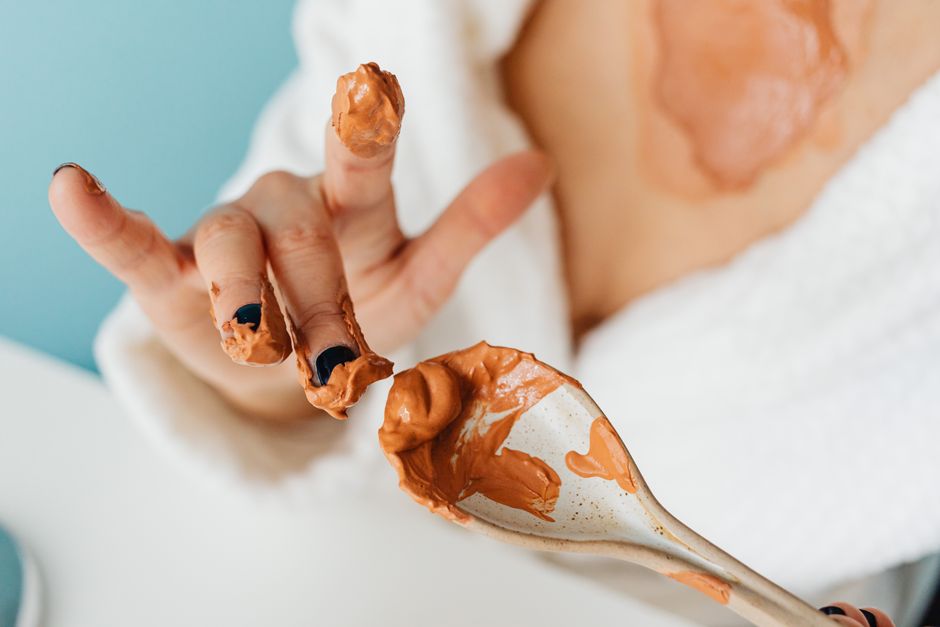
Sticky clay is almost always a water problem, not a clay problem. When clay holds too much water, its microscopic plate-like particles slide over one another instead of locking together, so the surface grabs your hands, your tools, and your work surface. The fix is to bring the clay back to a workable moisture level, and the method changes depending on the type of clay you are using. Below is how to do it for polymer clay, natural earthen clay, air-dry clay, and pottery clay on the wheel.
Why Does Clay Get Sticky In The First Place?
Clay stickiness comes from excess water sitting between the particles. Clay minerals are made of tiny flat plates. When those plates are surrounded by a film of water, they slide instead of gripping, and the whole mass feels wet, tacky, and unworkable.
Different clays hold water differently. Polymer clay is not water-based at all — it is PVC mixed with plasticizers, so its “stickiness” comes from warmth and softener content, not moisture. Natural clay, air-dry clay, and pottery clay are water-based, and their stickiness tracks directly with how much water is in the mix.
There is a second cause people often miss: heat. Polymer clay softens as it warms up in your hands. The longer you handle it, the stickier it gets. That is why the same block can feel fine at first and turn gummy after ten minutes of kneading.
How To Make Polymer Clay Not Sticky
Polymer clay gets sticky from warmth and from too much plasticizer, and both are fixable without ruining the clay.
Start by letting the clay cool. Set it aside for a few minutes, or work on a cool surface like a ceramic tile or a marble slab. Cooler clay is firmer and releases from your hands more cleanly.
If cooling is not enough, you can draw out some of the excess plasticizer. The standard method is “leaching.” Place the clay between two sheets of plain paper and press it flat, then let it sit. The paper absorbs some of the oily plasticizer. Repeat with fresh paper if needed. Do not use printed paper, since ink can transfer.
A few practical habits help as well:
- Knead in short bursts instead of continuously, so the clay does not heat up.
- Wash and dry your hands often. Oils and residue on your skin make clay stick more.
- Work on a smooth, non-porous surface rather than wood or fabric.
- Condition the clay by rolling and folding rather than squeezing it in your palm, which transfers more body heat.
If the clay is still sticky after leaching and cooling, it may simply be a very soft brand or an old block that has absorbed too much plasticizer from storage. Mixing in a small amount of firmer clay of the same brand is a common fix among hobbyists, though it does change the color and working properties.
How To Make Natural Earthen Clay Not Sticky
For water-based clay, sticky means too wet. The answer is to remove water, and the safest way is to let it dry slowly.
Spread the clay out in a thin layer on a porous surface such as a plaster bat, a wooden board, or a cotton cloth. The surface pulls moisture out of the clay. Check it every so often and fold or turn the clay so it dries evenly. Depending on how wet it started, this can take anywhere from under an hour to a full day.
If you need it faster, you can wedge the clay on an absorbent surface. Wedging means folding and pressing the clay repeatedly to distribute moisture evenly. This also pushes out air pockets, which is useful before throwing on a wheel or hand-building.
What you should not do is add dry clay powder straight into a wet lump and expect it to blend smoothly. Dry powder added to wet clay tends to clump and create hard spots. If you need to stiffen clay with dry material, it is usually better to let the dry clay and wet clay sit together sealed for a day or two so the moisture evens out.




How To Make Air-Dry Clay Not Sticky
Air-dry clay behaves much like natural clay — it is water-based, so stickiness is a moisture issue. The same drying approach applies.
Let the clay sit out uncovered for short periods, or place it on paper or a plaster surface to draw out water. Work in small pieces rather than one large lump, since a big mass holds moisture in its center and stays sticky on the outside while the middle is still wet.
One thing to watch with air-dry clay: it can dry out and crack if you leave it out too long. So the goal is to remove just enough water to make it workable, not to dry it fully. If it starts to feel stiff or shows small cracks at the edges, it has gone too far and needs a few drops of water worked back in.
Keep unused air-dry clay wrapped tightly so it does not lose moisture between sessions. A plastic bag with the air pressed out works well.
How To Stop Pottery Clay From Sticking On The Wheel
Sticky clay on a potter’s wheel is a slightly different problem, because you are adding water on purpose to keep the clay lubricated. The trick is controlling how much water stays on the surface.
Use less water than you think you need. Many potters keep a small sponge and a bowl of water and wet the clay only when it starts to drag. Excess water on the wheel does not just make the clay sticky — it can also weaken the walls of a piece as you throw.
Keep a dry spot on the wheel where you can rest your hands. Wiping your fingers on a dry towel between passes removes the slip that builds up. Some potters also use a very thin film of a lubricant on their hands, though this is a matter of personal preference rather than a requirement.
If the clay itself is too soft to begin with, let it firm up before you start. Throwing soft clay is frustrating, and no amount of wheel technique fixes a batch that is simply too wet.
Does The Type Of Clay Change The Fix?
Yes, and this is the part most guides skip. The word “clay” covers several materials with completely different chemistry, and the right fix depends on which one you have.
| Clay type | What makes it sticky | Main fix |
|---|---|---|
| Polymer clay | Warmth and excess plasticizer | Cool it, then leach with paper |
| Natural earthen clay | Too much water | Dry on an absorbent surface, then wedge |
| Air-dry clay | Too much water | Dry in small pieces, watch for cracking |
| Pottery clay (wheel) | Excess surface water and slip | Use less water, keep hands dry |
Notice that polymer clay is the odd one out. Adding water to polymer clay does not help and can make it worse, since water and PVC do not mix. If you have ever tried to fix sticky polymer clay with a damp cloth, that is why it did not work.
What Actually Makes Clay Sticky — And What Does Not
Some widely repeated advice does not hold up. A few common myths are worth clearing up.
Myth: you can always fix sticky clay by adding cornstarch or powder. This can reduce surface tack in the short term, but it does not remove the water or plasticizer causing the problem. With polymer clay, adding powder can leave a chalky residue and change how the clay bakes.
Myth: sticky clay means the clay is bad. In most cases the clay is fine — it is just holding too much water or too much softener. Drying or leaching usually brings it back.
Myth: more kneading always helps. With polymer clay, more kneading adds heat and makes it stickier. With water-based clay, kneading distributes moisture but does not remove it. Kneading evens out the clay; it does not dry it.
The reliable principle is simple. For water-based clay, remove water. For polymer clay, remove heat and a little plasticizer. Everything else is detail.
Frequently Asked Questions
Why is my clay so sticky?
Water-based clay is sticky because it holds too much water, while polymer clay is sticky from warmth and excess plasticizer. The cause determines the fix, so identify your clay type first.
Can I put sticky clay in the fridge?
You can chill polymer clay briefly to firm it up, and many people find this helps with handling. Do not freeze water-based clay, since freezing and thawing can change its texture.
Does adding cornstarch stop clay from being sticky?
Cornstarch can reduce surface tack for a short time, but it does not remove the water or plasticizer causing the stickiness. It can also leave a chalky finish on polymer clay.
How long does it take to dry out sticky clay?
It depends on how wet the clay is and how absorbent the surface is. Thin layers on plaster or cloth can firm up in under an hour, while a thick lump may need a full day or more.
