
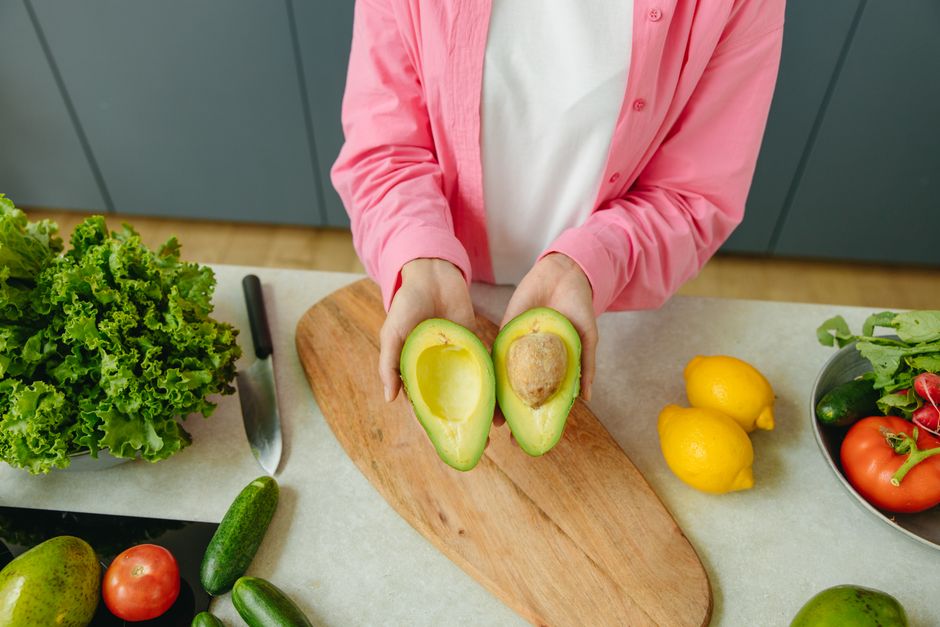
Avocado seed tea is made by boiling the large pit of an avocado in water, then drinking the strained liquid. It has become popular online as a home remedy for inflammation, digestion, and weight loss. The science behind those claims is much thinner than the videos suggest, and the seed contains compounds that deserve real caution.
How To Make Avocado Seed Tea: The Basic Method
The process is simple. People who make it generally follow the same basic steps.
- Remove the seed and rinse off any remaining fruit.
- Cut the seed into small pieces. A whole seed is hard and dense, so smaller pieces release more into the water.
- Simmer the pieces in water for about 10 to 15 minutes.
- Strain out the solid pieces and drink the liquid.
Some versions blend the raw seed into a powder and stir it into water or tea instead of boiling it. That matters, because blending the raw seed means you consume the whole thing, including compounds that boiling may partly break down or that the body absorbs differently.
You should know that no health agency has published a standard recipe, dose, or safe upper limit for avocado seed tea. There is no established serving size. Anyone giving you an exact amount is working from personal experience, not clinical guidance.
What Is Actually In An Avocado Seed?
The seed is not just fiber and water. It contains starch, some fat, small amounts of protein, and a group of plant compounds called polyphenols and flavonoids. These are the same broad categories of compounds found in many fruits and vegetables.
Here is where a common assumption goes wrong. Many people assume the seed holds more nutrients than the flesh because it is the part that grows a new tree. In reality, the flesh is where most of the vitamins and healthy fats in an avocado sit. The seed is largely starch. It does contain some antioxidants, but the amounts and how well your body uses them are not well established.
Lab studies have measured antioxidant activity in avocado seed extracts. That is a long way from showing a benefit in a person. A test tube can show that a compound neutralizes free radicals. It cannot show that drinking tea made from the seed lowers inflammation in a living human. Those are different questions, and the second one has barely been studied.
Are There Real Health Benefits?
No human clinical trials have confirmed health benefits from drinking avocado seed tea. That is the honest bottom line. The claims you see online rest mostly on lab work and animal studies, not on research in people.
Let’s separate what is known from what is assumed.
What lab and animal research suggests: Some studies in cells and in animals have looked at avocado seed extracts for antioxidant and anti-inflammatory activity. Results vary, and the doses used in those studies often do not match what a person would get from a cup of tea.
What has not been shown: There is no reliable evidence that avocado seed tea helps with weight loss, lowers cholesterol, controls blood sugar, or treats any disease in humans. Claims about these outcomes are not supported by clinical research.
This is a good place to be clear about a common mistake in health writing. A plausible mechanism is not the same as a proven benefit. Something can make biological sense and still fail when tested in people. For avocado seed tea, the human testing has largely not been done.




What Are The Risks Of Drinking Avocado Seed Tea?
The risks are more concrete than the benefits. This is the part most online posts skip.
Avocado seeds contain compounds called persin and other natural plant chemicals. Persin is best known for being toxic to some animals, including birds and certain livestock, where it can cause serious heart and tissue damage. Humans appear far less sensitive to persin than those animals are, but the seed contains more of it than the flesh does. The level that could cause harm in a person through tea is not well defined.
Beyond persin, there are practical concerns.
- Digestive upset. The seed is high in starch and fiber. Some people report stomach discomfort, gas, or loose stools.
- Unclear long-term safety. No one has studied what happens when people drink this regularly for months or years.
- Medication interactions. Because the seed contains plant compounds that may affect the body, there is a theoretical risk of interacting with medications. This has not been well studied in humans.
- Choking and choking-adjacent hazards from raw pieces. Hard seed fragments can be a problem if not fully broken down.
If you are pregnant, breastfeeding, or giving this to a child, there is no safety data to guide you. No clinical guidelines exist for these groups. The cautious position is to avoid it.
Does Boiling Make Avocado Seed Tea Safe?
Boiling may reduce some compounds, but it does not reliably remove all of them. Heat can break down certain plant chemicals, and it can also leave others intact. Without specific testing, you cannot know how much persin or other compounds remain in your cup.
This is why “I boil it, so it’s fine” is not a safe assumption. Boiling water kills many germs, which is a different concern from breaking down a plant toxin. The two are not the same, and treating them as if they were is a common error.
If you choose to try avocado seed tea, keep the amount small and occasional rather than daily and long-term. That is a harm-reduction position, not a recommendation. No health authority endorses drinking it at all.
Is Avocado Seed Tea Worth It Compared To The Fruit?
The avocado flesh gives you far more of what most people are actually after. It provides monounsaturated fat, fiber, potassium, vitamin E, and several B vitamins. Those nutrients are well documented. The seed does not offer a comparable nutritional package.
If your goal is antioxidants and fiber, whole fruits and vegetables, nuts, seeds like flax and chia, and legumes are backed by decades of research. Avocado seed tea is not.
There is also a food waste angle people raise. Using the whole fruit sounds appealing. But “less waste” and “good for you” are separate questions. You can compost the seed or use it in other ways without drinking it.
The Bottom Line On Avocado Seed Tea
Avocado seed tea is easy to make and hard to justify on health grounds. The benefits are unproven in humans. The risks, while not fully mapped, are real enough that caution is warranted, especially for anyone pregnant, breastfeeding, or giving it to a child.
If you enjoy it and tolerate it, that is your choice. But go in with clear eyes. This is not a proven remedy. It is a traditional-style preparation with limited evidence and some genuine unknowns. For most health goals, there are better-supported options.
Frequently Asked Questions
Is avocado seed tea safe to drink?
There is no established safe dose, and long-term safety has not been studied in humans. The seed contains plant compounds like persin that are more concentrated than in the flesh, so caution is reasonable.
What are the benefits of avocado seed tea?
No human clinical trials have confirmed any health benefits. Claims about inflammation, weight loss, or blood sugar control come from lab and animal studies, not from research in people.
Can you eat avocado seeds?
People do eat them in ground or boiled forms, but there is no reliable safety data on regular consumption. The seed is mostly starch and contains compounds that may cause digestive upset in some people.
Does boiling avocado seeds remove the toxins?
Boiling may reduce some compounds but does not reliably remove all of them. Without specific testing, you cannot know how much remains in the tea.
