
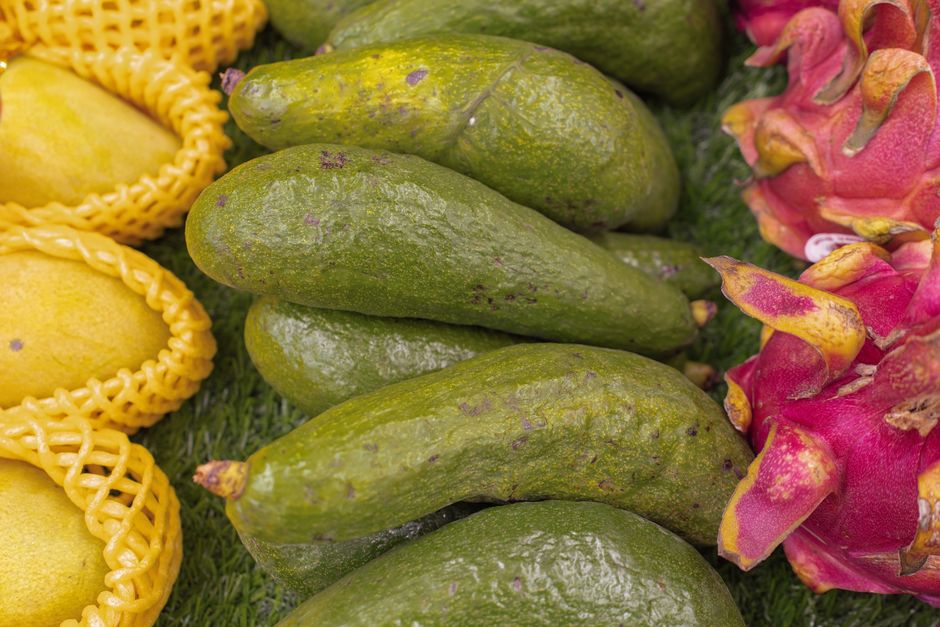
Making avocado oil at home is a straightforward kitchen project. You scoop and mash ripe avocados, dry the mash, warm it gently, and press the oil out of the pulp. The result is an unrefined oil with a deep green color and a strong avocado taste. Commercial producers use the same basic steps at a much larger scale, often with centrifuges and expeller presses instead of a stove and a strainer.
This guide walks through the process, explains why each step matters, and is honest about the parts that are harder than they look.
What You Need Before You Start
You need ripe avocados, and you need a fair number of them. Hass avocados contain roughly 15 to 20 percent oil by weight, and only part of that oil can be recovered with home equipment. A typical Hass avocado weighs around 200 grams, so one fruit holds roughly 30 to 40 grams of oil in theory. Real-world home yields are lower, because a good portion of the oil stays locked in the pulp and skin no matter how hard you press.
Beyond the fruit, gather these items:
- A knife and spoon for halving and scooping
- A bowl for the flesh
- A food processor or potato masher
- A baking sheet or dehydrator tray
- A heavy pot for gentle warming
- Cheesecloth or a fine mesh strainer
- A clean glass jar with a tight lid
Skip the blender if you can. High-speed blending whips air into the mash and creates an emulsion that makes separating oil harder later.
How To Make Avocado Oil From Avocado Step By Step
The process has four stages: prepare the fruit, dry the mash, warm it, and separate the oil. Each stage affects how much oil you end up with and how long it keeps.
Step 1: Prepare the Avocados
Wash the outside of each avocado first. When you cut through the skin, anything on the surface can end up in the flesh. Halve the fruit, remove the pit, and scoop the flesh into a bowl. Discard the skins and pits.
Mash or pulse the flesh until it forms a rough paste. You are not trying to make guacamole. You are trying to break the cell walls so the oil can escape. A coarse, uneven mash works fine.
Step 2: Dry the Mash
Spread the mash in a thin layer on a baking sheet or dehydrator tray. Dry it at low heat until most of the water is gone. In a dehydrator, this typically takes several hours. In a standard oven set to its lowest setting, expect a similar timeframe, and leave the door slightly cracked to let moisture escape.
Why dry it first? Fresh avocado flesh is roughly 70 percent water. Oil and water do not mix, and water makes the oil harder to separate and shortens its shelf life. Removing water before you press is the single biggest step most home guides skip.
You will know the mash is ready when it looks like dark, crumbly paste rather than wet guacamole.
Step 3: Warm the Dried Mash
Move the dried mash into a heavy pot. Warm it over the lowest possible heat, stirring often. You are not cooking it. You are loosening the oil so it flows more easily. If the mash starts to sizzle or smell sharp, the heat is too high and you are damaging the oil.
This step takes only a few minutes. Warm mash releases oil more readily than cold mash, but excessive heat degrades flavor and some of the delicate compounds in the oil.
Step 4: Press and Strain
Spoon the warm mash into a layer of cheesecloth. Gather the corners and twist to squeeze the oil out into a bowl or jar below. Work in small batches. Squeeze firmly and steadily rather than violently.
What comes out is a mix of oil and some remaining water and fine pulp. Let it sit for an hour or two. The oil will float to the top. Skim or pour it off carefully, leaving the water and sediment behind. Strain it once more through clean cheesecloth or a fine mesh strainer.
Pour the finished oil into a clean glass jar and seal it.
How Much Oil Will You Actually Get?
Less than most people expect. Home extraction recovers only a portion of the oil in the fruit. Commercial operations use industrial presses and centrifuges that pull out far more. A home batch might yield a few tablespoons from several avocados, depending on ripeness, variety, and how well you dried and pressed the mash.
This is worth knowing before you buy a case of avocados. If your goal is a steady supply of cooking oil, buying cold-pressed avocado oil is usually cheaper and more consistent than making it yourself. If your goal is the experience, or you have a surplus of ripe fruit, home extraction is a satisfying project.





How Should You Store Homemade Avocado Oil?
Keep it in a sealed glass jar in a cool, dark place. A cupboard away from the stove works better than a spot above it. Refrigeration is an option, and it will slow spoilage, though the oil may turn cloudy or semi-solid in the cold. That is normal and it returns to liquid at room temperature.
Homemade oil spoils faster than commercial oil. Commercial producers filter more thoroughly and often add antioxidants or package in light-blocking bottles. Your home batch still contains trace water and fine particles, both of which speed up rancidity.
Smell and taste it before each use. Fresh avocado oil smells mild and slightly grassy. If it smells bitter, crayon-like, or sharp, it has gone rancid and should be thrown out. There is no way to fix rancid oil.
Why Is Homemade Avocado Oil Different From Store-Bought?
Color, flavor, and shelf life differ most. Homemade oil is typically dark green, cloudy, and strongly flavored. Commercial refined avocado oil is pale yellow, nearly neutral in taste, and far more stable.
That difference comes down to processing. Refining removes pigments, free fatty acids, and compounds that cause off-flavors, which is why refined oil lasts longer and has a higher smoke point. Unrefined oil, whether homemade or store-bought, keeps more of the fruit’s natural flavor and color but breaks down at lower temperatures.
In practical terms, use your homemade oil for dressings, drizzling, and low-heat cooking. Save high-heat frying for a refined oil.
Common Mistakes That Ruin the Batch
Skipping the drying step is the most common error. Wet mash traps water in the oil, which clouds it, shortens its shelf life, and makes separation frustrating.
Using too much heat is the second. High heat speeds up extraction in the short term but degrades the oil and produces a bitter, cooked flavor. Low and slow is the rule.
Expecting a large yield is the third. Home extraction is inefficient by nature. Treat it as a small-batch project, not a way to replace your grocery store oil.
One more point worth clarifying: there is no home method that produces truly “cold-pressed” oil in the commercial sense. Cold pressing refers to mechanical extraction without added heat, done with industrial equipment. Warming mash on a stove, even gently, is a different process. It can still produce good oil, but the label does not apply.
Frequently Asked Questions
Can I make avocado oil without a press?
Yes. Cheesecloth and hand squeezing work for small batches, though the yield is lower than with a mechanical press. You will recover less oil, but the process is the same.
How long does homemade avocado oil last?
Typically a few weeks to a few months if stored in a cool, dark place, depending on how well you removed water and particles. Commercial oil lasts longer because it is filtered and refined more thoroughly.
Does homemade avocado oil have a high smoke point?
No. Unrefined oil, including homemade, has a lower smoke point than refined avocado oil and breaks down faster under high heat. Use it for dressings and low-heat cooking.
How many avocados does it take to make oil?
It takes several avocados to produce even a small amount of oil, since home extraction recovers only part of the oil in the fruit. Expect a few tablespoons from a batch, not cups.
