
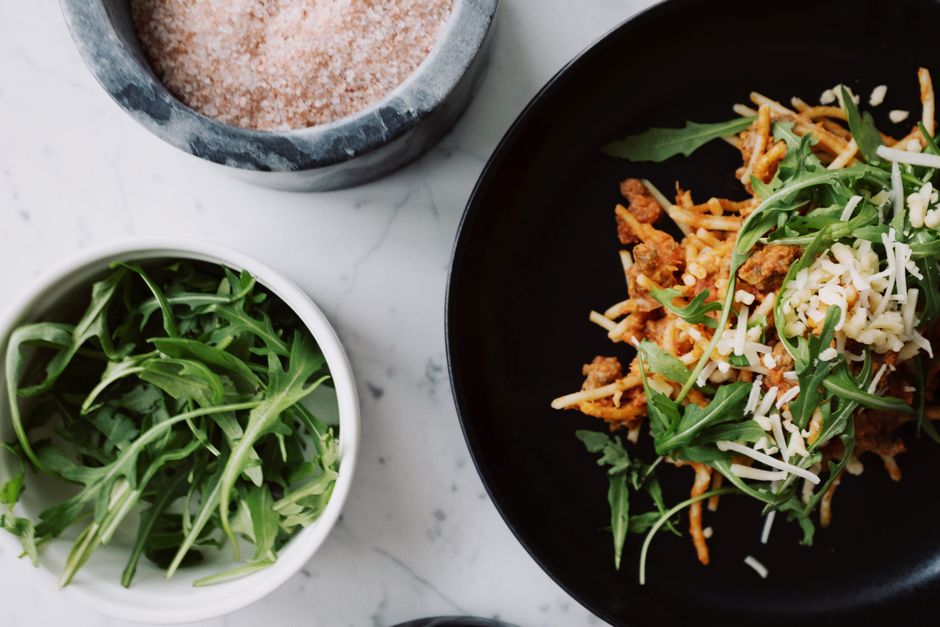
Arugula tastes bitter because of natural compounds it makes as it grows. Salt, fat, and acid all blunt that bitterness, and each one works through a different mechanism. Used together, they can turn a sharp, peppery leaf into something milder and more balanced without cooking it into mush.
The bitterness in arugula comes mainly from glucosinolates and related sulfur-containing compounds. These are the same family of plant chemicals that give mustard, horseradish, and radishes their bite. When you chew arugula, an enzyme called myrosinase mixes with those compounds and produces the sharp, peppery sensation. It is not a flaw in the leaf. It is a defense mechanism the plant evolved against being eaten.
Salt, fat, and acid each interfere with how you perceive that bitterness. Salt suppresses bitter taste receptors directly. Fat coats the tongue and dilutes the compounds in your saliva. Acid changes the chemistry of the leaf surface and shifts your attention toward sourness. None of them remove the bitter compounds. They change how strongly you taste them.
How To Make Arugula Less Bitter Salt Fat And Acid?
Salt is the fastest fix and the one most people underuse. A small pinch tossed through the leaves right before serving measurably reduces perceived bitterness. Sodium ions block part of the signaling from bitter taste receptors on the tongue. This is why a bland, bitter salad suddenly tastes sweeter and more balanced after a proper pinch of salt.
Use flaky salt rather than fine table salt for a salad. Fine salt dissolves too quickly and can leave pockets of extreme saltiness. Flaky salt lands unevenly across the leaves, so each bite gets a little rather than a lot. Add it at the last moment. Salt draws water out of the leaves through osmosis, and arugula that sits salted for more than a few minutes will wilt and turn limp.
Fat works differently. The bitter compounds in arugula are partly fat-soluble, so a fat coating on the tongue reduces how many of them reach your taste receptors. Olive oil, avocado, nuts, cheese, and creamy dressings all do this. The effect is real but it is a coating effect, not a chemical neutralization. More fat means more masking, up to a point.
Acid is the most misunderstood of the three. A squeeze of lemon or a splash of vinegar does not destroy the bitter compounds. What it does is add a competing taste that your brain weighs against the bitterness. Sourness and bitterness are processed differently, and a strong sour note pulls attention away from the bitter one. Acid also helps balance the salt and fat so the salad tastes seasoned rather than merely masked.
The order matters more than most people realize. Dress the leaves with acid and fat first, toss gently, then add salt last. If you salt first and let the salad sit while you finish the rest of the meal, you will come back to a soggy bowl.
Does Salt Really Reduce Bitterness Or Just Cover It Up?
Salt genuinely reduces bitterness perception. This is not just masking. Research on taste perception has found that sodium suppresses bitter taste signaling at the receptor level, which is why a pinch of salt can make coffee, grapefruit, and dark leafy greens taste less harsh.
The distinction matters because masking and suppression behave differently. A masker like sugar adds a competing sweet taste that your brain weighs against the bitter one. Salt actually dampens the bitter signal itself. That is why a very small amount of salt can do what a large amount of sugar cannot.
There is a limit. If arugula is aggressively bitter because it was grown in hot weather or harvested late, salt will help but will not erase it. Older leaves and leaves grown under heat stress accumulate more of the bitter compounds. In those cases, the better move is to use the arugula in a cooked dish where heat and fat do more of the work.
Which Fats Work Best For Taming Arugula?
Fats that coat the tongue well and taste good on their own work best. Olive oil is the standard choice because it clings to the leaves and carries its own slight bitterness, which paradoxically makes the arugula taste more balanced rather than less. A fruity, peppery olive oil can make arugula taste intentional rather than harsh.
Dairy fats are especially effective. Parmesan, pecorino, goat cheese, and creamy dressings contain fat plus salt plus often a little acid, so they hit all three levers at once. This is why the classic pairing of arugula, shaved parmesan, lemon, and olive oil works so well. It is not tradition for its own sake. It is a combination that happens to address every source of bitterness simultaneously.
Nut oils and nuts themselves do the same job. Toasted walnuts, pine nuts, and almonds add fat plus a roasted flavor that competes with bitterness. Toasting matters. Raw nuts taste flatter and do less work.
One caution: fat does not neutralize the compounds, so a heavily dressed arugula salad still contains the same glucosinolates. If you are avoiding arugula for a medical reason rather than a taste reason, dressing it will not change that.





What Kind Of Acid Works Best And How Much?
Lemon juice and mild vinegars work best. Lemon adds brightness plus a small amount of sugar, which helps. Champagne vinegar, white wine vinegar, and sherry vinegar are mild enough not to overwhelm the leaf. Balsamic is sweeter and heavier, so it masks more but also dominates the flavor.
Use less than you think. A general starting point for a salad dressing is roughly three parts oil to one part acid, then adjust. Too much acid makes arugula taste sour and thin rather than balanced. The goal is a dressing that tastes slightly too acidic on its own, because the leaves will dilute it.
Acid also has a structural effect worth knowing. It slightly softens the cell walls of the leaves, which is why arugula dressed with lemon and left for a few minutes tastes milder than arugula dressed and eaten immediately. Do not leave it more than a few minutes, though, or the leaves collapse.
Does Cooking Arugula Make It Less Bitter?
Cooking reduces bitterness more than any dressing can. Heat breaks down the enzyme that produces the sharp compounds and softens the leaf structure. Wilted arugula, arugula stirred into pasta, or arugula folded into an omelet all taste noticeably milder than the raw leaf.
The trade-off is texture and some nutrition. Raw arugula is crisp and holds its shape. Cooked arugula collapses quickly and releases water. If you cook it, do it fast over high heat or add it at the very end of a dish so it wilts from residual heat rather than direct cooking.
Some vitamins are sensitive to heat, so cooked arugula will have lower levels of certain heat-labile nutrients than raw. The difference is not dramatic for a single serving, but it is real.
Does The Type Of Arugula Matter?
Yes, significantly. Baby arugula is milder than mature arugula. It is harvested earlier, when the leaves have had less time to accumulate the bitter compounds. If you find standard arugula too harsh, baby arugula is the easiest upgrade.
Growing conditions matter too. Arugula grown in cool weather tends to be milder. Arugula grown in heat, or harvested after the plant has started to bolt and flower, tends to be sharper and more peppery. Wild arugula, sometimes sold as rucola selvatica, is a different species with thinner leaves and a more intense, almost wasabi-like bite. If standard arugula already tastes strong to you, wild arugula will taste stronger.
Freshness plays a role as well. Older arugula that has been sitting in the refrigerator for a week tastes harsher than a fresh bunch. The compounds concentrate as the leaves lose moisture.
Practical Order Of Operations
If you want the mildest possible raw arugula salad, work in this order. Start with baby arugula if you can find it. Whisk your acid and fat together first, taste the dressing, and adjust. Toss the leaves gently so every leaf gets a light coat. Add cheese or nuts for fat and salt. Add flaky salt last, right before serving. Eat within a few minutes.
If it is still too bitter after all of that, the leaf itself is the problem, not your technique. Cook it instead. Heat does what dressing cannot.
Frequently Asked Questions
Does salt really make arugula less bitter?
Yes. Sodium suppresses bitter taste signaling at the receptor level, so a pinch of salt reduces perceived bitterness rather than just hiding it. Add it last, since salt wilts the leaves within minutes.
What is the best dressing to make arugula less bitter?
Olive oil, lemon juice, and shaved parmesan work well because they combine fat, acid, and salt in one step. A roughly three-to-one oil-to-acid ratio is a reasonable starting point.
Does cooking arugula remove the bitterness?
Cooking reduces bitterness more than any dressing because heat breaks down the enzyme that produces the sharp compounds. The trade-off is that the leaves collapse and lose their crisp texture.
Is baby arugula less bitter than regular arugula?
Yes. Baby arugula is harvested earlier, before the leaves accumulate as many bitter compounds. Wild arugula is a different species and is more intense than either.
