
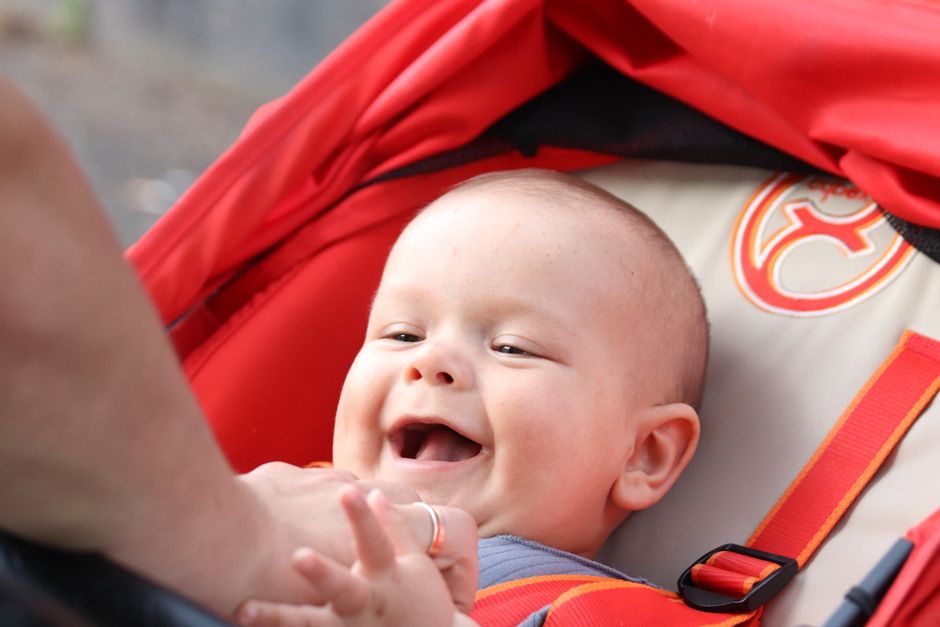
Babies begin laughing between three and four months old, and by six months most will laugh regularly during play. To make an infant laugh, you need to combine gentle surprise, social connection, and physical stimulation that matches your baby’s mood. The best techniques include peek-a-boo, funny sounds, gentle tickling (done carefully), blowing raspberries on the belly, and exaggerated facial expressions. Stop immediately if your baby turns away or gets fussy — laughter should always be a positive shared experience, never forced.
When Do Infants Start Laughing?
Laughter typically appears between three and four months of age. Before that, babies smile socially starting around six to eight weeks, but the first laugh often surprises parents because it comes suddenly during a playful moment. Some infants laugh as early as three months, while others take until five months — both are within the normal range.
The first laughs may sound more like a squeal or a short chuckle. Over the next few months, laughter becomes fuller and more predictable. By six to nine months, most babies laugh regularly during games like peek-a-boo or when they see a parent make a silly face.
What Makes an Infant Laugh? The Science Behind Baby Laughter
Infant laughter is a social signal. Research in developmental psychology shows that babies laugh primarily in response to people, not objects. A funny face from a parent triggers more laughter than a squeaky toy. The key ingredients are surprise, incongruity, and social connection.
When something unexpected happens — like a face suddenly disappearing and reappearing — the baby’s brain registers a mismatch between what they expected and what they saw. If the situation feels safe and the parent is smiling, the baby interprets that mismatch as funny. This is why peek-a-boo works so well: it combines surprise with reassurance.
Physical stimulation also plays a role. Gentle tickling, bouncing, or blowing raspberries on the belly triggers laughter through light touch and social interaction. However, babies differ in their sensitivity. Some love vigorous play, while others prefer quieter games.
How To Make An Infant Laugh: 5 Techniques That Work
These methods are supported by both developmental research and common clinical observation. Always watch your baby’s cues. If they look away, stiffen, or cry, stop and try a different approach.
- Peek-a-boo. Cover your face with your hands or a cloth, then reveal yourself with a cheerful “boo!” Vary the timing to keep it surprising. Most babies six months and older find this hilarious.
- Funny sounds. Clicking your tongue, making exaggerated kissing noises, or saying a word in a silly high-pitched voice often triggers laughter. The novelty of the sound matters more than the specific sound itself.
- Gentle tickling. Lightly tickle your baby’s feet, belly, or sides while smiling and saying “gotcha!” in a playful tone. Stop if the baby tenses up or pulls away — tickling should never be prolonged or forced.
- Blowing raspberries. Press your mouth gently against your baby’s tummy or arm and blow, making a vibrating sound. Many babies start giggling the first time they feel this sensation.
- Exaggerated facial expressions. Widen your eyes, drop your jaw, puff out your cheeks, or wiggle your eyebrows. The bigger and more unexpected the expression, the more likely your baby will laugh.
The most important factor is your own enjoyment. Babies read your emotional state. If you are genuinely having fun, your baby is more likely to laugh.





What Should You Avoid When Trying to Make a Baby Laugh?
Do not tickle a baby who is not fully engaged. Forced tickling can feel overwhelming and lead to distress, even if the baby is laughing. Some babies laugh reflexively when tickled, but that does not mean they enjoy it. Watch for signs of enjoyment: eye contact, reaching toward you, smiling between laughs. Signs of stress include turning the head away, arching the back, or crying.
Avoid startling the baby. Loud, sudden noises or movements may trigger a startle reflex instead of laughter. The Moro reflex (arms flinging out) indicates fear, not fun. Keep surprises gentle and within the baby’s comfort zone.
Do not use screens to make a baby laugh. No research supports that videos or apps make infants laugh in a developmentally meaningful way. Real human interaction is what builds the social bond behind the laughter.
Is It Normal If My Baby Doesn’t Laugh Much?
Most babies laugh by five months, but some are simply more serious or slower to develop a sense of humor. If your baby is smiling, making eye contact, and responding to you in other ways — such as cooing or reaching — a lack of frequent laughter is usually not a concern.
However, if your baby is not laughing by six months and also shows other delays — such as no social smiling, poor eye contact, or lack of response to sounds — talk to your pediatrician. Laughter is one of many social milestones, and its absence can sometimes signal a developmental issue such as autism or a hearing problem. Early evaluation is always better than waiting.
How Does Laughing Help Infant Development?
Laughter is not just fun — it supports bonding, brain development, and stress regulation. When a baby laughs, their body releases endorphins and lowers cortisol. Shared laughter strengthens the parent-child attachment, which is the foundation for emotional security later in life.
Laughter also teaches social timing. Babies learn that their actions can cause a reaction in others. This back-and-forth is an early form of conversation. Over time, laughter helps babies understand that the world is safe and that people can be trusted.
There is no evidence that babies who laugh more become smarter or happier adults. But within the first year, laughter is a reliable sign that a baby is socially engaged and developing typically.
Frequently Asked Questions
At what age do babies start laughing?
Most babies start laughing between three and four months old. Some begin at two months, others at five months — both are within the normal range.
Can you make a baby laugh by tickling?
Yes, gentle tickling often makes babies laugh, but not all babies enjoy it. Stop if the baby shows signs of distress such as pulling away or crying.
Is it bad if my baby doesn’t laugh at six months?
Not necessarily, but if your baby also lacks social smiling or eye contact, consult your pediatrician. Laughter is one of several social milestones.
What is the best game to make an infant laugh?
Peek-a-boo is the most reliably effective game for most babies six months and older. The combination of surprise and social connection triggers laughter.
