
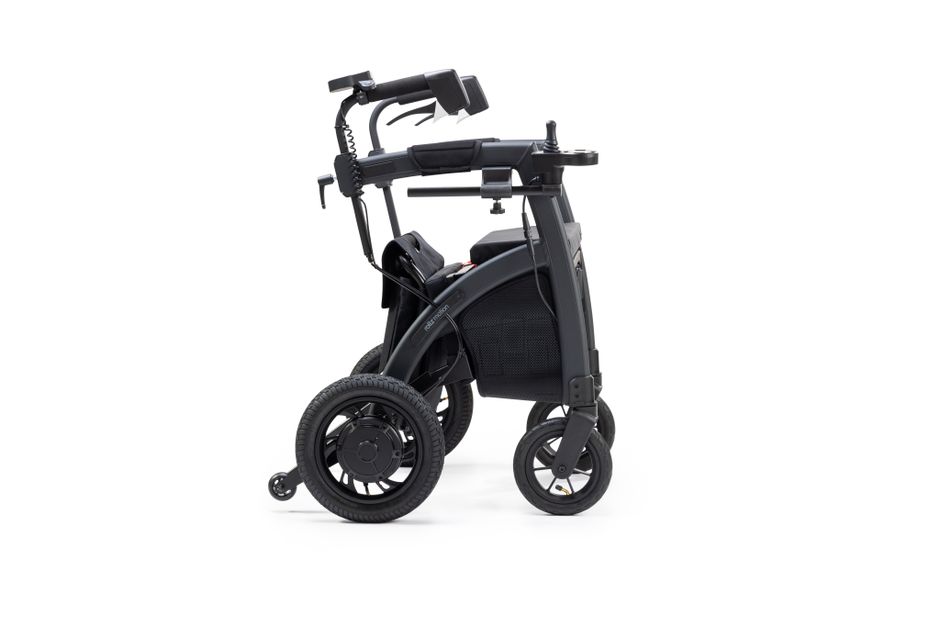
Electric wheelchairs are built for safety and stability, not speed. Most top out around 4 to 5 mph, and that ceiling comes from the manufacturer, not the motor. If you want more speed, you have six realistic paths: adjust the controller settings, reprogram the control module, swap the battery for a higher-output one, reduce weight and rolling resistance, change to larger or better tires, and pick a faster model or upgrade class. Some of these are simple. Others require a dealer or manufacturer.
One thing to understand up front: every change that adds speed also adds risk. A wheelchair that goes faster takes longer to stop, tips more easily on turns, and puts more strain on the motor and battery. The goal is not just faster. It is faster without losing control.
How To Make An Electric Wheelchair Faster 6 Ways
Each method below works through a different mechanism. Some free up existing power. Some add new power. Some simply reduce what the chair has to push against.
1. Adjust the Controller Settings
Most electric wheelchairs have a speed dial or programmable profile that limits top speed. The chair may be capable of more than it delivers out of the box. Dealers often set chairs conservatively for new users, especially in clinical or rental settings.
On many models, the speed setting is accessible through the joystick or a handheld programmer. On others, it is locked. If your chair has a speed knob, turning it up is the first thing to try. If it does not, a dealer can often raise the limit through the controller software.
This is the safest option because it stays within the manufacturer’s design limits. It also costs nothing if you can do it yourself.
2. Reprogram the Control Module
The control module is the computer that governs how much current reaches the motors. Many modules ship with conservative factory profiles. A trained technician can adjust acceleration, deceleration, and top speed within the module’s programmed range.
This is not a do-it-yourself job on most chairs. Programming requires specific software and cables, and an incorrect setting can cause sudden acceleration or braking failures. If you reprogram, use a dealer or the manufacturer.
Some manufacturers will not authorize changes beyond the factory ceiling. That is a liability decision, not a technical one. Respect it. A chair modified past its rated limits may void the warranty and may not be covered by insurance if something goes wrong.
3. Upgrade the Battery
Electric wheelchair motors draw current from the battery. If the battery cannot deliver enough current, the motor cannot reach its full potential. A battery with a higher amp-hour rating or a higher discharge capability can support more sustained power.
This only helps if the battery is the limiting factor. On most chairs, the controller is the bottleneck, not the battery. Swapping to a larger battery on a chair with a locked controller will not make it faster.
Battery upgrades also carry real risks. Lithium batteries in particular require a matched charger and a battery management system. A mismatched battery can overheat, fail, or catch fire. Use only batteries approved for your specific chair, and have a technician install them.
4. Reduce Weight and Rolling Resistance
Every pound the chair carries is a pound the motor has to move. Removing unnecessary weight helps, though the effect on top speed is usually modest. The bigger gains come from reducing rolling resistance.
- Keep tires inflated to the pressure printed on the sidewall
- Check that brakes are not dragging
- Clean and lubricate bearings and axles as the manufacturer allows
- Remove heavy accessories you do not use
- Keep the chair clean of debris around the wheels and casters
Underinflated tires are one of the most common and most overlooked causes of sluggish performance. A soft tire can noticeably slow a chair and drain the battery faster. This is not a speed upgrade so much as removing a drag you did not know you had.
5. Change the Tires and Wheels
Tire type affects both speed and ride. Pneumatic tires roll more smoothly over uneven ground than solid tires. Larger diameter wheels cover more ground per rotation, which can raise effective speed if the motor and gearing allow it.
Not every chair accepts larger wheels. Changing wheel size can also affect the chair’s center of gravity and stability. A taller wheel raises the seat height, which changes how the chair handles turns and slopes.
If you change tires or wheels, have a technician confirm the chair still meets its stability specifications. A chair that is faster but tips more easily is not an improvement.
6. Choose a Faster Model or Upgrade Class
Sometimes the honest answer is that your chair was not built to go faster. Standard power wheelchairs are designed for indoor and light outdoor use at walking speed. If you need more speed, a different class of device may fit better.
Faster options exist in categories like high-performance power chairs and some mobility scooters. These are built with larger motors, stronger frames, and higher-rated controllers from the start. Buying the right device is safer than pushing the wrong one past its limits.
What Is the Top Speed of an Electric Wheelchair?
Most standard electric wheelchairs have a top speed between 4 and 5 mph. That is roughly the pace of a brisk walk. Some models are limited to around 3 mph for indoor use, and higher-performance chairs can reach somewhat more.
The limit is usually set by the controller, not the motor. Manufacturers cap speed for stability and safety. A chair that goes faster is harder to stop and more likely to tip on turns or slopes.
For context, the Americans with Disabilities Act sets an accessible route design speed of 3 mph for pedestrians, and mobility devices used on sidewalks and paths are generally expected to travel at or near walking speed. Going much faster than that in shared spaces raises collision risk for you and for people around you.
Can You Legally Make a Wheelchair Faster?
In most cases, yes, but the rules vary by where you use it. On private property, you generally have more freedom. On public sidewalks and paths, speed limits and device classifications may apply.
Some states and cities classify faster mobility devices differently from standard wheelchairs. A device that exceeds certain speed thresholds may be treated more like a scooter or motor vehicle, which can affect where you are allowed to operate it.
If you plan to use a modified chair in public, check your local rules. This is not legal advice, and the specifics differ from place to place.





What Are the Risks of Making a Wheelchair Faster?
Speed changes the physics of the chair. A faster chair covers more distance before you can react, and it needs more distance to stop. That matters most on slopes, turns, and uneven ground.
Higher speed also increases strain on the motor, controller, and battery. Components rated for a certain speed may wear faster or fail sooner when pushed beyond it. Overheating is a real concern with motor and battery modifications.
Stability is the biggest issue. Power wheelchairs are designed with a center of gravity that keeps them upright during normal use. Raising speed, changing wheel size, or shifting weight can push that balance past its limit.
Any change that affects braking, steering, or stability should be checked by a qualified technician before you use the chair at higher speed.
Should You Modify or Replace Your Wheelchair?
Modifying a chair is worth it when the change is small, reversible, and within the manufacturer’s design limits. Adjusting a controller setting or inflating tires falls in that category.
Replacing the chair makes more sense when you need a meaningful speed increase, when the current chair is not built for it, or when modifications would void the warranty or compromise safety. A higher-performance device is engineered for the speed you want from the start.
Talk to a dealer or an assistive technology professional before making major changes. They can tell you what your specific chair can safely handle and what your options are.
Frequently Asked Questions
How fast can an electric wheelchair go?
Most standard electric wheelchairs top out between 4 and 5 mph. Higher-performance models can go somewhat faster, but the limit is usually set by the controller for safety.
Can I make my electric wheelchair faster myself?
Simple steps like inflating tires and adjusting a speed dial you can often do yourself. Controller reprogramming and battery changes should be done by a dealer or technician.
Does a bigger battery make a wheelchair faster?
Only if the battery is the limiting factor, which is uncommon. On most chairs the controller caps speed, so a larger battery adds range more than speed.
Is it safe to make an electric wheelchair faster?
Small changes within the manufacturer’s limits are generally low risk. Larger changes can affect braking, stability, and component life, so they should be checked by a qualified technician.
