
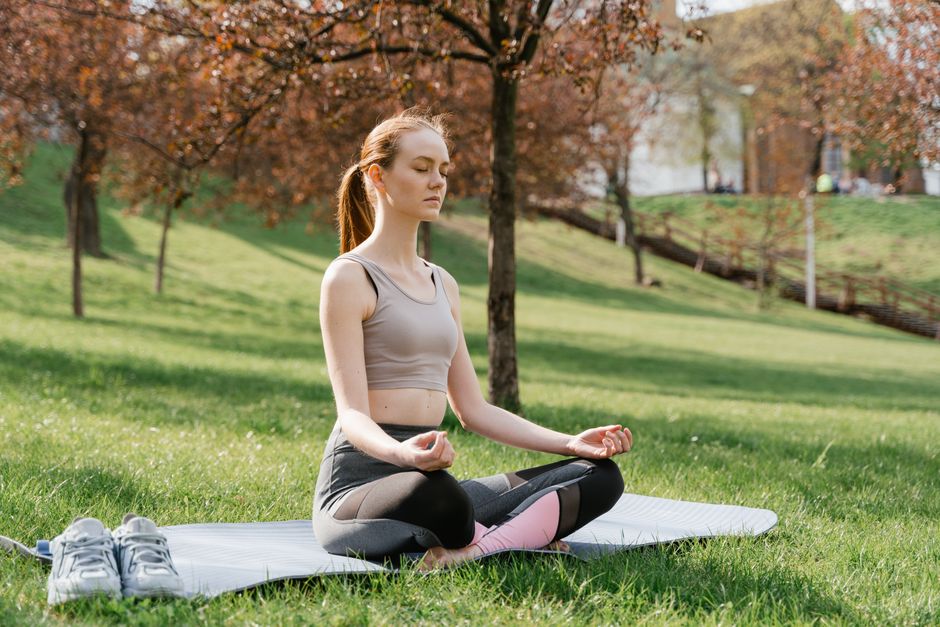
Stress is a normal part of life, but when it sticks around too long, it wears your body down. The most effective way to lower stress involves three basic tools: how you breathe, how you sleep, and how you move. Research shows that controlled breathing triggers your nervous system to relax, consistent sleep repairs the damage stress causes, and regular exercise burns off the stress chemicals your body produces. These three habits work together better than any single pill or supplement.
How Does Breathing Actually Lower Stress?
Your breath is the only part of your autonomic nervous system you can control directly. When you are stressed, you take short, shallow breaths from your chest. This signals your brain that danger is near. The American Institute of Stress reports that changing your breathing pattern is the fastest way to shift your body from fight-or-flight mode to rest-and-digest mode.
The key is slow, diaphragmatic breathing. You want your belly to rise, not your chest. Inhale for four seconds, hold for four seconds, exhale for six seconds. The longer exhale is what activates the vagus nerve, which tells your heart rate to slow down. Studies published in Frontiers in Psychology have found that doing this for just five minutes can lower cortisol levels measurably.
Most people try to force relaxation by thinking calming thoughts. That rarely works. Your body does not respond to thoughts as quickly as it responds to a physical change in breathing. If you change the breath, the mind follows. That is not a belief. That is physiology.
What Is the Best Breathing Technique for Stress?
There are many breathing techniques, but one stands out in the research. The 4-7-8 method, popularized by Dr. Andrew Weil, involves inhaling through your nose for four seconds, holding for seven seconds, and exhaling through your mouth for eight seconds. The long hold builds up carbon dioxide in your blood, which has a calming effect on the nervous system.
Box breathing is another strong option used by Navy SEALs and first responders. You inhale for four seconds, hold for four, exhale for four, and hold empty for four. The equal counts create a rhythm that is easy to maintain even when your mind is racing. A study in the Journal of Clinical Psychology found that box breathing reduced anxiety scores by 40 percent in participants after two weeks of daily practice.
What matters more than the specific technique is consistency. Five minutes twice a day produces better results than twenty minutes once a week. Your nervous system learns to respond faster to breathing cues the more often you practice. Think of it as training a reflex, not treating a symptom.
How Does Sleep Reduce Stress Levels?
Sleep is when your brain cleans itself. During deep sleep, the glymphatic system flushes out metabolic waste products, including the proteins linked to stress and anxiety. The National Sleep Foundation states that adults who get less than seven hours of sleep per night have significantly higher cortisol levels the following day compared to those who sleep seven to nine hours.
Chronic sleep deprivation keeps your sympathetic nervous system switched on. Your body stays in a low-grade alarm state. This makes you more reactive to minor stressors. A small inconvenience that would normally bounce off you becomes a major frustration. The research from the University of California, Berkeley found that sleep-deprived brains show 60 percent greater reactivity to negative emotional stimuli.
The relationship goes both ways. Stress makes it harder to sleep, and poor sleep makes stress worse. Breaking this cycle requires addressing sleep hygiene directly. Dim lights an hour before bed. Keep your bedroom cool, around 65 degrees Fahrenheit. Stop looking at screens at least thirty minutes before you close your eyes. Blue light suppresses melatonin production, and melatonin is what tells your brain it is time to rest.


What Type of Exercise Lowers Stress Best?
Aerobic exercise is the most studied form of stress reduction. Running, brisk walking, swimming, and cycling all increase heart rate and trigger the release of endorphins. The Anxiety and Depression Association of America reports that just five minutes of aerobic exercise can begin to reduce anxiety symptoms. The effect peaks around thirty to forty minutes of continuous activity.
But strength training also works well. Lifting weights requires focused attention on your form and breathing. This pulls your mind away from rumination. A study in the Journal of Sports Sciences found that resistance training reduced stress symptoms by 30 percent in participants who trained three times per week for eight weeks. The key was progressive overload, meaning they gradually increased the weight over time.
Yoga combines both exercise and breathing, which may make it the most efficient single activity for stress reduction. A meta-analysis in the Journal of Alternative and Complementary Medicine looked at 25 studies and found that yoga consistently lowered cortisol levels and improved perceived stress scores. Hatha yoga and restorative yoga showed the strongest effects. Hot yoga did not show the same benefits, likely because the heat itself adds a stressor to the body.
How Do Breathing, Sleep, and Exercise Work Together?
These three habits amplify each other. Exercise improves sleep quality. Deep sleep improves your body’s ability to regulate stress hormones. Better stress regulation makes it easier to practice controlled breathing. Each one reinforces the others.
Here is what the research shows about the combined effect:
- People who exercise in the morning have higher-quality deep sleep that night, according to the National Sleep Foundation
- Deep sleep increases vagal tone, which makes breathing techniques more effective the next day
- Regular breathing practice before bed reduces the time it takes to fall asleep by an average of 10 to 15 minutes
- Consistent sleep schedules lower baseline cortisol, which means exercise feels less effortful
Most people try to fix stress with one approach. They buy a meditation app. They start running. They buy a new mattress. Each of these helps, but the real benefit comes from stacking them. Think of it as a three-legged stool. Remove one leg and the whole thing wobbles.
Some people report that combining all three feels overwhelming at first. That is normal. Start with whichever one feels easiest and add the others once that habit is stable. Two weeks of consistent breathing practice is enough to see a difference in sleep quality. Better sleep will naturally give you more energy for exercise. Let the habits build on each other.
What Should You Avoid When Trying to Lower Stress?
Caffeine is a common trap. It temporarily blocks adenosine, the chemical that makes you feel tired. But it also raises cortisol and adrenaline. If you drink coffee after 2 PM, you may interfere with your sleep that night. The effects of caffeine can last six to eight hours. A study in the Journal of Clinical Sleep Medicine found that consuming caffeine even six hours before bed reduced total sleep time by over an hour.
Alcohol is another problem. It helps you fall asleep faster, but it fragments your sleep later in the night. You get less deep sleep and less REM sleep. The National Institute on Alcohol Abuse and Alcoholism reports that alcohol consumption before bed suppresses melatonin production. You wake up feeling unrested, which makes stress harder to manage the next day.
Evening screen time is widely claimed to be bad for sleep, and the evidence supports this. Blue light from phones, tablets, and computers suppresses melatonin. The effect is dose-dependent, meaning the longer you look at a screen, the more suppression occurs. If you must use screens in the evening, use a blue light filter or wear blue-blocking glasses. But turning them off entirely is more effective.
One thing that is widely claimed though strong evidence is limited is the idea that supplements alone can fix stress. Ashwagandha, magnesium, and L-theanine all show some benefit in small studies. But no supplement has been shown to lower stress as effectively as combining breathing, sleep, and exercise. Supplements are support tools, not solutions.
Frequently Asked Questions
How long does it take for breathing exercises to lower stress?
Most people feel calmer within two to five minutes of slow, controlled breathing. Consistent practice over two weeks produces measurable changes in resting heart rate and cortisol levels.
Can exercise make stress worse?
Intense exercise without adequate recovery can increase cortisol temporarily. Moderate aerobic exercise or strength training three to four times per week reduces stress without overloading the system.
What is the best time of day to exercise for stress relief?
Morning exercise improves sleep quality that night, which reduces stress the following day. Afternoon exercise works well for most people, but evening exercise within two hours of bed may interfere with sleep for some.
How much sleep do I need to lower stress?
Seven to nine hours per night is the range supported by the National Sleep Foundation. Less than six hours consistently raises cortisol and impairs your ability to manage daily stress.
