
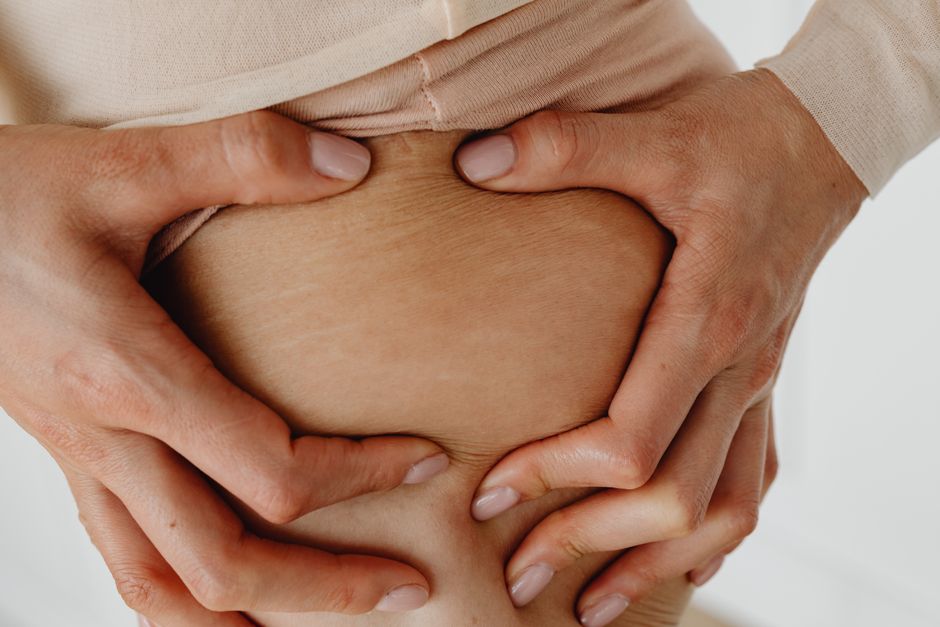
Stretch marks are a normal part of life for millions of people. They happen when skin stretches or shrinks quickly, and the collagen and elastin fibers tear beneath the surface. The honest answer about how to lose stretch marks is that you cannot erase them completely. But research shows you can make them less noticeable, reduce their color and texture, and improve your skin’s overall appearance. What follows is what the evidence actually says — not marketing claims.
What Exactly Are Stretch Marks and Why Do They Form?
Stretch marks, medically called striae, form in the middle layer of your skin called the dermis. When this layer stretches faster than it can keep up with, the collagen fibers break. Blood vessels underneath show through, giving new stretch marks that red, purple, or pink color.
Over time, those blood vessels constrict and the color fades to white or silver. At that point, the mark is considered mature. The American Academy of Dermatology notes that once stretch marks turn white, they are harder to treat. But that does not mean nothing can help.
Common causes include pregnancy, rapid weight gain or loss, growth spurts during puberty, and certain medical conditions like Cushing’s syndrome. Genetics also play a role. If your mother had stretch marks, you are more likely to develop them too.
Does How To Lose Stretch Marks Actually Work With Creams and Lotions?
This is where most of the hype lives. Walk into any drugstore and you will see dozens of creams claiming to erase stretch marks. The evidence tells a different story.
Research published in the Journal of the European Academy of Dermatology and Venereology found that over-the-counter creams containing centella asiatica, hyaluronic acid, and collagen peptides may improve the appearance of newer stretch marks. The improvement is modest. Think 10 to 20 percent reduction in color and texture, not disappearance.
Cocoa butter, shea butter, and coconut oil are widely claimed to prevent or reduce stretch marks. But clinical studies have not found strong evidence that they work. A 2015 study in the International Journal of Dermatology found that cocoa butter did not prevent stretch marks in pregnant women. Those creams moisturize the skin, which can make it feel softer and look slightly smoother. That is real but temporary. They do not rebuild collagen in the dermis.
For older, white stretch marks, creams have very little effect. The damage is deeper and the skin has already healed in that position.
What Do Dermatologists Recommend That Actually Works?
If you want to reduce the appearance of stretch marks, dermatologists have several tools backed by stronger evidence. None are magic, but they produce more noticeable results than creams.
Retinoid creams like tretinoin have the best evidence for newer stretch marks. A study in the Archives of Dermatology found that tretinoin improved the appearance of early stretch marks in about 80 percent of people. It works by stimulating collagen production and encouraging cell turnover. The catch is that it can cause irritation, redness, and peeling. It is also not safe during pregnancy.
Microneedling uses tiny needles to create micro-injuries in the skin. This triggers your body’s natural wound healing response and stimulates collagen production. Research in the Journal of Cutaneous and Aesthetic Surgery found that microneedling significantly improved the texture and width of stretch marks after several sessions. It works on both newer and older marks, though results vary.
Laser therapy is another option. Pulsed dye lasers work best on red or purple stretch marks by targeting the blood vessels. Fractional lasers treat older white marks by resurfacing the skin. The American Society for Dermatologic Surgery reports that laser treatments can reduce the appearance of stretch marks by 50 to 75 percent in some people. Multiple sessions are usually needed.
Chemical peels using glycolic acid or trichloroacetic acid can help, particularly on newer stretch marks. They remove the outer layer of skin and encourage new growth. Results are generally less dramatic than lasers or microneedling.





How To Lose Stretch Marks: What the Research Says About Prevention
Preventing stretch marks is easier than treating them after they form. But even here, the evidence is not as strong as you might expect.
Keeping your skin well-hydrated helps maintain elasticity. Drinking enough water and using a good moisturizer can support your skin’s ability to stretch without tearing. But moisturizing alone will not stop stretch marks if your genetics and hormones are working against you.
Weight management is the most effective prevention strategy. Rapid weight gain puts the most stress on your skin. Gaining weight slowly, during pregnancy or otherwise, gives your skin time to adapt. The CDC notes that gradual weight gain during pregnancy reduces the risk of developing severe stretch marks.
Some studies suggest that maintaining healthy vitamin C levels supports collagen production. Vitamin C is essential for collagen synthesis. Eating foods rich in vitamin C — citrus fruits, bell peppers, broccoli — may help your skin stay strong. But no study has proven that taking vitamin C supplements prevents stretch marks.
One non-obvious insight: exercise does not prevent stretch marks directly, but building muscle can change how skin sits on your body. Stronger muscles provide more support to the skin, which may reduce the tension that causes tearing.
| Treatment | Best For | Evidence Strength | Typical Results |
|---|---|---|---|
| Retinoid creams | New red/purple marks | Strong | Modest improvement |
| Microneedling | New and old marks | Moderate | Noticeable texture improvement |
| Laser therapy | Red or white marks | Moderate to strong | 50-75% reduction in some cases |
| Chemical peels | New marks | Moderate | Modest improvement |
| Cocoa butter | None specifically | Weak | Moisturizes only |
What Are the Side Effects of Treatments and Who Should Avoid Them?
Every treatment comes with risks. Knowing them helps you decide what is worth trying.
Retinoid creams can cause redness, peeling, dryness, and sun sensitivity. They are classified as pregnancy category C, meaning animal studies have shown harm to fetuses. Pregnant women and those breastfeeding should avoid them entirely.
Microneedling can cause temporary redness, swelling, and bruising. If done improperly, it can lead to infection or scarring. Always go to a licensed dermatologist or trained professional. At-home microneedling devices carry higher risks and less evidence of effectiveness.
Laser therapy can cause temporary discomfort, redness, and swelling. In darker skin tones, lasers can cause hyperpigmentation or hypopigmentation — the skin becoming darker or lighter. The American Academy of Dermatology recommends choosing a dermatologist experienced in treating darker skin types if this applies to you.
Chemical peels can cause burning, stinging, and peeling. Stronger peels carry a risk of scarring and infection. People with active skin infections, eczema, or psoriasis should avoid peels until their skin is clear.
No treatment is guaranteed. Results vary widely based on your skin type, the age of your stretch marks, and your body’s healing response.
Common Misconceptions About Stretch Marks You Should Ignore
There is a lot of bad information online. Here are the most common myths and what the evidence actually says.
- Myth: Tanning hides stretch marks. Tanning can temporarily darken the surrounding skin, making stretch marks look lighter by contrast. But UV damage breaks down collagen over time, making stretch marks worse. Tanning beds are especially harmful.
- Myth: Weight loss removes stretch marks. Losing weight can reduce the tension on your skin, but the existing marks remain. They may become less noticeable as the skin tightens, but they do not disappear.
- Myth: Stretch marks only happen to women. Men get them too, especially during growth spurts or rapid muscle gain. About 40 percent of men develop stretch marks at some point in their lives.
- Myth: Expensive creams work better. Price does not equal effectiveness. Many expensive creams contain the same ingredients as drugstore brands. The active ingredients matter, not the price tag.
- Myth: Stretch marks are unhealthy. They are a cosmetic concern, not a medical condition. They do not cause health problems and do not need treatment unless you want to reduce their appearance.
Practical Steps You Can Take Starting Today
If you want to reduce the appearance of stretch marks, here is a realistic plan based on the evidence.
Start with moisturizing. It will not erase marks, but keeping skin hydrated improves texture and appearance. Use a fragrance-free moisturizer with ceramides or hyaluronic acid. Apply it twice daily.
For newer red or purple marks, talk to a dermatologist about retinoid creams. They have the best evidence for early intervention. Do not use them if you are pregnant or planning to become pregnant.
For older white marks, microneedling or fractional laser therapy are your best options. Both require multiple sessions and a licensed professional. Expect to pay several hundred dollars per session, and results take months.
Protect your skin from the sun. Sunscreen with SPF 30 or higher prevents further collagen damage. Apply it every day to areas where you have stretch marks, especially if you are using retinoids or undergoing laser treatments.
Be patient. No treatment works overnight. Most require 3 to 6 sessions spaced weeks apart, and improvement continues for months after treatment ends.
Acceptance is also a valid option. Stretch marks are not a sign of poor health. They are a normal part of having skin that stretches. Many people find that over time, they care less about them.
Frequently Asked Questions
Can stretch marks go away completely?
No, stretch marks cannot go away completely. They can become less noticeable with treatment, but the scar tissue remains permanently.
What is the fastest way to reduce stretch marks?
Fractional laser therapy provides the fastest visible results, often showing improvement after 2 to 3 sessions. Multiple treatments are still needed for best results.
Do stretch marks mean I am unhealthy?
No, stretch marks are a normal cosmetic condition and not a sign of poor health. They are caused by rapid skin stretching and genetics.
Can exercise get rid of stretch marks?
Exercise does not remove stretch marks, but building muscle can improve skin tone and make marks less noticeable. It does not repair the collagen damage.
