
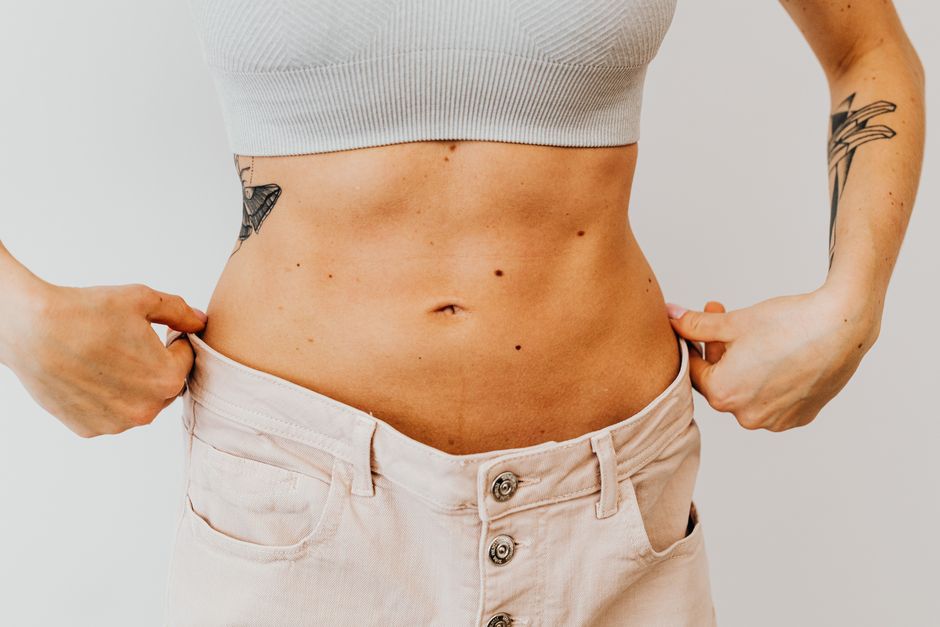
There is no exercise that burns fat specifically below the belly button. Fat loss does not work that way. Your body draws on stored energy from all over, and where it comes off first is largely set by your genes, hormones, age, and sex. The lower belly is often one of the last places to change, which is why it feels stuck. The way to lose it for good is to lower overall body fat with a calorie deficit, build and keep muscle, sleep enough, and manage stress and alcohol — then stay consistent long enough for the lower belly to follow.
Why Does Fat Collect Below The Belly Button?
The fat under your skin around the lower belly is subcutaneous fat. It sits just beneath the skin and above the muscle. It is soft, pinchable, and common in both men and women. This is different from visceral fat, which is packed deep inside the abdomen around the organs and is linked to higher health risks.
Where your body stores fat is not a choice you make. It is shaped by genetics, sex hormones, and age. In many women, the lower belly and hips are natural storage sites, partly under the influence of estrogen. In many men, the belly is a common place to store fat. As people age, fat tends to shift toward the abdomen and muscle mass tends to decline, which changes how the midsection looks even at the same weight.
One point that gets missed: a flat lower belly is not only about fat. The shape of your abdomen also depends on your posture, the tone of your deep core muscles, and — for some people — a separation of the abdominal muscles called diastasis recti, which is common after pregnancy. If the muscles have separated, no amount of dieting will flatten that area on its own.
Can You Target Fat Below The Belly Button With Exercise?
No. Spot reduction is a myth. Doing crunches, leg raises, or planks will strengthen the muscles under the fat, but it will not burn the fat that sits on top of them. Research on spot reduction has repeatedly found that exercising a specific body part does not preferentially remove fat from that area.
This does not mean core exercise is useless. Strong abdominal muscles improve posture, support your spine, and can change how your midsection looks once fat comes down. But the fat itself is removed by an overall calorie deficit, not by working the muscle nearest to it.
So the honest answer is: train your whole body, eat in a modest deficit, and let your body decide the order in which it lets go of fat. For most people, the lower belly is near the end of that line, not the beginning.
What Actually Drives Lasting Fat Loss?
Fat loss comes down to energy balance. You need to take in fewer calories than you burn, consistently, over weeks and months. That is the established physiology. Everything else — meal timing, food choices, workout style — works mainly by helping you hold that deficit.
A few things make the deficit easier to keep and protect your results:
- Protein at each meal. Protein helps preserve muscle during weight loss and tends to keep you fuller. Good sources include eggs, poultry, fish, Greek yogurt, beans, and tofu.
- Strength training two to three times a week. Lifting weights signals your body to keep muscle while you lose fat. Muscle also supports a slightly higher daily calorie burn.
- A slow, moderate deficit. Aggressive crash diets often cost you muscle and are hard to sustain. A modest deficit you can hold for months beats a harsh one you quit in two weeks.
- Patience with the lower belly. Because it is often the last area to change, it can look unchanged for a while even as your waist and face slim down. That is normal.
One clarification worth knowing: you cannot control the order in which fat leaves your body, and no supplement, wrap, cream, or “fat-burning” belt changes that. No clinical evidence confirms that any of these spot-reduce lower belly fat.





Does Diet Quality Matter Beyond Calories?
Calories drive fat loss, but food quality affects how easy that is and how you feel. Diets built on whole foods — vegetables, fruit, lean protein, whole grains, beans, nuts, and olive oil — tend to be more filling per calorie than diets built on refined carbs and added sugar.
Highly processed foods and sugary drinks are easy to overeat and add calories quickly without making you full. Swapping them for whole foods is one of the most practical ways to create a deficit without feeling deprived.
A few dietary patterns have been studied for their effects on abdominal fat specifically. Some research suggests that diets higher in fiber and lower in refined carbohydrates are associated with less visceral fat over time, though results vary and no single diet has been shown to be uniquely effective for the lower belly.
Alcohol deserves a direct mention. It adds calories, it can increase appetite, and it tends to reduce sleep quality. For many people, cutting back on alcohol is one of the simplest changes that helps the midsection. The evidence for alcohol’s specific effect on belly fat is mixed, but the calorie and sleep effects are well established.
Why Do Sleep And Stress Affect Belly Fat?
Short sleep and ongoing stress raise cortisol, a hormone that influences where the body stores fat and how hungry you feel. Over time, poor sleep is associated with higher abdominal fat and greater difficulty losing weight. This is not a small effect — sleep is one of the most underrated levers for fat loss.
When you are short on sleep, you tend to eat more, crave sugary and high-carb foods, and have less energy to move. Stress does much the same. Managing both is not a luxury; it supports the same deficit you are trying to create.
Practical steps that help most people:
- Aim for a consistent sleep schedule, with most adults needing seven to nine hours.
- Keep a regular bedtime and limit screens and bright light close to it.
- Use simple stress tools — walking, breathing exercises, time outdoors, or talking with someone you trust.
None of these will flatten the lower belly on their own. But they make the calorie deficit easier to hold and reduce the hormonal push toward storing fat around the middle.
Is A Flat Lower Belly Always About Fat?
Not always. Two other factors commonly affect how the lower belly looks, and neither responds to dieting.
The first is diastasis recti, a separation of the two bands of abdominal muscle down the middle of the belly. It is common during and after pregnancy and can also occur in others. It can leave a persistent pooch even at a healthy body fat. A physical therapist or qualified trainer can assess it, and targeted rehab often helps.
The second is posture and core control. A forward-tilted pelvis or weak deep core muscles can make the lower belly push outward. Improving posture and deep core strength can change the silhouette without any change in fat.
If you have tried a consistent deficit and training for a reasonable stretch and the lower belly has not budged, these are worth checking. A clinician or physical therapist can help you tell the difference between fat that will respond to diet and structure that needs a different approach.
What About Supplements And “Belly Fat” Products?
Be skeptical. The market for fat-burning pills, teas, wraps, and creams is large, and the evidence behind most of it is thin or absent. No supplement has been shown to reliably spot-reduce lower belly fat.
A few ingredients have some research behind them for modest effects on weight or appetite, but the effects are generally small, inconsistent across studies, and not a substitute for diet and activity. Even where a small effect exists, it is not targeted at the lower belly.
The honest position: if a product promises to melt fat below the belly button, no clinical evidence confirms that claim. Save your money and put it toward food quality, a gym membership, or a session with a trainer or dietitian.
How Long Does It Take To Lose Lower Belly Fat For Good?
There is no fixed timeline, and anyone who gives you one is guessing. How fast you lose fat depends on your starting point, your deficit, your muscle mass, your sleep, and your genetics. The lower belly is often the last area to change, so it can lag behind the rest of your body by weeks or months.
What matters more than speed is sustainability. A moderate deficit you can keep for months will beat an aggressive one you abandon. Keeping muscle through strength training and adequate protein means that when the fat does come off, your shape looks better than the number on the scale suggests.
For good — meaning lasting — the goal is not a short sprint. It is a set of habits you can hold: eating mostly whole foods, training your whole body, sleeping enough, managing stress and alcohol, and being patient with the areas that change last. That is what keeps the fat off rather than having it return.
Frequently Asked Questions
Can you lose fat below the belly button specifically?
No. You cannot target fat loss to one area; your body removes fat from all over based on genetics and hormones. The lower belly often changes last, so it improves as your overall body fat drops.
Do crunches or leg raises burn lower belly fat?
No. Core exercises strengthen the muscles under the fat but do not preferentially burn the fat on top of them. Fat loss comes from an overall calorie deficit, not from working the nearest muscle.
Why is my lower belly fat so hard to lose?
The lower belly is a common storage site and is often one of the last places fat leaves the body. For some people, a muscle separation called diastasis recti or posture issues also affect the shape, and those need a different approach.
How long does it take to lose lower belly fat?
There is no fixed timeline, and it varies widely by person. Because the lower belly tends to change last, it can lag behind other areas by weeks or months even with steady, consistent effort.
